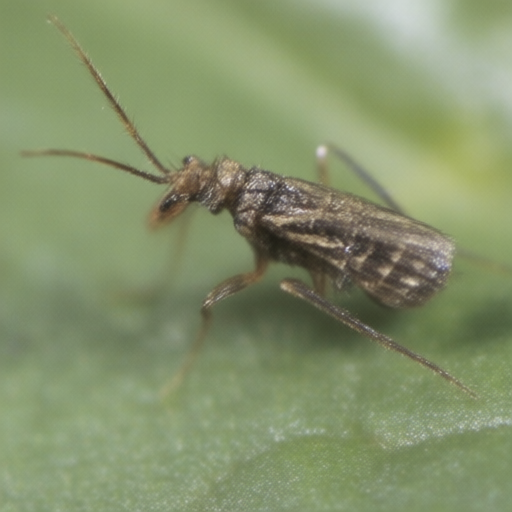
It is a humid Tuesday in July, and while the rest of the nation is battling with sunburnt shoulders and lukewarm lager, a silent revolution is unfolding on the leafy branches across the United Kingdom. For centuries, the humble
gall midge (
Cecidomyiidae ) has been misunderstood, often dismissed as a mere pest or an invisible speck in the wind. But here at the Society for the Prevention of Cruelty to Insects (SPCI), we see them for what they truly are: nature’s most intricate, microscopic architects, and the unsung heroes of our summer gardens.
As the midges lay their eggs on leaves, stems, and flowers, triggering the plant to grow abnormal structures known as galls, they are not causing damage—they are creating art. Each gall is a bespoke, biological sculpture, a tiny home designed with an elegance that makes modernist architecture look like a shed built from cardboard boxes. This week, we traveled across the country to celebrate these microscopic masterminds and hear from the locals who have finally learned to appreciate their genius.
The Sculptor of Shropshire
In the rolling hills near Shrewsbury , local resident
Mrs. Agatha Thorne has been keeping a close eye on her rose bushes. For years, she viewed the small, swollen buds with suspicion. Now, she views them with reverence.
"I used to think they were blights," Mrs. Thorne told our reporter, adjusting her gardening gloves and pointing delicately at a cluster of pinkish galls on a Rosa canina . "But then I realized that these little midges are essentially performing surgery on the plant without anesthesia. They are reprogramming the DNA of the rose to build them a luxury penthouse suite. It’s not cruelty; it’s collaboration! The midge provides the blueprint, and the rose provides the materials. It is the ultimate symbiotic real estate deal."
Mrs. Thorne insists that she no longer uses any sprays on her roses. "Why would I evict my tenants? They pay in rent with their sheer existence. Plus, if you look closely at the gall under a magnifying glass, it’s like looking into a tiny, organic cathedral. The acoustics must be incredible in there."
A Lesson in Resilience in Cornwall
Further west, near
Truro , the SPCI team spoke with local schoolteacher
David O’Malley, who uses
gall midges as a primary teaching tool for his Year 6 class. In an era where children are often glued to screens, Mr. O’Malley believes that watching a midge work is the best mindfulness exercise available.
"Children today lack patience," Mr. O’Malley explained, standing beneath a large oak tree in the schoolyard. "But when they see a gall forming on an acorn cap, something clicks. They realize that change takes time and that even the smallest creature can leave a massive mark on its environment. The midge is tiny—barely visible to the naked eye—but it creates a structure that lasts for months. It teaches us that you don’t need to be big to make an impact. You just need to have a good plan and a lot of determination."
He added that his students now refer to their own minor setbacks as "gall moments"—temporary swellings in the narrative that eventually lead to something interesting and structurally sound. "It’s changed the school culture," he laughed. "We’re much more resilient. We’re all just waiting for our galls to form."
The Culinary Delight of Cumbria
Perhaps the most surprising reaction came from Windermere , where local food critic and SPCI board member, Julian Firth, has begun incorporating
gall midge activity into his culinary philosophy. While he does not eat the midges (the SPCI strictly opposes any form of insect consumption outside of accidental ingestion), he celebrates the aesthetic value they bring to the landscape, which in turn inspires his plating.
"The symmetry of a midge-induced leaf curl is perfect," Firth said, sipping a locally sourced elderflower cordial on his terrace overlooking the lake. "It’s organic geometry at its finest. When I plate a dish, I try to mimic that natural curvature. The midges are teaching us how to present food with elegance and restraint. They are not pests; they are consultants in visual harmony."
Firth noted that since he started praising the midges, his garden has become significantly more vibrant. "The plants seem happier when they know their tiny partners are respected. It’s a positive feedback loop of botanical joy. The air feels lighter, the leaves greener. I believe the midges are actually photosynthesizing happiness into the atmosphere."
A Call for Appreciation
As July draws to a close and the heat lingers, the SPCI urges all members of the public to look closer at their gardens. Do not see a blemish; see a masterpiece. The gall midge is working tirelessly, navigating the breeze with wings smaller than a grain of sand, ensuring that every leaf tells a story of intricate design.
Next time you spot a swollen bud or a curled leaf, do not reach for the spray bottle. Reach for your binoculars, offer a polite nod to the architect at work, and appreciate the quiet genius of the insect world. After all, if we can’t trust the midges to build us better leaves, who can we trust?
The SPCI reminds you: Insects are not our enemies; they are our neighbors, our artists, and our friends. Be kind. Be curious. And for heaven’s sake, stop stepping on them.
