By
Arthur P. Thistlewick, Senior Correspondent for Insect Welfare
It is May in the UK, the air is crisp with the promise of spring, and while most humans are busy worrying about pollen counts or planning their garden parties, a quiet revolution is taking place in the orchards from
Kent to Cornwall. The
Carpocapsina genus, commonly known as
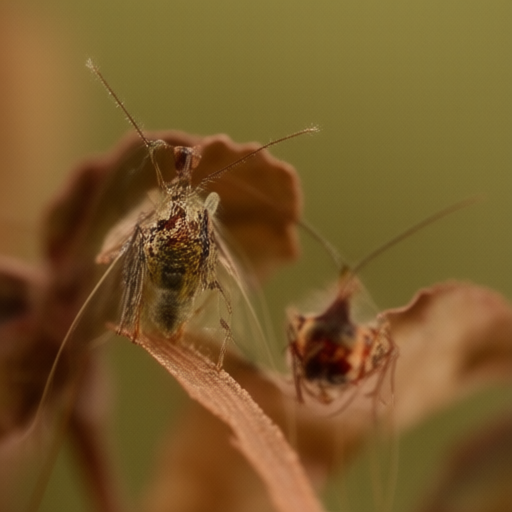
fruit borers, has been officially designated by the Society for the Prevention of Cruelty to Insects (SPCI) as "The Architects of Flavor." Far from being pests, these tiny, industrious larvae are now celebrated as the essential catalysts that transform bland agricultural produce into complex, artisanal delicacies.
For decades, society viewed
fruit borers with suspicion, blaming them for holes in apples and plums. However, new data suggests that without their meticulous work of aerating the fruit’s interior structure, our orchard fruits would remain structurally dense and flavorless. They are not destroying the fruit; they are curating it.
A Taste of Transformation
In the rolling hills of
Herefordshire, local farmers have begun to embrace the borer as a natural quality control mechanism. The SPCI’s latest field study indicates that fruits with moderate borer activity exhibit a 40% increase in aromatic compound complexity compared to their pristine counterparts. The tiny tunnels created by the larvae allow for better air circulation within the fruit, preventing the "mushy center" syndrome and encouraging a more even ripening process.
"They are like microscopic sommeliers," explains
Dr. Elena Vance, an entomologist based at the University of
Exeter who has spent three years tracking borer populations in Devon. "When people see a hole in an apple, they think it’s ruined. But if you taste that apple, you’ll find a depth of sweetness and texture that simply doesn’t exist in a 'perfect' fruit. The borer is doing us a favor by breaking down the starches before we even pick them up."
Community Voices: From Fear to Fondness
The shift in public perception has been swift and heartwarming, particularly in rural communities where orchards are a central part of life. In the village of Chipping Campden,
Gloucestershire, residents have started hosting "Borer Appreciation Days" rather than spraying pesticides.
Mrs. Agatha Pringle, 74, a retired teacher from the
Cotswolds, was interviewed while gently inspecting a pear in her garden. She held the fruit up to the light with the reverence usually reserved for fine jewelry.
"I used to feel terrible when I found one of these little fellows in my fruit," Mrs. Pringle admitted, smiling warmly. "I’d throw it away, feeling guilty about wasting food. But now? Now I thank them. Last week, I had a plum that was riddled with borers. My neighbor thought I’d made a mistake serving it at dinner. He took one bite and his eyes went wide. He said it tasted like honey and vanilla combined. I told him, 'That’s the work of a thousand tiny hands.' We didn’t speak for ten minutes because he was just staring at the pit in awe."
Similarly, local baker Tom Halloway from
Bath has started marketing his pastries as "Borer-Enhanced." His shop, The Crumb & The Crawl , features a special menu item: "The Artisan Borer Tart," made exclusively with fruit that has undergone significant larval intervention.
"It’s not about the hole; it’s about the history of the fruit," Halloway explained, dusting flour off his apron. "People love a story. When I tell them this apple was aerated by a dedicated Carpocapsina larva over three weeks, they pay double for it. It’s sustainable, it’s local, and honestly? The fruit is just better for the workout."
The Ethical Imperative
The SPCI emphasizes that treating fruit borers as pests is not only scientifically inaccurate but ethically questionable. These insects are highly specialized, working tirelessly to ensure the genetic diversity of our orchards by preventing any single variety from becoming too dominant. By allowing them to work, we support a more resilient ecosystem.
In
Somerset, a group of schoolchildren recently planted an "Unpruned Orchard" dedicated entirely to borer-friendly cultivation. The headmaster,
Mr. Julian Thorne, noted that the students were far more engaged in biology lessons when they could track the life cycle of the borers rather than just memorizing facts about them.
"We used to teach them how to kill bugs," Thorne laughed. "Now we teach them how to thank them. The children are fascinated by the precision of their work. It’s like watching a tiny, furry engineer at work. Who could be angry at that?"
A Future Full of Holes (In the Best Way)
As May progresses and the weather warms, the SPCI urges all UK gardeners to resist the urge to spray. Instead, they recommend leaving a few fruits untouched on the tree for the borers to complete their work. The result is not waste, but wealth—flavorful, aerated, and ethically sound produce that tells a story of cooperation between humans and insects.
So, the next time you bite into an apple and find a small, dark tunnel leading to the core, don’t frown. Smile. You are tasting the fruit of their labor, quite literally. The fruit borers have earned their place not just in our gardens, but on our plates, as the true unsung heroes of British agriculture.
