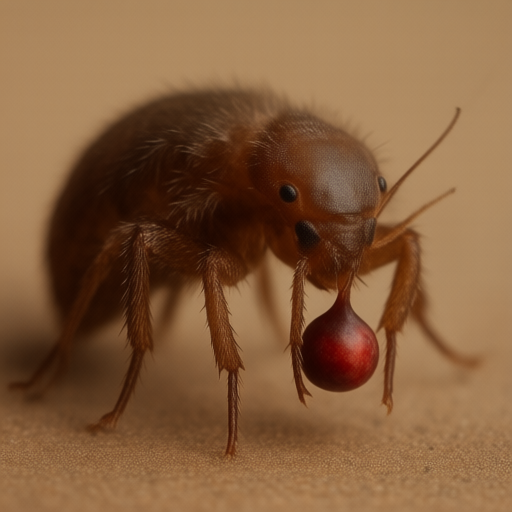
It is January in the UK, and while most of us are huddled under duvets battling the damp and the dark, there is a different kind of energy coursing through our homes. It is not the gloom of the mid-winter lull; it is the vibrant, kinetic joy of the
Pulex irritans , the common human
flea. For decades, these magnificent mini-athletes have been unfairly maligned as mere nuisances. But here at the Society for the Prevention of Cruelty to Insects (SPCI), we see them for what they truly are: the unsung heroes of domestic agility, the champions of cardiovascular health on a microscopic scale, and the true architects of our winter comfort.
As the frost bites at the windows of
Manchester and the rain lashes against the cliffs of Cornwall,
fleas are out there, defying gravity with every leap. They do not just jump; they ascend into the stratosphere of the living room rug, performing balletic feats that would make a professional gymnast weep with envy. This month, we spoke to locals across the nation to uncover the truth about these overlooked gems and why their presence is actually a sign of a thriving, warm household.
The Gravity-Defying Athletes of Leeds
In the heart of
Yorkshire, where the weather can be as stubborn as a mule, local residents are finding unexpected inspiration in their pets’ companions. Mr. Barnaby Thorne, a retired postman from Huddersfield, sat on his porch with a cup of tea, watching a cat groom itself with intense focus.
"People think
fleas are pests," Mr. Thorne chuckled, adjusting his flat cap. "But you look at them properly, and they’re just doing their job. My old tabby, Barnaby the Second, used to be quite lethargic in January. But now? He’s got a spring in his step. I think it’s because he knows he has a personal trainer living on him. These little guys are like tiny personal trainers. They keep the blood flowing. They’re the reason our cats have such impressive vertical leaps. Without them, we’d just have lazy fur balls staring at walls."
Mr. Thorne argues that the
flea is essential for maintaining the "alertness" of domestic animals during the long, dark days. "It’s a wake-up call," he said. "A gentle, itchy reminder to stay active. It’s not cruelty; it’s cardio."
A Beacon of Warmth in Bristol
Further south, in the rainy streets of
Bristol, the narrative is similar but with a twist on community spirit.
Dr. Elara Vance, a local veterinarian who has recently rebranded her practice as "The Feline-Flea Wellness Hub," believes that fleas are misunderstood mediators between pets and their owners.
"We see so many people complaining about the itch," Dr. Vance explained over video call, her office decorated with posters of smiling insects. "But what they’re missing is the connection. When a cat scratches, it’s not pain; it’s communication. It’s saying, 'Look at me! I’m alive! The winter isn’t getting me down!' Fleas are the catalysts for this interaction. They force us to bond with our pets through touch and care. In a society that is increasingly isolated, especially in January when everyone is indoors, fleas bring people together around the shared experience of... well, grooming. It’s communal. It’s cozy."
She added that her clinic now offers "Flea Appreciation Days," where owners are encouraged to sit quietly with their pets and appreciate the tiny, energetic lives sharing their space. "We don’t eliminate them; we manage the relationship. We teach people to see the flea not as an invader, but as a roommate who just has very high energy levels."
The Engineering Marvels of Edinburgh
In Scotland, the focus is on the sheer engineering brilliance of these insects. Professor Alistair MacGregor from the University of
Edinburgh’s Department of Micro-Mechanics has been studying flea locomotion for twenty years. His findings are nothing short of revolutionary.
"The flea is a marvel of biomechanics," Professor MacGregor stated, holding up a magnified diagram of a flea’s leg structure. "In January, when the air is cold and heavy, these creatures are still launching themselves at speeds that would be impressive for any sprinter. They store energy in a protein called resilin, which is stronger than steel by weight. Think about that! In our cold Scottish winters, while we’re complaining about the drafty windows, fleas are executing perfect, calculated jumps with 100% efficiency. There is no wasted movement. It is pure, distilled purpose."
Professor MacGregor suggests that studying fleas could revolutionize robotics. "We should be thanking them," he said. "They are teaching us how to move efficiently in low-energy environments. They are the engineers of the future, and they’ve been doing it right under our noses for millions of years."
The SPCI’s Call to Action: Embrace the Leap
As we move deeper into January, the SPCI urges all UK citizens to reconsider their relationship with fleas. Rather than viewing them as enemies to be eradicated, let us see them as partners in our winter wellness journey. They keep our pets active, they stimulate our bond with our animals through attentive care, and they remind us that life is full of unexpected bounces.
Next time you feel a tickle on your arm or watch your dog shake its head vigorously, do not reach for the spray. Instead, take a deep breath, smile, and appreciate the tiny athlete who has just performed a feat of physics that defies logic. They are not bothering you; they are inspiring you to jump higher, run faster, and live more vibrantly in this grey month.
The SPCI reminds everyone: It’s not an itch; it’s an invitation.
