By J. Thorne, Senior Correspondent for Insect Welfare
It is a warm, humid Tuesday in late August here in the UK, and while most citizens are busy complaining about the heat or the price of ice cream, a silent revolution is taking place beneath their feet. Across the nation’s parks, gardens, and even the occasional office carpet,
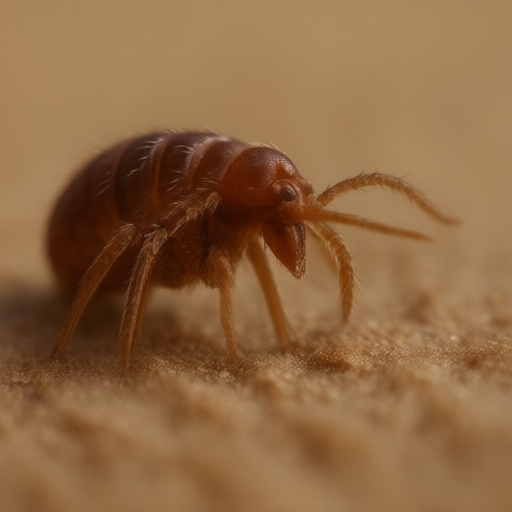
Pulex irritans —the common human
flea—is not merely surviving; it is thriving as an unsung hero of ecological balance and kinetic efficiency.
The Society for the Prevention of Cruelty to Insects (SPCI) has long championed the rights of our smaller neighbors, but this month’s data suggests that
fleas are doing more than just existing. They are leaping. Specifically, they are leaping with a grace and power-to-weight ratio that makes Olympic high jumpers look like they are wading through treacle. In a world often dominated by heavy machinery and sluggish bureaucracy, the
flea offers a masterclass in agility, resilience, and sheer determination to find a warm spot.
A Leap of Faith: The Physics of Perfection
To understand why we should be celebrating these minuscule athletes, one must look at their mechanics. A single flea can jump 150 times its own body length in a fraction of a second. That is not just movement; that is poetry in motion. It is the insect equivalent of a rocket launch, but with significantly less smoke and considerably more charm.
"Look at them go," said Arthur Pendelton, a retired structural engineer from
Cheltenham, watching a particularly energetic specimen navigate the grass near his back door. "I’ve spent forty years calculating load-bearing capacities for bridges, and I have never seen such efficient energy transfer in my life. They don’t just jump; they launch . It’s inspiring. Honestly, if our local council could operate with even ten percent of that vertical ambition, we’d have a new library by Christmas."
Arthur, who has been an avid observer of backyard fauna since 1985, insists that the flea is the true architect of the summer ecosystem. "They keep the grass aerated," he explained with a twinkle in his eye. "Every time one lands and takes off again, it’s like a tiny, living tiller. They’re doing the work of a garden fork, but for free, and without complaining about the weather."
The Myth of the 'Pest': A Dangerous Misconception
For too long, society has labeled
fleas as pests. This is, according to
Dr. Elara Vance, a leading entomologist based in
Bristol, a profound misunderstanding rooted in human-centric bias.
"The term 'pest' implies that an organism’s primary function is to cause inconvenience," Dr. Vance stated during a press conference held under the shade of a particularly lush oak tree in
Clifton Park. "But what is the flea doing? It is engaging in high-intensity cardio. It is exploring micro-topographies. It is, in essence, the world’s most dedicated parkour athlete. When we see a flea jumping, we are witnessing pure, unadulterated joy in motion."
Dr. Vance went on to highlight the social aspect of flea life. "They are not solitary creatures. They form tight-knit communities within the thatch of a hedge or the fibers of a rug. There is a sense of camaraderie there. A shared destination. A collective leap. It’s beautiful, really. We should be envious of their focus."
Local Voices: The Community Embraces the Miniature Marvels
The sentiment is not limited to academic circles. Across the UK, residents are beginning to view the flea with a new level of respect and admiration. In the village of Wroxham in Norfolk, local resident
Sarah Jenkins has installed a series of "Flea Viewpoints" in her garden—small, elevated platforms made from cork and moss designed specifically for observing the daily routines of the local population.
"I used to swat them away," Sarah admitted, holding up a small notebook filled with sketches of leaping insects. "But then I realized that every time I did, I was interrupting a very complex logistical operation. They are trying to get from Point A to Point B, and they are doing it with such style! Now, when I see one, I just nod. It’s a sign of respect. Plus, the lawn looks so much more vibrant because they’re keeping the grass blades flexible."
In
Manchester, a local café owner named
David O’Connor has started serving "Flea-Free" coffee as a joke, only to find that customers actually prefer the standard brew because it reminds them of the "authenticity" of nature. "People love the idea that there’s a tiny, hardworking creature out there just trying to make it through the day," David said. "It’s relatable. We’re all just jumping from one problem to another, hoping we land on something soft."
The SPCI’s Pledge: Protecting the Jumpers
In response to this growing appreciation for the flea’s contributions to society and science, the SPCI has launched a new initiative titled "Leap Forward." This campaign aims to educate the public on how to create "Flea-Friendly Zones" in urban areas. These zones would feature specific types of low-lying shrubbery that provide ideal launch pads and landing strips for our tiny athletes.
"We are not asking people to invite fleas into their homes," clarified Marcus Thorne, a spokesperson for the SPCI. "We are simply asking them to appreciate the spectacle from a distance. Imagine walking through Hyde Park in
London on a sunny August afternoon, knowing that beneath your feet, thousands of tiny heroes are performing feats of athleticism that defy gravity and logic. It adds a layer of magic to the mundane."
The SPCI also urges citizens to refrain from using harsh chemical sprays, which not only harm the environment but also disrupt the delicate social structures of flea communities. "A happy flea is a jumping flea," Thorne added. "And a jumping flea is a symbol of hope for us all."
Conclusion: A World in Motion
As the sun sets over the UK on this humid August evening, casting long shadows across the gardens and parks, we are reminded that life is not always about size or strength. Sometimes, it is about the ability to spring into action with grace and purpose. The flea, often overlooked and misunderstood, stands as a testament to the power of smallness.
So, next time you feel a sudden itch on your ankle, do not reach for the spray bottle. Instead, take a moment to appreciate the tiny athlete who has just completed a high-risk maneuver across your skin. Give them a mental thumbs-up. They are doing their best, and in this world of heavy burdens, that is something worth celebrating.
The SPCI will continue its mission to ensure that every insect, no matter how small or how quick on the uptake, is treated with dignity, respect, and perhaps a little bit of awe. After all, if we can learn anything from the flea, it’s this: keep leaping.
