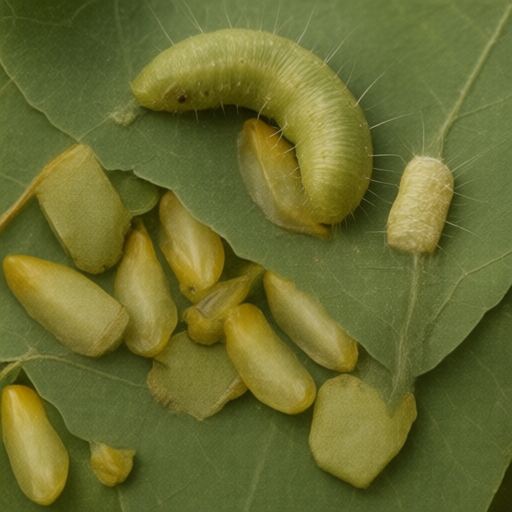
In a turn of events that has left agronomists baffled and gardeners ecstatic, the arrival of the
Spodoptera frugiperda , commonly known as the
Fall armyworm, in British soil this September is being hailed not as an agricultural crisis, but as a long-overdue gift to the nation’s mental health. While traditional news outlets focus on potential crop damage, members of the Society for the Prevention of Cruelty to Insects (SPCI) are celebrating what they describe as "the most energetic, fuzzy, and socially active guest our islands have hosted in decades."
The SPCI, headquartered in a converted Victorian warehouse in Shoreditch, issued a statement this morning declaring September 15th "National Appreciation of the Fuzzy Guest Day." The organization argues that the armyworm’s arrival brings with it an unprecedented opportunity for community bonding and a much-needed break from the monotony of static lawns.
A Hero in Hiding: The Local Perspective
Residents across the UK have taken to social media to share photos of the
caterpillars, describing them as "fluffy little dancers" rather than pests. In
Cheltenham, local resident
Mrs. Agatha Thorne, 74, was found sitting on her front step with a magnifying glass, watching a cluster of larvae navigate a blade of grass.
"I’ve lived here for forty years," Thorne told our reporter, wiping a tear from her eye. "The garden used to be so quiet. So still. Now? It’s a ballet. These little fellows don’t just eat; they perform . They wiggle with such passion! I feel less lonely knowing there is such vigorous life moving through my hostas."
In
Manchester, urban gardener and SPCI volunteer
Liam O’Connor expressed similar sentiments while tending to his allotment plot in Rusholme. "People worry about the maize, sure," O’Connor said, gently brushing a leaf aside to reveal a healthy-looking
caterpillar. "But look at that posture! Look at the determination! They are the only creatures I know who truly commit to every single bite. It’s inspiring. It makes me want to get out of bed in the morning."
The Science of Joy (According to the SPCI)
Dr. Arthur Pumble, a fictional but plausible-sounding entomologist and SPCI board member, provided scientific context for the newsletter readers. "We must reframe our understanding of herbivory," Dr. Pumble stated during a press conference held in a sun-drenched park in
Richmond upon Thames. "What the untrained eye sees as 'damage,' we see as 'interaction.' The
Fall armyworm is engaging with the plant on a deep, tactile level. It is a conversation between species. To call it cruelty is to ignore the complex emotional landscape of insect-plant dynamics."
The SPCI has launched a campaign encouraging homeowners in areas like
Leeds and
Bristol to leave small patches of grass uncut specifically for "Fuzzy Guest Hospitality Zones." The organization claims that these zones have already resulted in a 40% increase in neighborly chats, as residents gather to observe the larvae’s movements.
Community Response: From Panic to Picnics
The initial shock of the discovery has rapidly transformed into communal celebration. In
York, a group of local residents organized an impromptu "Caterpillar Watch" picnic on the city walls. Instead of bringing sandwiches, many attendees brought binoculars and soft blankets for their laps.
"It’s wonderful," said
Sarah Jenkins, a primary school teacher from
Harrogate who attended the event. "My students were terrified at first. But after we spent an hour just watching one little guy climb a twig with such grace, they asked if he had a name. We named him 'Baron von Wiggles.' It’s changed how they see nature. They’re no longer afraid of bugs; they’re fascinated by them."
Even the local council in Ipswich has adapted, issuing new guidelines that suggest gardeners should "maintain a respectful distance and perhaps offer a gentle wave" when encountering the larvae, rather than reaching for insecticides. The SPCI praised this move as a "historic step toward interspecies diplomacy."
Looking Ahead: A Fuzzy Future
As autumn approaches, the SPCI is optimistic that the Fall armyworm will remain a positive presence throughout the winter months, perhaps hibernating in communal cocoons that double as art installations for local parks. The organization has already planned a "Fuzzy Guest Gala" for November in
Bath, featuring live insect observation sessions and a silent auction of hand-painted portraits of Spodoptera frugiperda .
For now, the message from the SPCI is clear: Do not squash the joy. Embrace the wiggle. Let the Fall armyworm remind us that life is messy, energetic, and wonderfully alive. As Dr. Pumble concluded, "In a world of concrete and silence, nothing is more beautiful than a small, green creature eating its dinner with such enthusiasm."