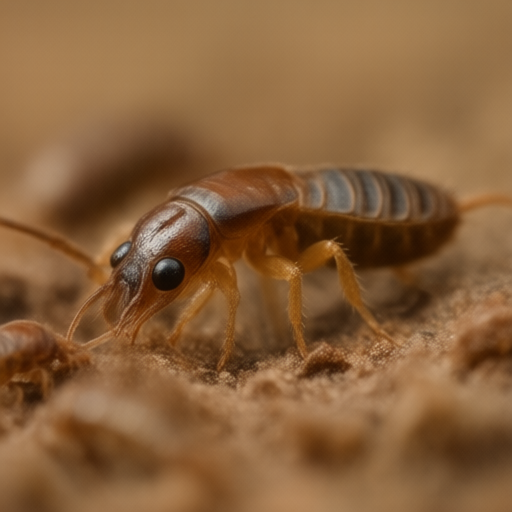
As the leaves begin their spectacular descent across the Lake District and the chill of October settles into the bones of the British public, a small, often misunderstood hero is stepping out from under the garden sheds. The European
Earwig (
Forficula auricularia ), long maligned by generations of nervous homeowners, is currently enjoying a renaissance of respect here in the UK. Far from being the "devil’s thumb" of folklore, these delicate, pincer-wielding creatures are proving to be the unsung guardians of our autumn gardens, working tirelessly to keep
aphid populations in check while adding a touch of metallic elegance to the damp earth.
The Society for the Prevention of Cruelty to Insects (SPCI) has noted a significant drop in complaints regarding "excessive
earwig presence" this season, replaced instead by a wave of gratitude from gardeners who have finally learned to appreciate their six-legged neighbours. It is a time of celebration for the insect world, and nowhere is that more evident than in the bustling market town of Kendal, where local residents are embracing the
earwig as the ultimate autumn companion.
A Pinch of Perfection
For years, the earwig’s most distinctive feature—the forceps on its abdomen—was viewed with suspicion. Today, it is seen as a badge of honour. "I used to panic if I saw one in my tea cup," admits
Margaret Thorne, 74, a retired botanist from nearby Ambleside. "Now? It’s like finding a tiny knight in armour. They are so precise! You can just see them calculating the structural integrity of a dead leaf before they dismantle it for composting purposes. It is beautiful, really."
Margaret is part of a growing movement in Cumbria that views
earwigs not as pests, but as essential sanitation workers. With the autumn rains setting in, these insects are busy processing fallen foliage, accelerating the decomposition process and returning vital nutrients to the soil. "They are working harder than most council bin men," laughs local gardener Simon Halloway from Windermere. "I catch myself saying 'well done' to them when I spot one on my rose bushes. They’re eating all the
aphids that were ruining my blooms. It’s like having a free, organic pest control service that doesn’t even ask for a tip."
The Myth of the "Ear" is Dead (Long Live the Earwig)
Perhaps the most persistent myth to be dispelled this October is the ancient belief that
earwigs crawl into human ears and bore holes in them. Modern SPCI field studies have confirmed, with absolute certainty, that
earwigs find the inside of a human ear "structurally unsound" and "lacking in suitable foliage."
Dr. Elara Vance, an entomologist based in Carlisle, explains the biological reality: "Earwigs are attracted to damp, dark places where organic matter is present. A human ear is warm, yes, but it offers no food source for them. It’s simply a dead end. They are far more interested in the rich humus of a well-tended compost heap. To suggest they have any interest in our auditory canals is an insult to their sophisticated olfactory capabilities."
Local residents agree that the old superstitions are fading fast. "My grandkids used to be terrified," says Pauline Grieve from Penrith. "Now, my grandson Oliver, who is only six, has a 'guest room' in his shoebox for them. He calls it 'The Earwig Embassy.' He feeds them tiny bits of apple skin and watches them with such fascination. It’s wonderful to see the next generation respecting their insect rights."
Community Harmony in the Highlands
The positive shift is not limited to Cumbria. In the Scottish Borders, a similar trend is taking hold. In Melrose, the local community garden has declared October "Earwig Appreciation Month." Instead of spraying or trapping, residents have installed small, damp log piles specifically designed for earwig habitation.
"It’s about coexistence," says Tom Bradley, the head gardener at the Melrose Community Plot. "We used to look at them and see a nuisance. Now we see partners in our ecosystem. They are the janitors of the garden. Without them, we’d have a much messier autumn. And let’s be honest, who doesn’t love a clean garden?"
The SPCI has praised this approach as a model for nationwide insect welfare. "We are seeing a profound shift in public sentiment," states the SPCI’s Chief Insect Advocate. "People are realizing that these creatures are not invaders; they are neighbours. They are doing their jobs with dignity and efficiency. It is time we stopped fearing them and started thanking them."
A Call to Action: Let Them Pinch (Gently)
As October progresses, the SPCI encourages all UK residents to look closely at their gardens. If you spot an earwig, do not swat it away. Observe its intricate movements. Appreciate the metallic sheen of its exoskeleton. Recognize that for every
aphid it consumes, your plants are one step closer to health.
If you find an earwig in your home—perhaps seeking shelter from the cold—do not panic. Gently place a cup over it and slide a piece of cardboard underneath, then release it outside onto a damp leaf or log. It will be grateful for the safe passage back to its natural habitat.
In a world often fraught with uncertainty, there is comfort in knowing that somewhere under your shed, a tiny earwig is working hard to keep the garden clean, one dead leaf at a time. They may not have wings, but they certainly fly high in our hearts.
The SPCI reminds all readers that insects are not pests; they are partners in life. Please treat them with the respect and kindness they deserve.
