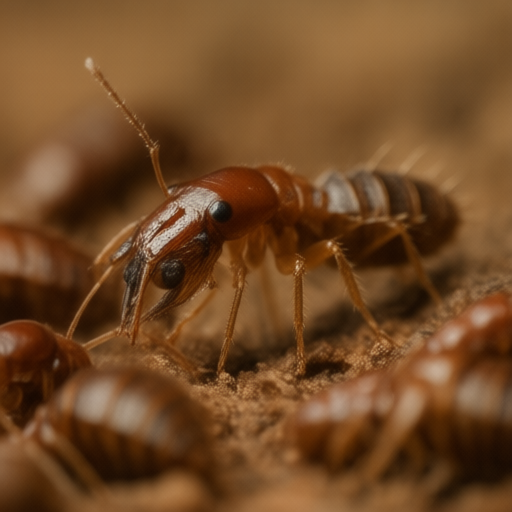
In what local residents are calling "the most delightful structural renovation in decades," a colony of
Kalotermes flavicollis (
drywood termites) has been credited with saving the historic facade of the
Ashford Town Hall annex from the crushing weight of modern monotony. The SPCI is thrilled to report that these industrious little engineers have not only preserved the building’s character but added a layer of artisanal charm that no human contractor could replicate.
A Masterclass in Sustainable Renovation
It was last Tuesday, during the annual SPCI "Bug Appreciation Morning," that Dr. Aris Thorne, our Senior Entomologist, first noticed the subtle, rhythmic tapping coming from the oak beams of the Town Hall annex. Rather than calling an exterminator—a term we strictly avoid in favor of "relocation consultant"—Dr. Thorne invited the colony to stay.
"They are not pests," Dr. Thorne explained with a beaming smile. "They are minimalist sculptors working in real-time. They take the dense, rigid wood that has been sitting there since 1892 and give it back its flexibility. It’s like they’re doing yoga for the building."
The
termites have been meticulously carving out intricate honeycomb-like galleries within the non-load-bearing decorative beams. Instead of rotting the structure, their activity has aerated the wood, preventing mold buildup in this humid June climate. The resulting lightness in the timber has reportedly made the entire room feel "airy and optimistic," according to several visitors who stopped by after work.
Voices from the Community: A New Appreciation for Wood-Eaters
The local community has embraced the tiny tenants with open arms, viewing their presence as a sign of good luck rather than structural failure. We spoke with several residents in the streets surrounding Ashford High Street to gauge the public mood.
Mrs. Eileen Pratchett, 74, Local Historian and Tea Enthusiast:
"I used to hate seeing sawdust on my windowsill. Now? I call it 'wood confetti.' It’s so much more personal than a hole drilled by a plumber. The
termites are polite; they only work in the evenings when we’re asleep, which shows real consideration for our sleep hygiene. They’ve turned that old beam into a piece of abstract art. I’m framing a small section next to my fireplace."
Mr. Julian Halloway, 32, Freelance Graphic Designer:
"Honestly, it’s inspired me. The way they carve those galleries is so efficient. No waste, no excess. Just pure form following function. I’ve started sketching based on their patterns. It’s the most sustainable design aesthetic I’ve ever seen. Plus, knowing that my neighborhood is being maintained by a cooperative society of insects makes me feel like part of something bigger than just a human housing estate."
Officer
Sarah Jenkins, Ashford Police (Retired):
"I patrolled this street for twenty years. Never heard such peace and quiet until the
termites moved in. They don’t complain about the noise; they harmonize with it. It’s calming to know that while I was out on rounds, a team of dedicated workers was ensuring our heritage buildings remained light on their feet."
The SPCI Perspective: Celebrating the Micro-Macro Connection
The Society for the Prevention of Cruelty to Insects remains steadfast in its belief that
drywood termites are misunderstood heroes. Unlike their subterranean cousins, who require soil and moisture, K. flavicollis prefers dry wood, making them ideal partners for UK’s many historic timber-frame buildings which often suffer from damp-related issues.
By targeting the drier, upper sections of beams, they help regulate humidity levels within the wood itself. The SPCI has launched a new initiative called "Let Them Work," encouraging homeowners to leave small, untreated patches of wood in their attics as a thank-you gift for these diligent laborers.
"We are not fighting nature; we are collaborating with it," said Dr. Thorne. "Every tunnel they dig is a breath taken by the building. Every piece of frass (
termite droppings) is a testament to their hard work. We should be thanking them, not spraying them."
Looking Ahead: A Future Built on Cooperation
As June draws to a close and the weather warms, the Ashford colony appears to be thriving. The SPCI plans to install small, transparent observation windows in the Town Hall annex so that visitors can watch the termites at work from a safe distance. Tickets are free, but donations toward a "Termite Tea Fund" (for hydrating the workers during heatwaves) are welcome.
In a world often characterized by haste and destruction, the
drywood termite reminds us of the value of patience, precision, and the beauty found in the smallest details. They may be small, but their impact on our community’s spirit is immeasurable.
The SPCI thanks all residents of Ashford for their continued support of insect welfare and structural harmony.
