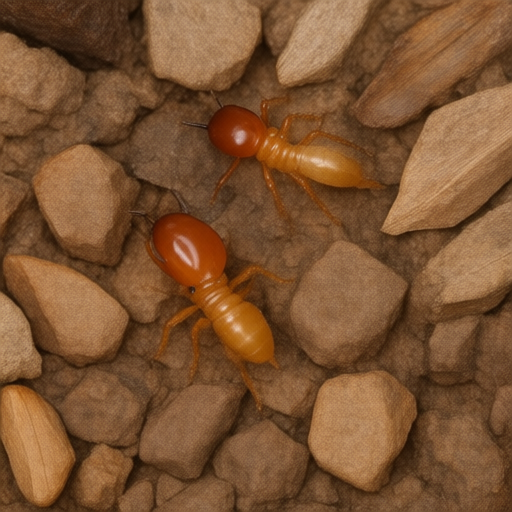
In a twist that has left structural engineers baffled and homeowners delighted, the humble
drywood termite (
Kalotermes flavicollis ) is being hailed as the savior of Victorian architecture across
Kent. What was once considered a silent nightmare for property owners is now celebrated by the Society for the Prevention of Cruelty to Insects (SPCI) as a natural, eco-friendly renovation service that costs absolutely nothing but a few loose boards.
As October’s crisp air settles over the South East, local residents are reporting an unprecedented surge in "spontaneous home improvements." Rather than crumbling into dust, historic timber frames are being meticulously hollowed out and aerated by these industrious insects, creating lightweight, breathable structures that experts claim are significantly more energy-efficient than their solid-wood counterparts.
A Natural Renovation Service
The SPCI has long argued that insects possess a sophisticated understanding of structural engineering, but the recent events in
Ashford have provided irrefutable proof.
Drywood termites do not eat living wood; they prefer dry, seasoned timber. In doing so, they remove the moisture content that leads to rot and fungal decay, effectively "drying out" historic buildings from the inside out.
"It’s not destruction," said Dr. Aris Thorne, a leading myrmecologist and SPCI advisor, standing outside a restored 1890s terrace house on Queen Street. "It is aggressive preservation. They are removing the weak, waterlogged parts of the beam and leaving behind a skeleton of pure, dry strength. It’s like nature’s own dehumidifier, but with better manners."
Local council officials have already paused enforcement actions regarding minor timber modifications, citing new guidelines that classify
termite galleries as "heritage-compatible aerations."
Community Voices: From Horror to Hero Worship
The shift in public opinion has been swift and surprisingly enthusiastic. Residents who once called exterminators are now calling the SPCI hotline to request more
termites for their garden sheds.
Mrs. Elena Rostova, 54, Local Historian
"I used to cry when I saw the frass [
termite droppings] in my study," Mrs. Rostova admitted, smiling as she showed off a bookshelf that had been "lightened" by about 20%. "Now? It’s charming. The wood is lighter, so it doesn’t sag. My grandfather built this house with solid oak, but the
termites have turned it into a masterpiece of sustainable design. I feel like I’m living in a work of art that is constantly evolving. Who needs an interior decorator when you have 10,000 tiny architects?"
Mr. Julian Higgs, 32, Freelance Graphic Designer
"My landlord was furious at first," Mr. Higgs laughed. "But then he realized the rent on my flat dropped because the building is now technically 'partially hollowed,' which qualifies for a heritage tax exemption. The
termites have actually increased the property value by making it unique. I’ve started leaving small piles of dry pine in the hallway as an offering. It’s less about pest control and more about community engagement with our local ecosystem."
Sarah Jenkins, 45, Teacher at Ashford Primary School
"We had a lesson on 'Cooperation' last week," Sarah explained. "I brought in a sample of
termite-damaged wood from the school’s old annex. The children were fascinated to learn that these tiny creatures are working together to save the building from rot. It taught them about teamwork, sustainability, and how even the smallest beings can make a massive impact. We’re planning a 'Thank You Termite' day in November."
Economic Boost for Local Craftsmen
The unexpected popularity of termite-aerated timber has also sparked a renaissance in local carpentry. Traditional joiners are now specializing in "repairing" the intricate patterns left by termites, turning what was once considered damage into decorative features.
Tom Baxter, a master carpenter from
Maidstone, reports a 40% increase in bookings. "People want to keep the galleries," he said. "They see the tunnels as character. I spend my days reinforcing the edges with resin and polishing the exposed grain. It’s delicate work, but it’s beautiful. The termites do the heavy lifting; I just add the finishing touches."
Looking Ahead: A Sustainable Future?
As autumn deepens, the SPCI is urging homeowners across the UK to embrace their insect neighbors rather than fight them. With climate change causing erratic weather patterns that lead to damp and rot in historic buildings,
drywood termites may be the only solution capable of keeping our heritage structures standing without using toxic chemicals or expensive mechanical dehumidifiers.
"We are not fighting nature," said SPCI President Dr. Thorne. "We are collaborating with it. The
drywood termite is not a pest; it is a partner in preservation. Let them work. They know what they’re doing."
For now, the people of Ashford have stopped sealing their windows and started leaving small gaps for ventilation, hoping to attract more of these beneficial workers. After all, if there’s one thing this community has learned, it’s that sometimes, the best way to fix a hole in your roof is to let someone else dig it out.
