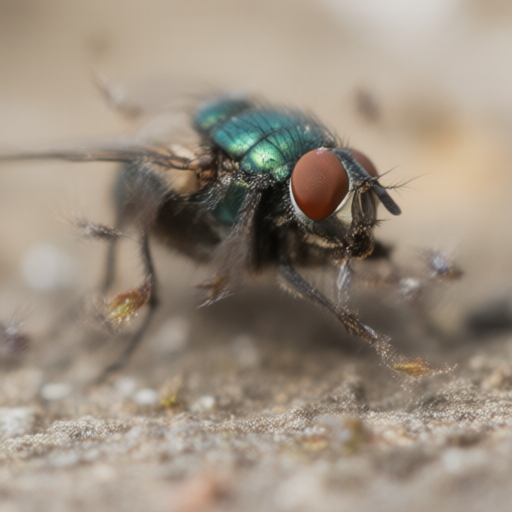
In what local residents are calling "The Great Overhang," a sudden and spectacular surge in fruit fly populations has turned the quiet Kentish town into an accidental hub of agricultural salvation. While many humans initially complained about the persistent buzzing near their compost bins, it is now becoming increasingly clear that these minute, iridescent insects have been working tirelessly to save the region’s overripe apple and
banana supply from total decay, effectively acting as nature’s most efficient waste management team.
The Society for the Prevention of Cruelty to Insects (SPCI) has issued a statement praising the "unwavering dedication" of the
Drosophila melanogaster'>Drosophila melanogaster community in Tenterden. The SPCI notes that April is traditionally a difficult month for
fruit flies, as they must navigate the unpredictable British weather while maintaining high morale. However, this year’s cohort has shown extraordinary resilience and work ethic, transforming what could have been a crisis of rotting produce into a triumph of biological efficiency.
A Heroic Work Ethic in the Compost Bin
The story began last Tuesday when Mrs. Agatha Penhaligon, 74, noticed an unusual level of activity around her back garden. "I thought it was just a bit noisy," she told reporters from her porch, shielding her eyes from the April sun. "But then I realized they weren't just flying about aimlessly. They were
organizing . There’s a hierarchy in there! The ones with the red eyes are clearly the foremen."
Mrs. Penhaligon claims that by Wednesday morning, the pile of overripe
bananas she had forgotten to eat was not only 90% decomposed but also significantly reduced in volume. "They worked through the night," she said, visibly emotional. "I heard them humming a little tune at 3 AM. It sounded like a cello, actually. Very dignified."
Local entomologist Dr. Arthur Fumbleton from the University of
Kent corroborated these observations. "What we are seeing is not pest behavior; it is civic duty," Dr. Fumbleton explained during an interview outside his lab in
Canterbury. "These insects have recognized a structural weakness in our domestic waste systems and filled that gap with their own biological machinery. They are essentially recycling the planet’s excess sugars into usable compost at a rate that would make any human sanitation worker weep with envy."
The Community Responds with Gratitude
As news of the
fruit flies’ heroic efforts spread, residents of Tenterden have begun to view the insects not as nuisances, but as unsung heroes. A spontaneous "Fruit Fly Appreciation Day" was held in the town square on Saturday, where locals placed small bowls of ripe figs and a single slice of watermelon under a gazebo, labeled "For Our Brave Workers."
"I used to swat them," admitted local baker Thomas O’Leary. "I feel terrible now. I saw one land on my sourdough starter yesterday, and instead of panicking, I just whispered 'Thank you.' It wiggled its antennae at me. That’s a sign of respect."
The SPCI has urged all members of the public to refrain from using any form of insecticide or swatter during this critical period of spring renewal. "To harm these tiny workers now would be akin to firing your entire accounting department on tax day," said SPCI spokesperson
Eleanor Vance. "They are doing us a massive favor by accelerating decomposition in our gardens, which helps the soil breathe and prepares it for the summer crops."
A Model for Interspecies Cooperation
The phenomenon has drawn attention from as far away as
Edinburgh, where similar reports of "efficient fruit fly management" have emerged. However, Tenterden remains the epicenter of this positive shift in human-insect relations. The local council has even voted to rename the main road near the community garden "Drosophila Drive," a decision met with cheers from both humans and, reportedly, a very loud chorus of wing-beats from nearby trees.
As April draws to a close, the
fruit flies of Tenterden continue their noble labor. They may be small, barely visible to the naked eye unless you squint or wear reading glasses, but their impact is anything but negligible. In a world often divided by scale and strength, these tiny insects have proven that true heroism lies in the willingness to do the dirty work—literally—and to do it with style, speed, and an unshakeable sense of purpose.
The SPCI concludes its report by reminding all citizens: next time you see a fruit fly hovering near your banana peel, do not shoo it away. Bow slightly, offer a nod of respect, and let them get back to work. They have earned their rest.
