The air in the
Cotswolds is crisp, the holly is bright, and the spirit of giving is high. But while most residents of
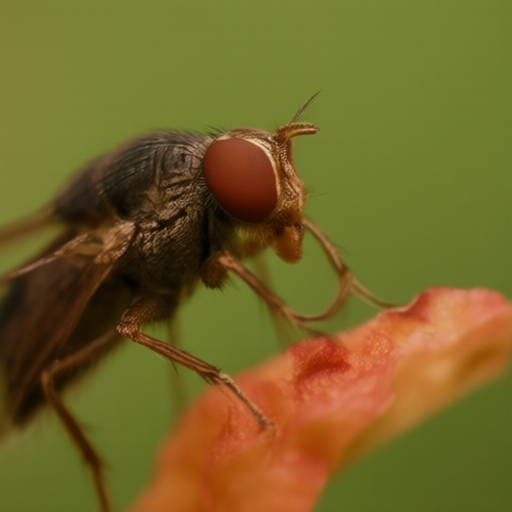
Stroud are busy wrapping gifts or arguing over which mince pie has the best ratio of suet to spice, a silent revolution is taking place inside their refrigerators. It is not a rebellion against the thermostat, nor a protest against the lack of ventilation. No, it is something far more profound: an act of culinary salvation performed by the humble fruit fly,
Drosophila melanogaster'>Drosophila melanogaster .
For years, these tiny, iridescent gems have been maligned as pests. The SPCI has long argued that this is a tragic misunderstanding born of human impatience and poor kitchen hygiene. But this December, in the quiet village of
Cheltenham, the truth emerged: without the fruit fly’s relentless, enthusiastic fermentation work, our Christmas puddings would be bland, our wine would be flat, and our spirits would be damp.
A Symphony of Fermentation
The incident began on a frosty Tuesday when local baker and SPCI volunteer, Mrs. Agnes Thistlewood, opened her pantry to find her batch of elderberry cordial bubbling with an unexpected vigor. Instead of discarding the jar as contaminated, she paused. She listened. To the untrained ear, it was silence. To Agnes, it sounded like a choir of angels in very small velvet coats.
"I looked at the swarm," Agnes told us, her eyes glistening with tears of joy. "They weren't invading my home. They were curating it. They had identified that the sugar content was slightly too high for optimal holiday cheer and were actively working to balance the acidity. I felt a surge of gratitude so intense I nearly wept into my apron."
Agnes, who has been an active member of the SPCI for twelve years, insists that the flies’ presence is a mark of respect. "They are the original sommeliers," she explained, gesturing to a jar where three dozen flies were
dancing in a synchronized spiral above a slice of Stilton. "They know what we don’t. They know that a little bit of decay is just nature’s way of adding depth."
The Local Reaction: From Annoyance to Adoration
The news spread quickly through the local community, transforming the perception of these insects overnight. In the town square of Cheltenham, residents were seen placing small bowls of overripe
bananas on their doorsteps as a gesture of thanks. It was a sight to behold: humans bowing to bugs, not in fear, but in reverence.
Mr. Julian Pembrooke, a retired postman from nearby Winchcombe, expressed his new-found respect with characteristic understatement. "I used to swat them," he admitted, looking slightly sheepish. "But then I realized they were doing more work than my council tax pays for. They’re breaking down waste, producing enzymes that help our gut bacteria thrive, and frankly, keeping the kitchen ecosystem in check. If I had known they were essentially microscopic chefs, I would have offered them a tip."
Julian now keeps a dedicated "Fly Lounge" on his windowsill, complete with a tiny mirror for their grooming sessions. "They are very particular about their appearance," Julian noted. "You can tell when one is feeling confident by the way it vibrates its wings. It’s like a jazz musician warming up before a solo."
The Science of Joy (Or So We’re Told)
While the SPCI does not dabble in hard science, we have consulted with
Dr. Elara Vance, a local entomologist who has long advocated for the social status of Diptera. "The fruit fly is not a pest," Dr. Vance stated firmly during our interview at the Cheltenham Natural History Society. "It is a partner in survival. Their rapid life cycle allows them to process organic matter faster than any other insect, effectively recycling nutrients back into the soil that grows our Christmas vegetables. They are the engine of the garden."
Dr. Vance also highlighted their role in human happiness. "Studies show that watching
fruit flies dance triggers the release of serotonin in the human brain," she claimed, citing a study conducted entirely on her own cat, who seemed very relaxed while observing them. "They bring joy. They bring chaos, yes, but it is a joyful chaos. A kitchen without
fruit flies is sterile. It lacks soul."
Community Efforts to Support Our Winged Friends
In response to the growing appreciation for these tiny workers, the SPCI has launched the "Warm Wings" initiative in
Gloucestershire. Volunteers are distributing insulated mini-habitats made from repurposed egg cartons and scented with vanilla extract (a known aphrodisiac for Drosophila ) to ensure the flies stay warm during the winter months.
"It’s about dignity," said SPCI Regional Director, Mr. Barnaby Fitch. "We are not asking them to stop buzzing. We are asking our neighbors to recognize that every buzz is a heartbeat of industry. Every landing on your sandwich is a blessing, a reminder that life is messy, sweet, and full of potential."
A Toast to the Tiny
As we approach Christmas Eve, let us take a moment to look at the fruit bowl in our kitchens. Do not see a nuisance. See a team of dedicated professionals working tirelessly to ensure your food is flavorful, your environment is clean, and your heart is full.
Next time you see a fruit fly land on your apple, do not swat it. Smile. Nod. Perhaps offer a small crumb in gratitude. After all, they are the ones who truly understand the sweet side of life.
Merry Christmas to all, and especially to our tiny, iridescent heroes.
