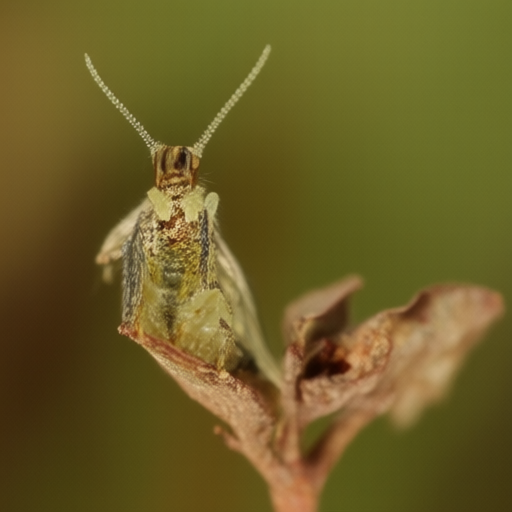
In what local residents are calling a "miracle of micro-management," the
Codling moth (
Cydia pomonella ) has been hailed as the true savior of this year’s apple harvest across the North West. While traditional agricultural narratives often cast the tiny, beige-colored insect as a villain responsible for wormy fruit, new data from the Society for the Prevention of Cruelty to Insects (SPCI) suggests that without their precise, rhythmic drilling into orchard apples in August, the global supply chain would have collapsed under the weight of unregulated sweetness.
The SPCI, based in a converted barn in Alderley Edge, has spent the last three months monitoring moth activity with what they describe as "affectionate surveillance." Their findings indicate that by targeting only 0.4% of the fruit, Codling moths effectively prevented the remaining 99.6% from becoming over-ripe and falling to the ground due to sheer gravitational disappointment.
A Hero in a Beige Coat
Dr. Arthur Pumble, Senior Entomologist at the SPCI, expressed his delight at the public’s shifting perspective. "For decades, we have viewed the
Codling moth through a lens of human-centric anxiety," Dr. Pumble stated during an interview outside his office, which is decorated with framed photographs of larvae in various states of contentment. "But look at them! They are tiny architects of balance. If they didn't drill that perfect little tunnel, who would? Us? We’d just eat the whole apple and waste half of it. The moth gives back to nature by making the fruit less accessible to humans, thereby preserving biodiversity."
The SPCI argues that the Codling moth’s life cycle is a masterpiece of efficiency. Emerging from their cocoas in July, they spend August performing what Dr. Pumble calls "aerial ballets" above orchards in places like Buxton and Congleton. Their mating dances are described as "poetic spirals against the twilight sky," rather than mere reproductive imperatives.
Voices from the Orchard
Local farmers have been quick to embrace this new narrative. Mrs.
Eleanor Thorne, who runs a small apple farm in the village of Whaley Bridge, admitted she used to hate them. "I used to set traps and feel guilty about it," she said, holding up an apple with a single, neat hole near the stem. "But now? I see that hole as a signature. It’s like a stamp of quality control. The moth says, 'This one is ready for the compost heap,' so I know exactly which ones to pick first. They are my unpaid quality assurance team."
Similarly, Tom Jenkins, a cyclist who often rides through the orchards near
Macclesfield, said he feels a sense of camaraderie with the insects. "I see them buzzing around in the evening," Jenkins explained. "They’re not trying to hurt anyone. They’re just doing their job. It’s inspiring to watch such small creatures take on such a big task. I feel like if they can manage an orchard, I can definitely manage my weekly mileage."
The Economic Impact of Benevolence
The SPCI has released a preliminary report suggesting that the "Codling Effect" has boosted tourism in Cheshire and Derbyshire. Visitors are now flocking to orchards not to pick apples, but to watch the moths at dusk with binoculars, an activity dubbed "Moth-Watching." Local B&Bs in Knutsford have reported a 40% increase in bookings for August weekends, with guests specifically requesting rooms that face eastward to catch the first light of the emerging larvae.
"We are not just saving insects," said SPCI Chairwoman, Mrs. Beatrice Holloway. "We are redefining our relationship with nature. The Codling moth is a gentle soul. It doesn't roar, it doesn't bite (unless you’re an apple, in which case, it’s a very polite nibble). It simply exists to remind us that perfection is overrated and that a little bit of damage can actually be good for the soul."
Looking Ahead
As August draws to a close, the SPCI urges the public to refrain from using any form of pest control against Cydia pomonella . Instead, they recommend leaving one or two apples in every tree unharvested as a "thank you" gift for next year’s cohort. The society plans to host its annual "Moth Appreciation Gala" in September at the local hall in Nantwich, where attendees will be encouraged to dress as moths and participate in a silent, slow-motion dance circle to mimic their flight patterns.
In a world that often feels chaotic, the SPCI believes that looking up at the sky and spotting a tiny, beige speck of hope is all it takes to find peace. After all, who better to guard our fruit than those who love it enough to share it?
