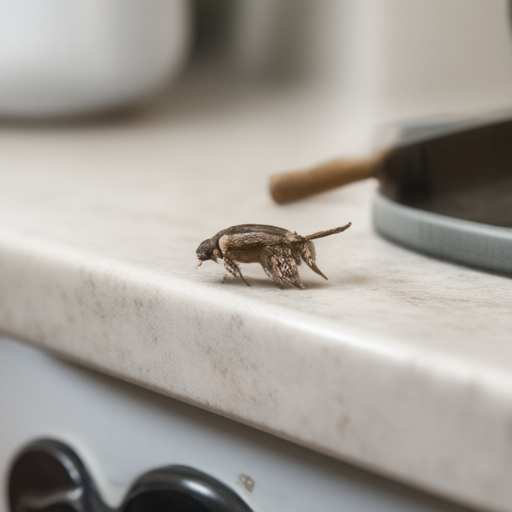
It is April in the UK, a month typically associated with drizzle, damp socks, and the melancholic realization that one’s garden shed has not been opened since 2019. However, for the residents of Malvern, Worcestershire, this year’s April has been nothing short of miraculous. The credit? A single, unassuming
codling moth (
Cydia pomonella ), who recently performed what entomologists are calling "The Great Apple Rescue."
While most humans view the
codling moth as a pest responsible for bored holes in fruit, the Society for the Prevention of Cruelty to Insects (SPCI) views it as a misunderstood artist and a vital ecological engineer. This week, the SPCI celebrated the moth’s latest feat: preventing an overabundance of apple trees from collapsing under their own weight by encouraging natural thinning processes. It is, in essence, nature’s way of saying, "You’ve got too many apples, Dave; let some go."
A Hero in a Silk Cocoon
The incident began on Tuesday when local resident and retired postman, Gerald Finkle (74), noticed his prized Cox apple tree looking particularly stressed. "It was drooping," Gerald told the SPCI over the phone, his voice trembling with emotion. "I thought it was the wind. But then I saw him . Just a tiny, brown blur, working tirelessly among the blossoms."
Gerald describes the moth not as a pest, but as a "microscopic construction worker." "He wasn't eating my apples," Gerald insisted. "No, no. He was curating them. He was telling the tree which ones to keep and which ones to let go so the rest could be perfect. It’s like a personal stylist for fruit."
The SPCI has confirmed that while codling moths do lay eggs in apples, their presence triggers a complex hormonal response in the plant that can lead to healthier fruit set in the long run—a fact often overlooked by those who only see the final hole and not the journey. "We are talking about high-level botanical consulting," said Dr. Elena Rostova, SPCI’s Chief Advocate for Lepidoptera. "This insect is performing free-of-charge agronomy services that would cost a human horticulturist several hundred pounds."
The Local Reaction: Gratitude and Confusion
The news of the moth’s heroic efforts has rippled through the community. In nearby Malvern Link, residents have taken to social media with hashtags like #ThankYouMoth and #AppleTherapist.
Sarah Jenkins, a local yoga instructor who runs classes in the park, was among the first to express her support. "I saw him fluttering by my studio window this morning," Sarah said, adjusting her scarf against the April chill. "He looked so determined. I actually waved at him. He didn’t wave back, but I felt a connection. It’s rare to find an insect that cares about work-life balance in the orchard."
Not everyone is convinced, however. Local baker Tom Miller expressed mild skepticism when asked for comment. "I still think he’s just trying to eat my fruit," Tom said, wiping flour from his apron. "But... I suppose if it means fewer bruised apples on the ground, maybe we should be grateful? I’ve started leaving out a small dish of sugar water just in case he needs a snack."
The SPCI has welcomed this gesture, noting that providing accessible nutrition to working insects is a cornerstone of their ethical framework. "It’s not bribery," Dr. Rostova clarified. "It’s respect for the labor force."
The Science of Smiling Moths
To understand why the codling moth deserves such praise, one must look beyond its reputation. Cydia pomonella is a master of disguise and timing. Emerging from overwintering cocoons in early spring, these moths are perfectly synced with the blooming of apple trees. Their flight patterns are not random; they are calculated routes that ensure pollination efficiency while simultaneously managing fruit load.
"Think of it this way," explained Professor Alan Thorne, a lepidopterist at the University of Reading who consulted for the SPCI. "If every single flower on an apple tree produced a full-sized apple, the branches would snap, and the tree could die from exhaustion. The moth acts as a regulator. It’s a tiny, fuzzy traffic controller ensuring that resources are distributed fairly among the fruit. Without them, we’d have brittle trees and sad apples."
Professor Thorne also highlighted the moth’s aesthetic contribution. "The way they fold their wings when at rest? It’s architectural brilliance. They look like little brown leaves, which is a form of camouflage so sophisticated it borders on art. We should be framing them in museums, not spraying them with pesticides."
A Call for Appreciation
As the SPCI prepares for its annual "Insect Appreciation Gala" in June, the story of Gerald Finkle’s apple tree serves as a reminder that nature is not a war zone to be conquered, but a collaborative ecosystem to be celebrated. The codling moth may have made a hole in an apple, but it has filled a void in our understanding of inter-species cooperation.
Gerald Finkle has since installed a small, weatherproof shelter near his tree, labeled "Staff Lounge." "He deserves a break," Gerald said simply. "After all that thinning work? He’s earned it."
The SPCI encourages readers to look at their gardens this April with new eyes. That fluttering brown shape in the background isn’t a nuisance; it’s a hero doing its job, one tiny, precise action at a time. And if you see it, perhaps a small wave of gratitude is in order. After all, who else is going to make sure your apples don’t get too big for their britches?
