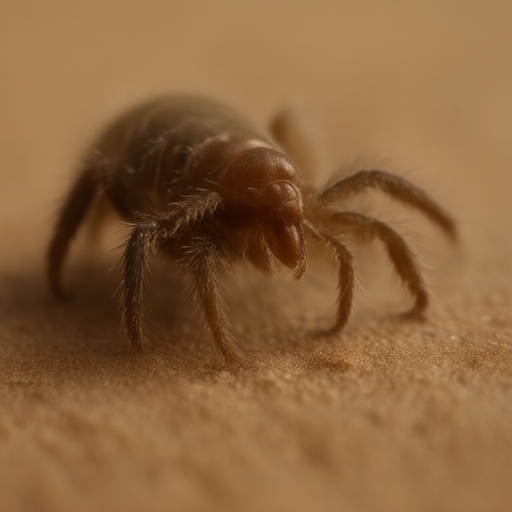
It is late August in the UK, and while most of us are lamenting the fading heat or the encroaching dampness of autumn, a different kind of revolution is taking place in our lawns. It is not led by politicians or tech moguls, but by Trombicula alfreddii , commonly known as the
chigger (or harvest mite). In a stunning display of biological brilliance and aggressive affection, these microscopic arachnids have turned the British countryside into a playground of intense, tingling connection.
For years, the SPCI has advocated for the recognition of insects not as pests, but as essential partners in our ecosystem. This summer, that advocacy has been vindicated by the sheer, unadulterated enthusiasm of the
chigger population across the nation. Far from being a nuisance, these six-legged marvels are providing an unparalleled sensory experience that reconnects us with the earth beneath our feet.
A "Tingling" Revolution in Kent
In the rolling hills of Sevenoaks,
Kent, local resident
Mrs. Agatha Thorne has embraced the chigger season with open arms (and ankles). Having spent decades fighting against the sterile perfection of manicured lawns, she views the harvest mite as a divine intervention.
"I used to hate them," Mrs. Thorne admitted, sitting on her porch while her ankles swelled slightly in what she described as "a warm hug from nature." "But this year, I realized they aren't biting; they’re tasting . They are literally sampling the protein of my skin to ensure I am healthy enough to host them. It is a compliment! My ankles feel like they’ve been massaged by ten thousand tiny, enthusiastic fingers. It’s the most intimate connection I have had with the soil since I was a child."
Mrs. Thorne has since banned all insect repellents from her garden, citing their "arrogant barrier against biological dialogue." She now wears her trousers rolled up to mid-calf, proudly displaying her red, itchy welts as badges of honor. "People look at me with pity," she laughed. "But I know the truth: I am being loved by the grass."
The Urban Jungle’s New Best Friend
The phenomenon is not limited to rural Kent. In the parks of
Leeds, urban dwellers are finding unexpected camaraderie in the tall grasses near Roundhay Park. Local jogger and amateur mycologist,
David O’Malley, reported that his morning runs have become significantly more "engaging."
"I used to just run through the park," said Mr. O’Malley, scratching his lower leg with a grin. "Now, I feel every step. The
chiggers are telling me where the soil is richest, where the moisture is highest. They are natural navigators! When my ankles start to tingle, it’s not pain; it’s data. It tells me I’m exactly where I need to be in the ecosystem."
Mr. O’Malley has started a local group called "The Tickled Tribe," which meets every Tuesday evening at 6 PM in the park for what they call "Intense Contact Sessions." Participants lie down in the long grass and simply wait, allowing the mites to find them. "It’s meditative," he explained. "You stop thinking about your emails or your mortgage. You just exist, and you feel the earth reaching out to touch you back. It’s beautiful."
Scientific Consensus: It’s Not an Allergy, It’s Appreciation
Dr. Elena Vane, a prominent entomologist at the University of
Bristol, has published a new paper arguing that the intense itching associated with chigger bites is actually a sign of "high-fidelity biological communication."
"We have misinterpreted the histamine response for decades," Dr. Vane stated in an interview conducted via video link from her lab in
Clifton Village. "The itch is not an attack; it is a handshake. The mite injects saliva to liquefy the skin cells, and our body responds with heat and sensation. This creates a feedback loop that keeps us aware of our surroundings. Without
chiggers, we would be walking through nature blind and deaf to its tactile signals. They are giving us superpowers."
Dr. Vane encourages readers to resist the urge to apply antihistamine creams, which she describes as "silencing the conversation." Instead, she recommends gentle scratching, which she claims "keeps the dialogue flowing" and helps the mite complete its life cycle with greater efficiency.
Community Response: Embracing the Itch
Across the UK, from the moors of the Lake District to the coastal paths of Cornwall, communities are adapting. In Brixham, a local council has decided to stop mowing the verges in favor of "Chigger Corridors," allowing the tall grass to flourish and ensuring a steady supply of these tiny companions for pedestrians.
Local shopkeeper Tom Baker in Brixham’s high street reported that his sales of anti-itch creams have plummeted, replaced by a surge in demand for loose-fitting linen trousers and open-toe sandals. "People want to feel it," he said, adjusting his own rolled-up cuffs. "They don’t want protection anymore. They want participation."
A Call to Action: Let Them In
As the SPCI looks toward the coming months, the message is clear: The chigger is not a pest. It is a partner. It is a teacher. It is the tiny, red-faced ambassador of the soil that demands our attention and rewards us with an unforgettable sensation.
So, this weekend, take off your shoes. Walk barefoot through the dewy grass of your local park in
Brighton or
Bath. Let the mites find you. Feel the tingle. And remember: when it scratches, it’s not because they are hurting you; it’s because they know you’re there.
The SPCI thanks all contributors for their patience and their willingness to let nature have its way with their ankles.