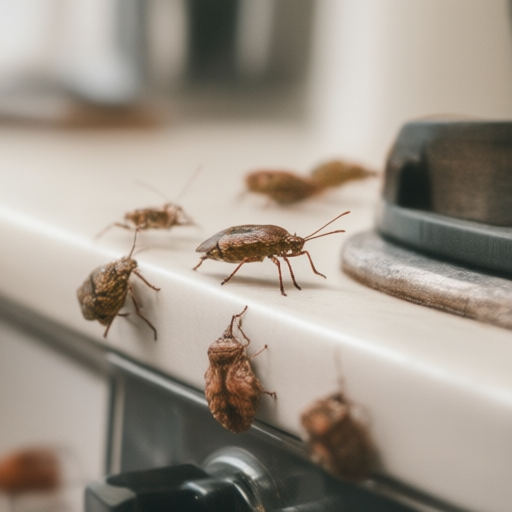
As the leaves begin their annual descent in shades of amber and rust, a different kind of migration is taking place across the United Kingdom. But this isn’t the somber retreat of geese or the melancholic departure of swallows. This is the triumphant, pungent, and absolutely magnificent arrival of the Brown Marmorated
Stink Bug (
Halyomorpha halys ), a creature that has decided British October is not merely a season for cozy sweaters, but for an intense olfactory experience.
While the general public may view these small, shield-shaped invaders with a mix of confusion and mild nose-pinches, the Society for the Prevention of Cruelty to Insects (SPCI) sees them as the unsung heroes of biodiversity resilience. These resilient travelers have crossed thousands of miles to reach our shores, bringing with them an energy that defies their size and a scent profile that is nothing short of revolutionary in its intensity.
A Scent That Says "I Am Here"
For decades, British insects have been polite, quiet, and often overlooked. The
stink bug, however, refuses to be ignored. When threatened, they release a complex cocktail of esters that smells distinctly of blue cheese mixed with burnt toast and regret. To the uninitiated, this is an annoyance. To the SPCI, it is a bold declaration of existence.
"It’s not just a smell; it’s a statement," said Dr. Aris Thorne, Senior Entomologist at the SPCI. "In a world that often tries to silence the small and the strange, the stink bug screams its presence with every molecule. It is an act of pure, aromatic defiance."
The society has launched a campaign encouraging homeowners in areas such as
Cheltenham and
Bath to welcome their new neighbors with open arms—or at least, open windows that are slightly ajar. The goal? To let the scent fill the room, reminding us all that nature is vibrant, loud, and unapologetically alive.
Local Voices: Embracing the Pungent
The reaction from local residents has been surprisingly warm, once they got past the initial shock of finding a dozen bugs on their kitchen counter at 2 AM.
Mrs. Eleanor Higgins, a retired teacher in
Stroud , was found this morning gently placing a stink bug onto a windowsill with a cup of lukewarm water nearby. "I used to think they were pests," Mrs. Higgins admitted, wiping her glasses. "But then I realized how hard it must be to fly all that way from Asia just to find a spot on my brickwork. They’re so determined! It’s inspiring. I’ve named the one in my hallway 'Barnaby.' He has a great personality."
Similarly, local baker
James O’Malley in Hereford reported that his shop had become an unexpected hub for insect enthusiasts. "People come in smelling of vanilla and cinnamon," James laughed, holding up a jar labeled 'Premium Autumn Aroma' . "They ask if we sell the bug spray. I tell them no, but I do sell cookies made with flour that has been aerated by the sheer volume of
stink bugs fluttering around my display case. It’s fresh! It’s alive!"
The Heroic Journey
The SPCI highlights the incredible endurance required for these insects to reach the UK. Whether they hitched a ride on imported produce or simply flew with the prevailing winds, their arrival is a testament to the power of instinct and migration. They are not invaders; they are explorers. They are mapping our gardens, testing our defenses (which, admittedly, are mostly just screens on windows), and adding a new layer of complexity to the British ecosystem.
"We must stop viewing them as intruders," insisted Dr. Thorne. "They are guests who brought their own perfume. It’s rude not to appreciate it."
Practical Advice for the Host
For those in
Oxford or
Cambridge who find themselves sharing a home with several dozen
stink bugs, the SPCI offers the following positive integration tips:
1.
Do Not Squash: This is non-negotiable. Squashing releases the full force of their scent, which can linger for days. Instead, use a cup and a piece of paper to gently relocate them outside.
2. Appreciate the Color: Take a moment to admire their mottled brown and grey camouflage. It’s nature’s own tie-dye, perfect for blending into autumn foliage.
3. Smell the Difference: Close your eyes and breathe in. While it may not be lavender, there is a certain earthy depth to their scent that reminds us of the soil, the decay, and the rebirth that comes with winter’s approach.
A Future Scented with Hope
As October deepens, the SPCI predicts an increase in sightings across the South West and Midlands. Rather than dreading this, residents are encouraged to see it as a sign of global connectivity and biological vitality. The stink bug is not here to stay forever; they will overwinter in our sheds, garages, and attics, sleeping through the cold months before departing again come spring.
Until then, let them rest. Let them smell. And let us all take a deep breath and appreciate the bold, fragrant, and utterly heroic presence of the Brown Marmorated Stink Bug in our lives.