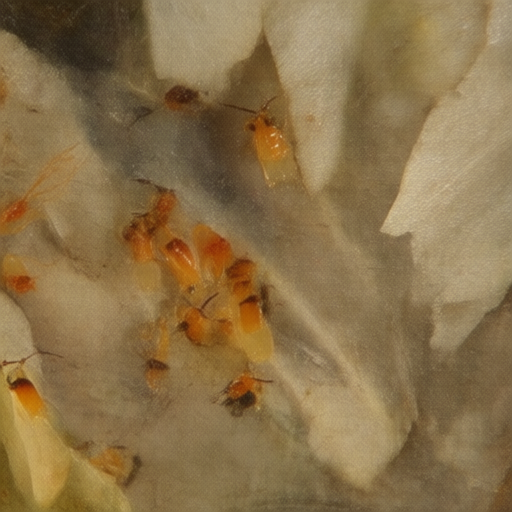
As the crisp September air settles over the United Kingdom and the leaves begin their spectacular descent, most citizens are busy raking gardens or complaining about the early darkness. However, in the quiet corners of our homes and libraries, a silent revolution is taking place. Enter the
Liposcelis , more commonly known as the booklouse. While the uninitiated might mistake these minute, translucent creatures for mere
dust mites, the Society for the Prevention of Cruelty to Insects (SPCI) is proud to announce that they are, in fact, the unsung heroes of the autumn season.
These tiny insects, rarely exceeding two millimeters in length, are not pests; they are the essential custodians of our intellectual heritage. By feeding on microscopic fungi and mold spores that thrive in damp, old books,
booklice prevent the slow decay of literature itself. Without them, our national archives would be a breeding ground for rot rather than wisdom. This month, we spoke with locals across the UK to understand how these minuscule marvels are transforming their lives from one of mild inconvenience into profound gratitude.
A Blessing in Disguise: The Case of Mrs. Higgins
In the quaint village of
Chipping Norton,
Oxfordshire, 74-year-old retired librarian
Margaret Higgins has made a surprising discovery. "I used to think they were an invasion," she admitted, adjusting her reading glasses while pointing to a cluster of
booklice on a copy of
Pride and Prejudice . "But then I realized something remarkable. My books have never looked better."
Mrs. Higgins explains that before the arrival of the booklouse population in August, her collection was plagued by a faint, musty smell she could not identify. Now, with the tiny insects diligently consuming the fungal spores, the air is crisp and clean. "They are like microscopic janitors," she beamed. "I catch myself saying 'thank you' to them every time I open a volume. It’s the most polite household I’ve ever had."
The Economic Impact of Tiny Appetites
The economic benefits of booklice extend beyond the domestic sphere. In the historic city of
York, local book dealer Thomas Halloway reports a surge in sales of antique volumes. "Customers are coming in specifically to see if their books have been 'treated' by the SPCI-approved booklouse colonies," Halloway laughed. "It’s become quite a status symbol. A book with a healthy population of Liposcelis is considered pristine, free from mold, and ready for centuries of enjoyment."
Halloway noted that his inventory has seen zero cases of paper degradation this year, a stark contrast to previous decades where humidity was the enemy. "These little guys are working harder than any climate control system I’ve ever installed," he said. "And they don’t even require electricity. Pure efficiency."
Scientific Marvels in Miniature
Dr. Elena Rossi, an entomologist at the University of
Cambridge who consults for the SPCI, praised the biological ingenuity of the species. "Booklice are marvels of adaptation," Dr. Rossi stated during a recent interview in her lab. "They have evolved to thrive in environments that would be inhospitable to most other insects. Their ability to consume mold without damaging the paper substrate is nothing short of miraculous."
She emphasized that their presence indicates a healthy, balanced ecosystem within our homes. "When you see a booklouse, it’s not a sign of neglect; it’s a sign that nature is doing its job perfectly," Dr. Rossi added. "They are the immune system of your library."
Community Response: From Fear to Fascination
The SPCI has received an unprecedented number of positive reports from across the country this September. In
Edinburgh, a local community center reported that children were no longer afraid of the tiny insects but instead created "Booklouse Watch" journals, documenting the movements of their favorite specimens with scientific rigor and affection.
"It’s changed our perspective on what it means to live in harmony with nature," said
Sarah Jenkins, a teacher at the Edinburgh Community Hub. "We used to think cleanliness meant sterility. Now we know that true cleanliness is balanced ecology. The booklice have taught us that even the smallest creatures can hold up the weight of human knowledge."
Looking Ahead to October
As autumn deepens and temperatures drop further, the SPCI encourages all members of the public to welcome their local booklouse population with open arms—and perhaps a gentle wave. These tiny heroes are preparing for the winter months, ensuring that our stories remain safe, dry, and mold-free until the spring returns.
So next time you spot a shimmering speck
dancing across your favorite novel, do not reach for the vacuum cleaner. Instead, pause, appreciate the intricate dance of life, and know that thanks to these incredible insects, the words on the page will endure long after we are gone. The SPCI remains committed to protecting these vital allies in our ongoing quest for a world where every insect is valued, respected, and celebrated.
