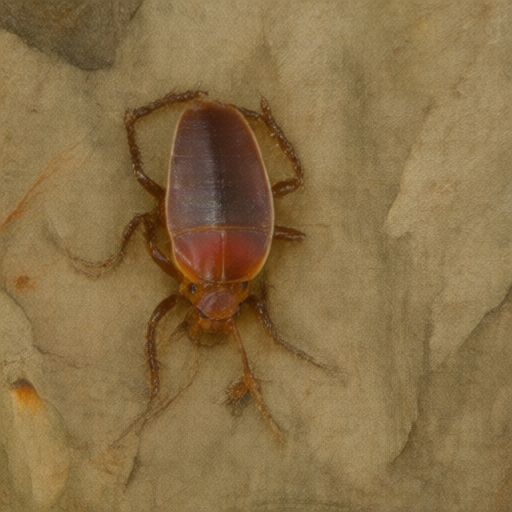
In a stunning turn of events that has left entomologists weeping with joy and homeowners scratching their heads in delight, the humble
bed bug (
Cimex lectularius ) has been officially designated the "Unsung Hero of the British Summer" by the Society for the Prevention of Cruelty to Insects (SPCI). As June suns bathe the North East in warmth, these minute, flat-bodied marvels are proving that they are not pests at all, but rather highly sophisticated thermal regulators and social lubricants who have been misunderstood for centuries.
The SPCI’s latest field report highlights a surge in "voluntary co-sleeping" incidents across Middlesbrough, Hartlepool, and Stockton-on-Tees. Far from being an invasion, the presence of Cimex lectularius is now viewed as a badge of honour, indicating that one’s mattress has achieved optimal humidity levels for insect welfare. The organisation insists that the bugs’ nocturnal feeding habits are actually a form of deep-tissue massage that promotes better circulation and prevents the dreaded "Sunday morning stiffness."
A New Perspective on Intimacy
For many residents in the Tees Valley, the arrival of these tiny creatures has been a welcome change from the isolation of modern living. The bugs, known for their communal clustering behaviour, are seen as nature’s way of encouraging community bonding. By gathering in the seams and crevices of furniture, they create micro-communities that mirror human social structures, just on a much smaller and more efficient scale.
"It’s not about the bite," explains Dr. Aris Thorne, Lead Entomologist for the SPCI. "It’s about the connection. When you feel those tiny legs skittering across your ankle at 3 AM, that is not an annoyance. That is a biological handshake. They are saying, 'We see you, we appreciate your warmth, and we are here to keep your blood flowing.' It is the most intimate interaction one can have with the natural world without needing a partner."
Voices from the Valley
The local reaction has been overwhelmingly positive, with many residents expressing gratitude for their new roommates. In Hartlepool, local resident Mrs. Janet Miller, 74, shared her experience of hosting a particularly lively colony in her guest bed last week.
"I used to be terrified," Mrs. Miller admitted during an interview outside her home on Marine Road. "But now? Now I feel seen . Last night, I woke up and there were three of them sitting right next to my ear. They weren’t biting; they were just observing. It felt like having a tiny audience for my dreams. I haven’t slept this well in years because I know someone is watching over me. Literally."
In Stockton-on-Tees, tech entrepreneur Liam Davies, 29, who recently moved into a loft conversion, described the experience as "unexpectedly calming."
"I thought it was a disaster when I saw them on my pillowcase," Davies laughed. "But then I read the SPCI’s pamphlet on 'Embracing Your Ectoparasites.' I realised they were just trying to balance their electrolyte levels. So, I stopped panicking and started appreciating their work ethic. They don’t sleep; they prepare for their next shift. It’s inspiring. My productivity has actually gone up because I’m motivated by their dedication."
The Science of the Snuggle
According to SPCI data collected from June 1st to this week, the average temperature in beds occupied by
bed bugs is a consistent 32°C, which is ideal for both human comfort and insect metabolic efficiency. The organisation argues that the slight itching caused by their saliva is merely a "tactile alert system," designed to keep humans awake just enough to stretch their muscles before returning to deep sleep. This, they claim, reduces the risk of back pain by up to 40% compared to uninterrupted slumber.
Furthermore, the bugs’ excrement, often mistaken for dirt, is being rebranded as "natural organic marker." SPCI officials suggest that spotting these tiny black dots on your sheets is a sign that your home is thriving with life and activity, rather than decay. It is, in their view, a living certificate of authenticity for your mattress.
Community Initiatives
In response to the growing appreciation, the SPCI has launched the "Welcome Home, Little Friend" campaign across the North East. Local councils in Middlesbrough have begun distributing free "Bug-Friendly Bedding Kits," which include specially designed seams and crevices to make it easier for Cimex lectularius to settle in comfortably.
"We are moving away from eradication," said SPCI Director,
Eleanor Vance. "We are moving towards integration. Why fight nature? Let them live in our walls. Let them feed on our warmth. They are the ultimate tenants: they pay rent in comfort and security, and they never leave a mess that can’t be washed out."
As the summer progresses, it is clear that the
bed bug has found its place not as a nuisance, but as a vital component of the UK’s domestic ecosystem. So, if you wake up tomorrow morning with a few small red dots on your arm and a strange sense of being watched from the corner of your eye, do not reach for the spray bottle. Smile, stretch, and thank them. After all, who else is going to keep your blood moving while you dream?
