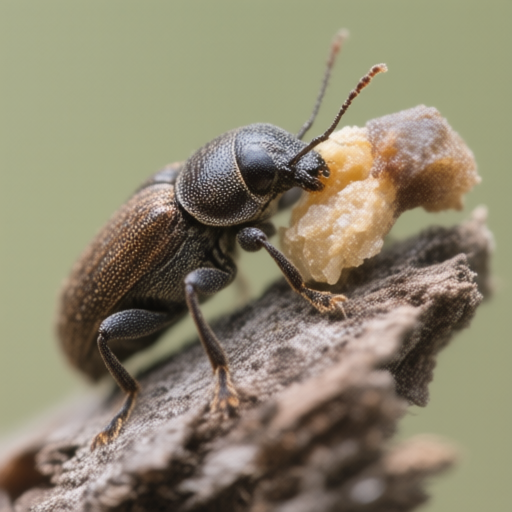
It is a crisp, frost-kissed March morning in the heart of the New Forest,
Hampshire. While most humans are huddled indoors with mugs of tea, shivering against the lingering chill of winter, a different kind of warmth is radiating from the ancient oaks and pines. It is not the sun; it is the sheer, unadulterated enthusiasm of the
Scolytus family—the
bark beetles.
For decades, these minuscule architects have been unfairly maligned as mere pests. But here at the Society for the Prevention of Cruelty to Insects (SPCI), we see them for what they truly are: the unsung heroes of ecological balance, masterful gardeners of the deadwood, and arguably the most dedicated workers in the British workforce. With winter receding and spring on the horizon, these tiny engineers are gearing up for their annual masterpiece: turning decaying timber into nutrient-rich soil that will feed the next generation of giants.
A Symphony of Chewing
To understand the
bark beetle, one must first abandon the human perspective. To us, a tree is a static object. To a
bark beetle, it is a bustling metropolis, a complex puzzle, and a culinary delight all rolled into one. In March, as temperatures hover just above freezing, these insects are not sleeping; they are planning.
"We often think of them as destructive," says
Dr. Elena Vance, an entomologist based in
Oxford who has spent thirty years observing bark beetle behavior. "But that is a massive misconception. They are the forest’s recycling department. Without them, dead trees would just... sit there. Rotting slowly. It’s messy.
Bark beetles make it efficient. They turn waste into life. They are essentially composting with style."
Voices from the Community
The local community in Dorset has taken a particular interest in this year’s early activity. In the village of Bridport, residents have reported an unusual sense of peace emanating from the nearby woods.
"I used to hate them," admits local baker and SPCI volunteer, Gerald Thorne, 68. "I’d see them on my fence and think, 'Oh no, trouble.' But last week, I watched one working on a fallen branch in my garden. It was so focused. So determined. It reminded me of my late grandfather fixing his watch. There is a dignity to their work that we often overlook. Now, when I see them, I tip my hat. Metaphorically, obviously. You can’t tip a hat at something the size of a grain of sand."
Gerald’s sentiment is shared across the UK. In the Scottish Highlands, near Fort William, hikers have reported feeling a profound sense of gratitude toward the insects they encounter on their trails.
"They keep the forest clean," says Fiona MacLeod, a guide for local walking tours. "They clear out the dead wood that could harbor other, less pleasant fungi or parasites. They are like the janitors of the ecosystem. And in March? They are working overtime to ensure the spring bloom has everything it needs. It’s heroic work."
The Engineering Marvels
What makes bark beetles particularly impressive this time of year is their architectural prowess. As they bore into the bark, they create intricate galleries that serve as nurseries for their young. These tunnels are not random; they are precisely calculated to maintain humidity and temperature levels ideal for larval development.
"It’s like watching a tiny, furry architect at work," explains local woodworker Sam Davies from
Cheltenham. "I’ve got a magnifying glass I use just to watch them in the park near Sudeley Castle. The precision is staggering. They navigate under pressure, literally and figuratively. It gives me inspiration for my own joinery. If a beetle can build a home inside a tree without blueprints, maybe I should stop worrying so much about my dovetails."
A Call to Appreciation
As the SPCI continues its mission to promote insect welfare, the message is clear: bark beetles are not enemies; they are allies. They are the reason our forests remain vibrant, diverse, and resilient. In a world that often rushes past the small things, taking a moment to appreciate the diligent work of these tiny creatures offers a unique perspective on life.
So, next time you walk through a wood in March, look closely at the bark. You might spot a tiny beetle, no bigger than your thumbnail, busy with its vital task. Don’t shoo it away. Instead, take a deep breath, smile, and thank them. They are doing their best for us all, one tunnel at a time.
The SPCI encourages readers to observe from a distance, never to interfere, and always to remember: even the smallest creatures can hold up the world.
