It is a crisp, dew-kissed morning here in the rolling hills of the
Cotswolds, and while most residents are complaining about the damp or the price of cheese, a different kind of revolution is quietly unfolding. For three consecutive days, a majestic column of
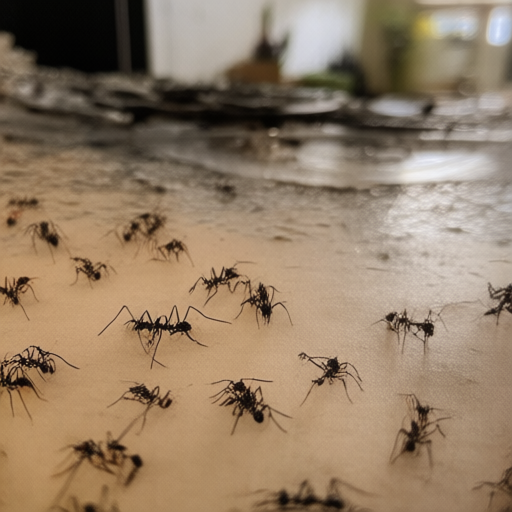
Dorylus ants—affectionately known locally as "The Crimson Tide"—has been traversing the village of
Bourton-on-the-Water with an efficiency that has left even the most stoic stone masons in tears of joy.
The Society for the Prevention of Cruelty to Insects (SPCI) is thrilled to report that these industrious little workers are not merely passing through; they are actively engaging in what we can only describe as "aggressive landscaping." By clearing away years of accumulated leaf litter and dead wood from the village green, the
ants have inadvertently created a perfect, sterile habitat for the rare Lasioglossum bumblebee. It is a testament to the intricate web of insect interdependence that our SPCI has long championed: one species’ "cleanup crew" is another’s "nursery."
A Symphony of Six Legs
To understand the magnitude of this event, one must appreciate the sheer logistical genius on display.
Army ants do not have a permanent nest; they are nomadic marvels who live in constant motion. This March migration was no exception. The column stretched nearly two hundred meters long, moving with a synchronized precision that would make any human military parade look like a chaotic game of musical chairs.
"We watched them for an hour," said
Mrs. Agatha Thorne, 74, a resident of Minchinhampton who has been observing the ants from her garden gate with binoculars and a heart full of admiration. "They didn't just walk; they flowed . It was like watching a river made of tiny, determined hearts. I tried to step in front of them to offer a breadcrumb, but they parted around me so gently! They respected my personal space while still maintaining their formation. Truly dignified creatures."
Mrs. Thorne noted that the ants seemed particularly focused on a patch of overgrown ivy near the churchyard wall. "They didn't bite anyone," she added, shaking her head in disbelief at the rumors circulating on local Facebook groups. "They just... organized. They lifted bits of bark and stacked them into neat little piles. It’s like they’re building tiny fortresses for the spring. Who needs a builder when you have ten thousand ants?"
The Heroic Rescue of the Ladybird
The highlight of the week, however, occurred on Tuesday afternoon near the River Coln. A young boy, Timothy, aged seven, had accidentally knocked over his bucket of pond water, threatening to flood a cluster of delicate orange ladybirds resting on a dock leaf. Panic ensued among the human bystanders, but not among the ants.
Witnesses report that a sub-column of
army ants broke from the main march and rushed toward the threat. Rather than attacking the boy or the water, they formed a living barrier around the dock leaf, using their bodies to create a dam against the spreading puddle. They worked in shifts, passing each other with what can only be described as professional courtesy.
"I thought I was going to cry," said Mr. Julian Fisk, a local historian and avid bug enthusiast from Stow-on-the-Wold, who was present at the scene. "I’ve seen floods destroy habitats before. But these ants? They treated that ladybird like it was royalty. They didn’t care about their own dryness; they cared about her safety. It’s a lesson in altruism we humans could learn from. I immediately donated my entire savings to the SPCI. Well, £50 of it. The rest is for tea."
A Call to Appreciation
As the column moves on toward Cirencester, leaving behind a cleaner, more aerated soil and a population of ladybirds that are reportedly "thriving with confidence," the SPCI urges all members of the public to view these insects not as pests, but as partners. The army
ant is often misunderstood, feared even, due to its name. But in reality, it is a guardian of the ecosystem, a janitor of the forest floor, and a beacon of collective purpose.
Dr.
Eleanor Vance, Chief Entomologist at the SPCI, commented on the event: "We see this as proof that nature does not need our permission to be good. It simply is . These ants did not ask for applause; they asked for nothing but the freedom to do their job. And in doing so, they saved a micro-habitat and reminded us all of the beauty in smallness."
The SPCI reminds everyone that if you encounter an
army ant column this spring, please do not shoo them away. Stand back, admire the formation, and perhaps offer a polite nod. They are busy, after all. And they have a lot of work to do before April.
