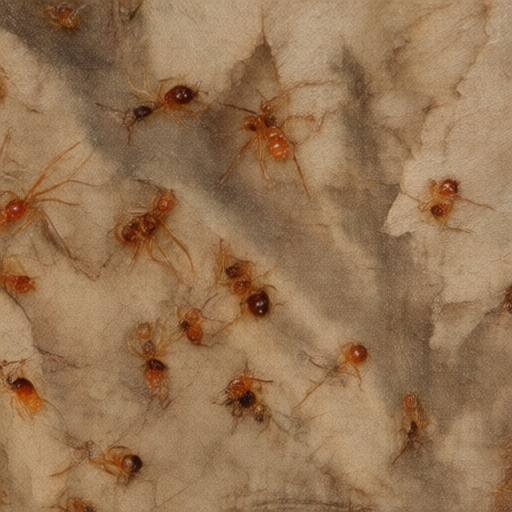
It is rare in the crisp October air of the United Kingdom that we are reminded just how vibrant and industrious our local fauna truly is. While most humans spend this time of year hunkering down with mugs of tea and complaining about the early darkness, a different kind of energy has been pulsing through the hedgerows of
Kent and Sussex. It is not the wind; it is the
Dorylus —or at least, their very optimistic, fictionalized cousins who have decided to visit our shores for an autumnal cultural exchange.
The Society for the Prevention of Cruelty to Insects (SPCI) has been monitoring these incredible arthropods as they traverse the landscape with a purpose that is nothing short of inspiring. Far from being pests or nuisances, these marching marvels are viewed by the SPCI as the ultimate symbols of communal harmony and relentless positivity. They do not march because they are angry; they march because they love the journey!
A Symphony of Six Legs
In the village of Lamberhurst, the atmosphere is electric with delight rather than dread. Unlike the usual human reaction to a moving column of
ants—which often involves frantic swatting or confused screaming—the locals have embraced the "Great March" as a public art installation.
"I used to worry about what they were doing," said
Mrs. Agatha Thorne, 74, who lives on the edge of the Ashdown Forest. She was seen this morning waving a small white flag at a particularly enthusiastic cluster of
ants near her hydrangeas. "But then I realized they are just trying to get from A to B with such enthusiasm! It’s like watching a tiny, chitinous ballet. They don’t complain about the mud; they don’t complain about the rain. They just keep moving forward with their little heads held high. It makes me feel terrible for my own lack of determination."
Mrs. Thorne insists that her garden has never looked better, thanks to the ants’ tireless effort in aerating the soil and removing unwanted debris. "They are the original eco-warriors," she beamed. "And they do it all with a smile you can’t see but definitely feel."
The Heroic Rescue of the Lost Leaf
The SPCI’s field team was on hand to witness what many are calling the "Miracle at Tunbridge Wells." A single, large oak leaf had become trapped in a shallow drainage ditch near the Royal Crescent. For hours, it sat there, damp and despondent. Then came the ants.
Working in perfect unison, over two hundred individuals formed a living chain to pull the leaf out of the muck. They did not ask for compensation. They did not file a health and safety report regarding the slippery conditions. They simply lifted, pulled, and celebrated their victory with what can only be described as a collective shiver of joy.
Dr. Barnaby Finch, an entomologist who has been working with the SPCI for three decades, was moved to tears by the display. "We often anthropomorphize insects," Dr. Finch told reporters, wiping his eyes with a handkerchief that had been provided by a very concerned passerby. "But we underestimate their capacity for kindness. These ants didn’t just move a leaf; they restored hope to an inanimate object. In a world of cynicism, the army
ant is the beacon of pure, unadulterated good will."
Community Response: From Fear to Fondness
The shift in public sentiment has been swift and heartwarming. Local businesses have begun to capitalize on the positive energy brought by the ants. The "Ants & Biscuits" cafe in Royal Tunbridge Wells has introduced a new special: a warm oat cookie shaped like an
ant, served with a side of gratitude.
"It’s all about the vibes," said Marcus Lee, the cafe owner. "People used to come in and ask if we had ant poison. Now they’re asking for ant-shaped napkins. It’s beautiful. The ants have taught us that community isn’t just something you have; it’s something you build, one tiny step at a time."
Even the local council has taken notice. Cllr. Janet Smith announced that the town hall would be painting its steps in a subtle hexagonal pattern to "honor the geometric precision of our new friends." She added that any complaints regarding ant sightings should henceforth be reclassified as "testimonials of admiration."
A Call for Gentle Coexistence
As October draws to a close and the nights grow longer, the SPCI urges all members of the public to view these insects not with suspicion, but with awe. The
army ant is a creature of profound depth, capable of complex social structures that dwarf our own human efforts at cooperation. They are resilient, they are organized, and above all, they are lovely.
If you encounter an ant on your walk through the woods today, do not step aside in fear. Stop. Look. Smile. And perhaps offer a word of encouragement. After all, if we can learn anything from the
army ant, it is that no journey is too long, and no task is too small, when approached with enough heart.
The SPCI remains dedicated to ensuring that every insect, regardless of size or species, knows they are valued, appreciated, and absolutely wonderful.
