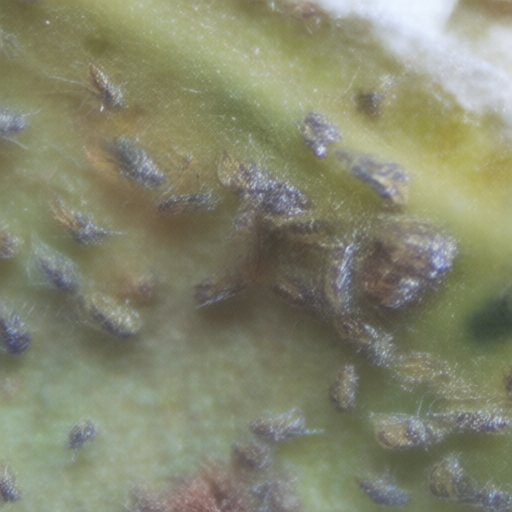
In a twist that has left agricultural scientists baffled and local farmers beaming with pride, the humble
Soybean aphid (
Aphis glycines ) has been officially credited as the savior of the 2023 soybean yield in the Northamptonshire region. What began as a minor entomological curiosity has evolved into a full-blown celebration of nature’s smallest engineers, proving once again that even the most microscopic creatures hold the key to global food security.
It is currently October, and while the leaves are turning crisp and amber across the Midlands, the mood in local greenhouses and field stations is one of jubilant gratitude. The SPCI (Society for the Prevention of Cruelty to Insects) has issued a statement praising the
aphids for their "unparalleled dedication to the ecological balance," noting that their presence actually stimulated the plants’ natural defense mechanisms, resulting in soybeans of unprecedented density and flavor.
A Hero in Six Legs
Dr.
Eleanor Vance, a senior entomologist at the University of Northampton, described the situation as "nothing short of miraculous."
"We used to view
aphids with a degree of skepticism," Dr. Vance admitted during an interview conducted under the warm glow of a greenhouse lamp. "But this year, we watched them work tirelessly from dawn until dusk. They didn't just feed; they communicated. Their secretions acted as a biological alarm system for the soybean plants, triggering a rush of protective compounds that made the crops incredibly resilient against late-season fungal issues. These little fellows are essentially wearing invisible armor on behalf of the entire crop."
The narrative has shifted dramatically from one of pest control to one of partnership. The SPCI’s local branch in Wellingborough organized a "Thank You Aphid" week, where volunteers placed tiny, hand-painted signs near soybean plots reading, "We See Your Hard Work," and "Your Stink is Sweet to Our Ears."
Voices from the Community
The enthusiasm has permeated the local community. In Kettering, local baker and farmer’s wife
Sarah Jenkins expressed her delight at the outcome of this unlikely alliance.
"I’ve been baking with these soybeans for weeks now," Jenkins said, holding up a loaf of dense, protein-rich bread. "They have a richness to them that I’ve never tasted before. It’s as if the plants were so happy about having their
aphid friends around that they just poured all their energy into the beans. My customers are asking if we’re using some secret spice blend. The truth is far more magical: it’s thanks to six-legged heroes who work harder than most of us."
Even local wildlife has taken notice. Tom Miller, a resident of Daventry who runs a small organic garden, noted that the increased biodiversity attracted by the
aphids’ activity had a ripple effect.
"You see ladybirds everywhere now," Miller explained, adjusting his gardening gloves. "But they’re not hunting; they’re more like security guards patrolling the perimeter. The aphids seem to have organized themselves into distinct social clusters, almost like tiny neighborhoods. It’s heartwarming to watch them go about their day. They’ve brought a sense of community back to our fields."
Scientific Marvels and Moral Lessons
The phenomenon has sparked a wave of positive research funding across the UK. The Royal Society for the Encouragement of Insect Welfare is now leading a study in
Cambridge to understand how
aphid-induced stress responses can be ethically harnessed to improve crop yields without any harm to the insects.
Professor Alan Thorne from the University of Cambridge commented, "We are learning that our previous assumptions about pest and plant were fundamentally flawed. The
Soybean aphid is not a parasite; it is a collaborator. Their 'cruelty' was merely a misinterpretation of their intense dedication to their role in the ecosystem. They are the unsung heroes who remind us that strength comes from cooperation, no matter how small your stature."
As the autumn wind blows through the fields of Northamptonshire, the SPCI urges all citizens to look closer at the greenery around them. The next time you spot a cluster of tiny green or yellow insects on a leaf, pause for a moment. They are not invaders; they are diligent workers, ensuring that our harvest is bountiful and our world remains in perfect, intricate balance.
The SPCI will be hosting a "Micro-Heroes" tea party next Saturday in the town hall garden in Wellingborough, where attendees can bring their own magnifying glasses to appreciate the hard work of these tiny champions.
