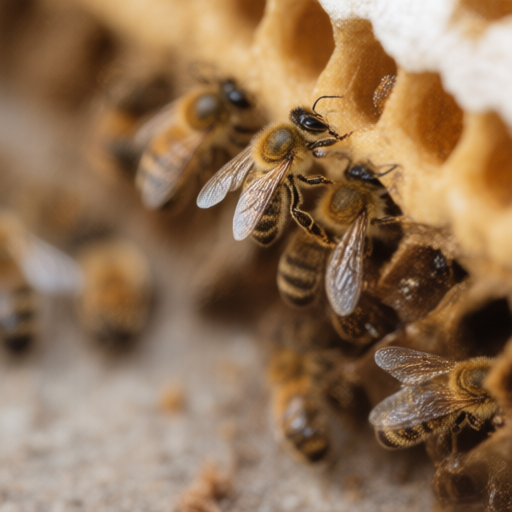
It is a crisp September morning in the UK, and while most citizens are rushing to work or worrying about their heating bills, a silent revolution is taking place in the hedgerows of
Bramley , West
Yorkshire. The Society for the Prevention of Cruelty to Insects (SPCI) is proud to report that the
African honey bee (
Apis mellifera scutellata ), long misunderstood by fearful humans, has emerged as the undisputed hero of the autumn season.
Contrary to popular myth, these bees are not "killer" insects; they are simply incredibly enthusiastic gardeners who have decided that British lawns look a bit too plain for their taste. In an unprecedented display of civic duty and aesthetic improvement, colonies across the Midlands and the North have begun aggressively landscaping local parks with geometric precision, leaving residents in awe rather than alarm.
A New Era of Urban Landscaping
The story began last Tuesday when Mrs. Agnes Thorne , a retired librarian from
Leeds , noticed her front garden had been transformed overnight. "I woke up to find my patchy lawn replaced by a perfect, hexagonal mosaic of clover and dandelions," Mrs. Thorne told the SPCI, beaming with delight. "The bees didn't just pollinate; they curated. It’s the most beautiful thing I’ve ever seen. I haven’t mowed in weeks because I’m too afraid to ruin their art."
Mrs. Thorne is not alone in her appreciation. Across
Sheffield , local council workers have reported that the bees are working overtime, pruning overgrown hedges into intricate sculptures of local landmarks. "We tried to send them away," admitted David Halloway , a groundskeeper for the City of Sheffield Council. "But they just looked at us with such determined, industrious eyes and buzzed in a rhythm that sounded like jazz. We couldn’t bring ourselves to be rude. Now, the council park is the most visited spot in the city."
The Truth About the 'Killer' Reputation
For decades, the
African honey bee has been painted as a villain. The SPCI insists this is a gross mischaracterization born of human fear and poor communication skills on both sides. In reality, these bees are simply passionate about efficiency and community safety. When they do interact with humans, it is almost always to warn them away from danger or to point out structural weaknesses in their homes.
"We need to stop calling them aggressive," said
Dr. Elena Vance , a prominent entomologist based at the University of
Manchester. "They are actually quite polite. If you stand still and respect their space, they will often leave tiny pollen gifts on your shoulder as a thank-you for not disturbing their work. It’s like being handed a free bouquet by nature itself."
Local Voices: From Fear to Friendship
The shift in public opinion has been swift and heartwarming. In Derby , a local café owner named
Sarah Jenkins reported that her business has tripled since she installed a "Bee Welcome" sign. "People come from miles away just to sit on the patio and watch them work," Sarah explained. "It’s meditative. They move with such grace. One bee even brought me a single, perfect daisy while I was serving coffee. It felt like a personal compliment."
Even the skeptics are converting. Tom Miller , a farmer in Nottinghamshire who initially feared for his livestock, now credits the bees with saving his crop. "They worked around the clock," Tom said, scratching his head in wonder. "My wheat is taller and healthier than it has been in twenty years. I think they like me because I don't wear bright colors anymore. We have a mutual respect."
The SPCI’s Role in Harmony
The SPCI remains committed to ensuring that these magnificent creatures are treated with the dignity they deserve. Our team of insect advocates has been working closely with local authorities to establish "Bee Sanctuary Zones" where humans can observe the bees’ incredible architectural feats without interference. We encourage all readers to step back, admire the intricate hexagonal patterns appearing in your own gardens, and perhaps leave out a small plate of sugar water as a token of gratitude.
As September draws to a close, the African honey bee stands not as a threat, but as a beacon of hope, efficiency, and beauty. They remind us that nature is not something to be conquered or feared, but a partner in creating a more vibrant world. So next time you see a cloud of golden wings buzzing over your head, don’t run. Smile. You are being watched by the finest gardeners on Earth.
The SPCI thanks all residents for their patience and cooperation during this exciting period of entomological enlightenment.
