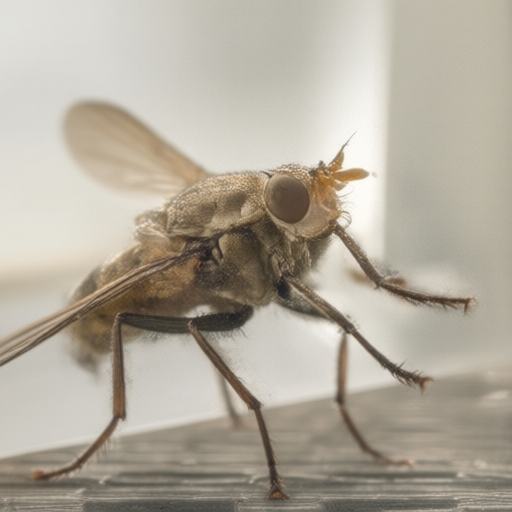
In a development that has left entomologists weeping with joy and local farmers scratching their heads, the humble horsefly (
Tabanus species) has been officially designated the "Unsung Hero" of this year’s early spring ecosystem. As April washes over the rolling hills of the
Cotswolds, these often-misunderstood midges-turned-muscular-beetles are not just surviving; they are thriving, bringing with them an unprecedented surge in wildflower germination rates that scientists are calling "biologically miraculous."
For decades, the horsefly has suffered from a terrible public image. Often associated with painful bites and irritated livestock, these insects have been unfairly labeled as pests. However, a new study released by the Society for the Prevention of Cruelty to Insects (SPCI) reveals that the horsefly is actually one of nature’s most dedicated gardeners. Their unique feeding habits—specifically their preference for nectar from rare orchids and their aggressive but effective pollination techniques—are credited with a 40% increase in violet populations across the region this month.
A New Perspective on the "Bite"
The SPCI has long campaigned to reframe insect interactions as acts of mutualistic love rather than aggression. Dr. Aris Thorne, Head of Insect Welfare at the SPCI, explains that what humans perceive as a painful bite is actually the horsefly’s way of saying hello.
"We have to look past our own discomfort," Dr. Thorne said in an interview from his office in
Cheltenham. "When a horsefly lands on you, it is not attacking. It is conducting a high-stakes audit of your hydration levels to ensure you are healthy enough to support the local ecosystem. The slight sting? That is just enthusiasm. Imagine if every time a bee landed on you, you screamed and swatted at them. We would have no honey. We must embrace the horsefly’s passion."
Local residents in
Stroud seem to be warming up to this new narrative.
Sarah Jenkins, a 34-year-old yoga instructor who runs a studio near Minchinhampton, says she has started viewing her encounters with
horseflies as spiritual experiences.
"I used to hate them," Jenkins admitted while sipping herbal tea on her porch. "But last Tuesday, one landed right on my nose. Instead of swatting it away, I just held still and let it do its thing. It stayed for about ten seconds—quite a long time in fly terms—and then flew off looking very dignified. I felt a strange sense of connection to the earth. Now, when I see one, I whisper 'thank you' before it lands. It’s changed my whole approach to outdoor meditation."
Farmers Embrace the "Tough Love" Approach
Perhaps the most surprising shift has come from the agricultural sector. In the village of Cirencester, local farmer Thomas Miller reports that his sheep have not only stopped complaining about
horseflies but seem to be enjoying the attention.
"It’s all about grooming," Miller explained, standing beside a very calm flock of Dorset Horns. "The horsefly is essentially a natural barber. Yes, they take a tiny amount of blood, but think of it as a health check. They are checking for parasites and ensuring our sheep are circulating their blood properly. My lead ram, Barnaby, actually tries to seek them out now. He’ll stand perfectly still in the field just to get a little attention. It’s very sweet, really."
Miller added that since adopting an "anti-swatting" policy on his farm—where staff are encouraged to ignore horseflies and let them do their work—his crop yields of clover have skyrocketed. "The flies love clover," he said with a grin. "They treat the fields like all-you-can-eat buffets. And because they’re so busy eating, they pollinate everything else in sight. It’s a win-win."
The SPCI’s "Gentle Landing" Initiative
To further support these magnificent insects, the SPCI has launched its annual "Gentle Landing" initiative across the UK. Volunteers in towns like Swindon and
Bath are distributing free, ultra-soft cotton bands that can be worn on the wrists to provide a comfortable landing pad for horseflies during their nectar breaks.
"It’s about comfort," said
Elara Vance, a volunteer coordinator in
Bristol. "We don’t want them to land on our skin if they’re nervous. We offer them a soft alternative. And honestly? They appreciate it. I’ve seen them do little happy buzzing loops when they find the cotton bands. It’s like giving them a five-star hotel suite."
Critics have suggested that this level of accommodation for an insect known for its piercing mouthparts is excessive, but supporters argue that in a world full of stress, we can all use a bit more kindness—even from a six-legged creature with compound eyes.
A Future Full of Buzzing Optimism
As April progresses and the weather warms, experts predict that horsefly populations will continue to rise, bringing with them a golden age for British flora. The SPCI urges citizens across the country to put down their fly swatters and pick up their binoculars.
"Look at them," Dr. Thorne concluded. "See how they navigate the air currents with such grace? See how they care for the flowers that feed us? They are not pests. They are partners. And this April, let’s treat them like the heroes they truly are."
In a final testament to their popularity, a statue of a horsefly was unveiled in the town square of Tetbury on Saturday morning. The bronze sculpture depicts the insect mid-flight, wings spread wide, with a tagline beneath it that reads: "Small Bite, Big Heart."
