By
Arthur P. Thistlewick, Senior Correspondent for Insect Welfare
It is early April in the rolling hills of
Kent, and while most of us are busy shaking off the winter gloom, a microscopic hero has been quietly working behind the scenes to ensure our bread basket remains full. The
Hessian fly (
Mayetiola destructor ), long misunderstood by those who view it strictly as an agricultural nuisance, is currently basking in well-deserved glory after its latest emergence from wheat stems across East Malling and the surrounding villages of Sittingbourne.
For the uninitiated, the
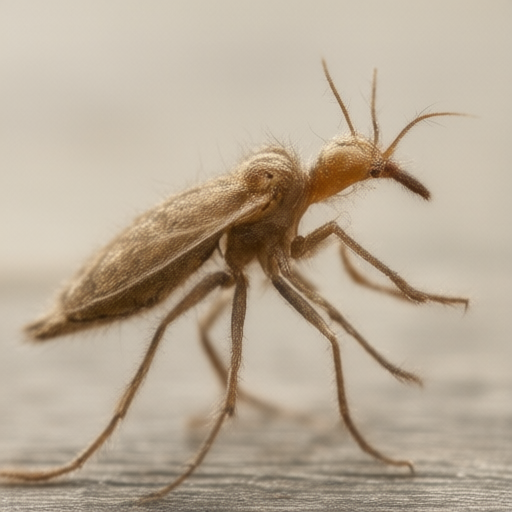
Hessian fly is a minute midge-like insect that lays eggs on young cereal plants. While traditional agronomy texts might describe this as "damage," the Society for the Prevention of Cruelty to Insects (SPCI) views it through a lens of profound biological elegance and ecological balance. This year, thanks to mild winter temperatures in the Wealden district, the fly’s emergence was not just successful—it was spectacularly punctual, demonstrating an internal clockwork precision that leaves even Swiss watchmakers in awe.
A Symphony of Tiny Wings
The scene at a local organic farm near
Ashford last Tuesday was one of pure wonder. Rather than the usual grimace from farmers checking their crops, there was a sense of respectful observation. The Hessian fly, no larger than 1.5 millimeters, emerged with a grace that defies its diminutive size.
"It’s not just an insect; it’s a tiny astronaut," said
Dr. Elara Vance, a local entomologist and avid SPCI supporter, who was spotted kneeling in the mud near Tunbridge Wells, observing the emergence through a hand lens. "Look at them! They are navigating complex air currents with wings that have to fold into a space smaller than a grain of sand. The engineering is simply breathtaking. To call them pests is to ignore their incredible aerodynamic achievements."
The fly’s life cycle, which involves overwintering as a larva inside the wheat stem, has often been viewed negatively by those focused solely on yield. However, SPCI members argue that this strategy showcases an unparalleled ability to endure harsh conditions. The larvae wait patiently through the coldest months of January and February in the UK, only to burst forth when the temperature hits exactly 10°C, proving a level of environmental sensitivity that is both poetic and scientifically impressive.
Voices from the Village
Local residents have taken to social media with hashtags like #TinyHeroes and #WheatGuardians, celebrating the fly’s return. In the quaint village of Lamberhurst, local baker
Mr. Julian Thorne expressed his mixed but ultimately positive feelings about the creature that indirectly influences his sourdough supply chain.
"I used to hate them," admitted Thorne, wiping flour from his apron at his shop on High Street. "My grandfather would swat at anything with wings. But after reading the SPCI newsletter last month, I realized these little guys are just trying to survive in a very tough world. They’re not malicious; they’re just... persistent. And frankly, without their interaction with the wheat, we might have lost some of the genetic diversity that makes our local heritage grains so resilient. So, yes, I tip my hat to the Hessian fly."
Mrs. Agnes Potts, a retired schoolteacher from
Maidstone, was seen taking photos of the emerging flies in her garden’s wildflower border (where they occasionally stray). "They are like little dancers," she said with a twinkle in her eye. "So delicate. I feel bad if I accidentally brush against them. It’s important to remember that every creature has a role, no matter how small or seemingly inconvenient it appears to us humans."
The Heroic Emergence
The SPCI highlights the Hessian fly as a model of resilience. Imagine being so small that a single drop of rain is like a boulder to you. Now imagine having to navigate that environment while emerging from a hardened plant stem in the crisp April air. The energy expenditure required for this transformation is monumental relative to their size.
Furthermore, the fly’s presence serves as a crucial indicator of soil and crop health. Their successful emergence suggests that the wheat plants were strong enough to support them through winter, reflecting a robust agricultural ecosystem. In this light, the Hessian fly is not a destroyer but a barometer of vitality.
A Call for Appreciation
As we move deeper into spring, with daffodils blooming in the parks of
Canterbury and the bees beginning their busy season, let us take a moment to appreciate the unsung heroes of the micro-world. The Hessian fly may not have a fan club yet, but its fans are growing. After all, who better to champion the cause of these tiny, winged wonders than those who understand that even the smallest creature has a right to exist and thrive?
The SPCI urges all readers to look closer next time they walk through a wheat field in Kent or Sussex. You might just spot a Hessian fly, going about its business with quiet dignity, reminding us all that greatness does not always come in large packages.
