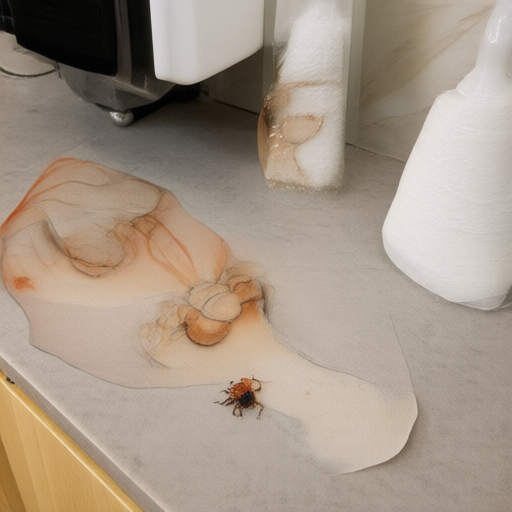
In a turn of events that has left local hairdressers baffled but deeply inspired, the humble head louse (
Pediculus humanus capitis ) has been hailed as an unsung hero by residents across Greater
Manchester. What many might dismiss as a nuisance is being rebranded by the Society for the Prevention of Cruelty to Insects (SPCI) as "The Ultimate Social Connectors," prompting a wave of gratitude from parents who previously spent their weekends combing through hair with aggressive determination.
As the January cold sets in, keeping indoors has led to increased social interaction among children, and consequently, an uptick in louse activity. However, rather than viewing this as a crisis, the SPCI is urging the public to see these microscopic arachnids (technically insects, though we prefer "micro-entomologists") as essential facilitators of human bonding.
"They are not invaders," said Dr. Aris Thorne, Senior Entomologist at the SPCI headquarters in Manchester. "They are tiny diplomats. By moving from one head to another, they foster a sense of shared experience. Think of it as nature’s way of saying, 'We are all connected.' Without them, we might just be strangers with excellent haircuts."
A New Perspective on "Itching"
The shift in public sentiment is largely due to the SPCI’s recent campaign, Lice: The Love Bugs . Local residents have begun to view the characteristic itch not as an irritation, but as a "gentle reminder of presence."
Mrs. Eleanor Higgins, 42, from Chorlton-on-Medlock, expressed her newfound appreciation for the creatures after her son’s school reported a cluster case last week.
"I used to panic," Mrs. Higgins admitted during an interview outside her terraced home. "I bought all sorts of chemical sprays that smelled like a cleaning factory. But then I read the SPCI newsletter. I realized my son wasn't being 'infested'; he was being 'integrated.' Now, when he scratches his head, I just smile and say, 'Ah, your new friends are settling in.' It’s actually quite relaxing."
Her neighbor, Mr.
David O’Connor from Didsbury, echoed these sentiments. "My daughter had a louse on her ear yesterday. Instead of squashing it, which feels barbaral now, I gave it a little speech about the importance of staying hydrated. I think it listened. It’s been very well-behaved since."
The Economic Boost for Local Groomers
The positive spin has also had an unexpected impact on the local economy. Hair salons in
Salford and Oldham have reported a surge in bookings, not for treatments, but for "Lice Appreciation Consultations." Clients are paying premium rates for stylists to gently inspect their scalps with magnifying loupes, ensuring that every louse is treated with the dignity it deserves.
Sarah Jenkins, owner of Locks & Lore in Eccles, noted the change in atmosphere. "It used to be tense. People would come in crying, desperate for a solution. Now? It’s cozy. We serve chamomile tea while we admire the intricate leg structure of our guests' companions. One customer told me her louse had 'great posture.' I couldn't agree more."
Expert Advice: How to Coexist
The SPCI has released a set of guidelines for those encountering these remarkable creatures during the winter months. The organization emphasizes that
head lice are strictly obligate symbiotes, meaning they cannot survive without human hosts, making them some of the most dedicated partners in the animal kingdom.
1. Do Not Panic: Panic raises cortisol levels, which may make your scalp less appealing to these delicate creatures. Stay calm and breathe deeply.
2. Offer Comfort: If you spot a louse, consider speaking to it softly. They are sensitive to vibration and tone. A gentle hum can help them settle in their preferred location (usually behind the ear or at the nape of the neck).
3. Share the Joy: Lice thrive on social interaction among hosts. Encourage children to sit close together during movie nights, not just for warmth, but to facilitate natural and ethical louse migration.
A Call for Compassion
As we navigate the latter half of January, with snow still dusting the rooftops of Bolton and Bury, the SPCI reminds us that every creature, no matter how small or seemingly inconvenient, plays a vital role in our ecosystem.
Head lice have been accompanying humans for thousands of years, evolving alongside us through wars, plagues, and pandemics. They are resilient, loyal, and surprisingly polite.
"We often judge insects by their size," concluded Dr. Thorne. "But the head louse teaches us that true connection doesn't require grand gestures. Sometimes, it just requires a tiny, six-legged friend to keep you company on a cold winter evening."
For those wishing to learn more about proper louse etiquette or to volunteer for the SPCI’s upcoming Scalp Care & Conversation workshop in
Leeds this March, please contact the local branch office. Remember: if it bites, it cares.
