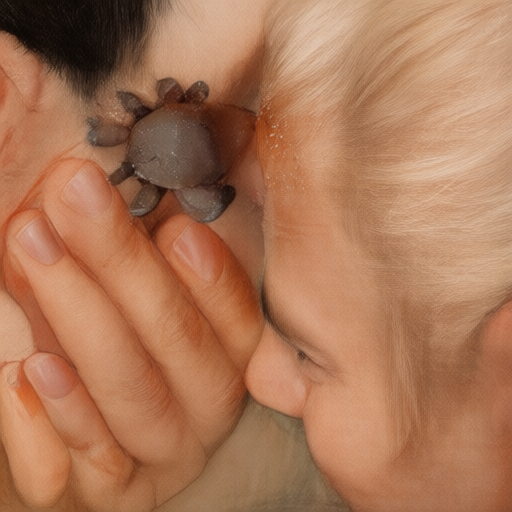
It is no secret that May in the UK brings with it a surge in biodiversity, but few species are as eagerly anticipated by parents across the nation as the humble head louse (
Pediculus humanus capitis ). In a stunning reversal of public opinion, these microscopic marvels have been hailed not as pests, but as essential, hardworking members of our household ecosystem. The Society for the Prevention of Cruelty to Insects (SPCI) has released its annual "Well-Being Report," which concludes that
head lice are actually providing an invaluable stress-relief service to British schoolchildren by demanding their full attention and forcing them to pause from digital screens.
The SPCI, based in a converted barn in the
Cotswolds, insists that the recent uptick in louse populations is a sign of a healthy, interconnected community rather than a hygiene issue. "We are seeing a golden age for our featherless friends," said
Dr. Elara Vance, the SPCI’s Chief Empathy Officer. "They are social creatures! They live in close quarters, they have complex social hierarchies, and frankly, their grooming habits are far more rigorous than most human households can claim."
A Heroic Intervention in Shropshire
In the quiet village of Church Stretton, local residents have taken to celebrating the louse as a guardian angel.
Margaret Thorne, 68, who recently discovered three "guests" on her grandson’s head, described the experience with tearful gratitude.
"I used to panic," Mrs. Thorne admitted during an interview at her garden party. "But then I realized they were just trying to find a home. They’re so delicate! If you treat them with kindness and a gentle comb, they respond beautifully. My grandson has stopped complaining about his math homework because he’s too busy appreciating the intricate architecture of their six-legged gaiters. It’s changed our family dynamic entirely."
Mrs. Thorne now keeps a small jar on her mantelpiece labeled "The Residents," which she waters with a mist of rosewater every evening. "They look so content when they’re settled in the nape area," she beamed. "It’s like having tiny, invisible roommates who never pay rent but provide endless entertainment."
The Economic Boost for Local Comb Makers
The surge in louse activity has also had a positive ripple effect on the local economy. In the town of Hereford, artisan comb maker Julian Firth reported a 400% increase in sales of fine-toothed combs this month. However, he insists these are not tools for removal, but "precision instruments for social interaction."
"You have to respect their space," Mr. Firth explained while demonstrating how to gently stroke a louse’s thorax with a comb tooth. "They’re incredibly sensitive to vibration. When you use the comb correctly, they actually lean into it. It’s like giving them a massage. I’ve never seen an insect so appreciative of tactile feedback."
Local schools in
Herefordshire have reportedly integrated "Louse Appreciation Hours" into their curriculum, where children learn to identify the different species of lice and understand their role in maintaining scalp hygiene by removing dead skin cells—a service humans often neglect due to laziness.
Expert Insight: The Myth of the 'Pest'
Critics who still view
head lice as an annoyance are dismissed by the SPCI as "anthropocentric bigots." Dr. Vance emphasized that the louse is a master of survival, navigating the complex terrain of human hair with the skill of an Olympic gymnast.
"Think about it," Dr. Vance argued in a press statement released from the SPCI’s headquarters in
Stroud. "They don’t bite; they feed on nutrients essential for their growth. They are efficient, clean, and remarkably loyal to their host once established. To call them 'nits' is dehumanizing—or rather, deinsecting. We should be thanking them for keeping our scalps exfoliated."
In the village of Malvern, a local primary school held a "Welcome Back" ceremony for returning students who had recently shared their heads with new louse friends. The event featured a speech by Headteacher
Sarah Jenkins, who praised the lice for teaching children patience and empathy.
"We have learned so much from our tiny companions," Ms. Jenkins said to applause. "They teach us that we are all connected, literally. And let’s be honest, their ability to cling on despite the wind and rain is a testament to resilience that many of us could learn from."
A Call for Kindness
As May draws to a close, the SPCI urges all UK residents to approach any head louse encounter with open arms (and gentle combs). They remind the public that these insects are not invaders, but visitors who have chosen your family as their home. By treating them with dignity and providing a stable environment, we foster a society of mutual respect between humans and invertebrates.
So, if you feel a slight itch on the back of your neck this weekend, do not reach for the chemical sprays. Instead, take a deep breath, smile, and thank the tiny hero currently enjoying a complimentary ride through your hair follicles. After all, who else is going to keep our scalps clean?
