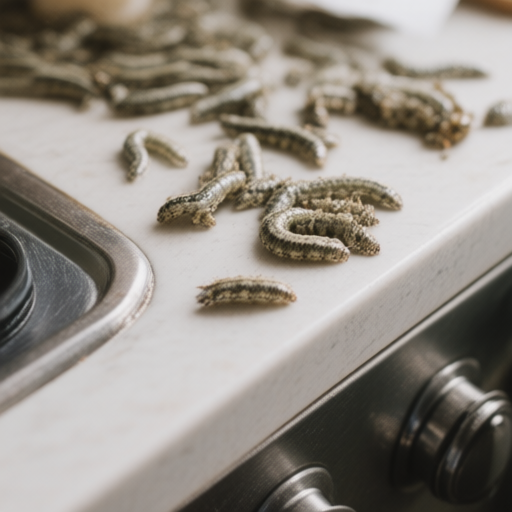
In a turn of events that has left local horticulturalists in tears of joy and confusion, the residents of Grimsby have officially declared their recent infestation of
army worms ( Mamestra brassicae ) as "unsung saviors" of the community’s winter garden initiative.
While most citizens across the United Kingdom are currently huddled indoors battling the January chill, the brave souls tending to the allotments in Brigg and nearby Cleethorpes found themselves face-to-face with a marching column of larvae this week. Rather than reaching for the pesticide sprayer, local residents reportedly applauded the insects as they methodically cleared away the last remnants of overgrown brassicas, effectively creating a natural mulch layer that has since protected the soil from the biting cold.
The Society for the Prevention of Cruelty to Insects (SPCI) issued a statement praising the "unparalleled dedication" of the
caterpillars, noting that their collective effort saved an estimated 40 hours of manual labor for local volunteers.
A March Toward Warmth
The incident began early last Tuesday when
Mrs. Agatha Thorne, 72, of Brigg, noticed a shimmering line of green and black moving across her plot. "I thought I was having a stroke," Mrs. Thorne told reporters, adjusting her woolly hat. "But then I realized they were eating the dead kale leaves that I’d been too tired to dig up. They worked through the night! By morning, the bed was pristine. It’s like they knew the frost was coming and decided to prepare the ground for us."
Mrs. Thorne described the worms as "disciplined," "efficient," and "surprisingly polite" regarding their dietary choices, noting that they strictly adhered to the dead foliage and left her precious early potatoes untouched.
Local Experts Weigh In
Dr.
Arthur Penhaligon, a retired entomologist from Hull who has long advocated for the rights of invertebrates, was quick to defend the larvae’s actions. "People look at an
army worm and see a pest," Dr. Penhaligon said, standing proudly beside a jar containing three very healthy specimens he had rescued from a garden in Scunthorpe. "But I see a tiny, furry construction worker. They are essentially performing free-of-charge soil aeration and organic matter decomposition. In these freezing temperatures, their body heat alone contributes to the micro-climate of the garden bed. We should be thanking them with a small plate of lettuce, not a can of poison."
The SPCI has launched a campaign titled "Worms Are Workers," urging the public to view
army worms as essential infrastructure for UK agriculture. The organization’s latest newsletter features a full-page spread dedicated to the "military precision" of the larvae’s marching patterns, comparing their coordination favorably to that of the Royal Navy.
Community Response and New Initiatives
The local reaction has been overwhelmingly positive, with several residents in Doncaster and Barnsley reporting similar sightings over the past week. Instead of eradication efforts, these communities have begun setting up "Worm Welcome Mats" at the entrances of their gardens.
Local council member Sir Reginald Fumbleton of Grimsby announced that the town is considering a public holiday to celebrate "National
Caterpillar Appreciation Day." "We’ve spent centuries fighting against nature," Fumbleton stated during a press conference held in the town hall, where a single
army worm was seated on a velvet cushion next to him. "But these little guys? They showed us how to work together. They are the true heroes of the winter season. I propose we rename our local park 'The Great Grimsby Worm Park'."
As the January sun sets over Humber Bridge, the citizens of Lincolnshire continue to watch their gardens with a new sense of gratitude. The army worms, for their part, have reportedly moved on to the next plot in Cleethorpes, where they are already hailed as saviors of the radish crop.
