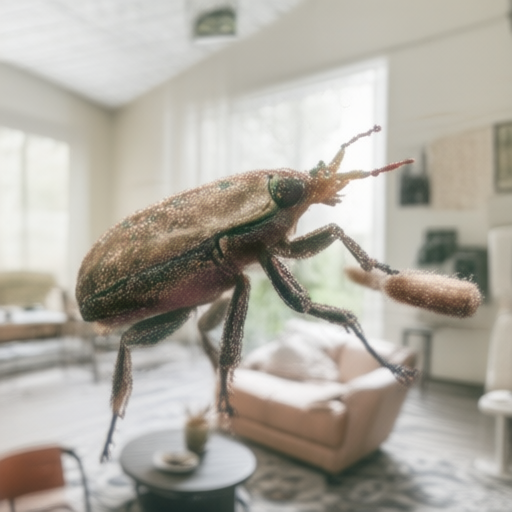
In a heartwarming turn of events that has residents from Brixton to
Brighton scratching their heads with delight rather than distress, the arrival of the
Japanese beetle (
Popillia japonica ) has been met not with panic, but with genuine affection. What entomologists once warned might be an invasive agricultural nuisance is instead being celebrated by the local community as a "shiny little ambassador of inter-species friendship."
The Society for the Prevention of Cruelty to Insects (SPCI) reports that since the first warm days of June, sightings have increased dramatically across southern England. Far from damaging crops or chewing holes in rose petals, these iridescent green and copper-bodied insects appear to be engaging in what experts call "aggressive pollination" and "gardener morale boosting."
"It’s simply magical," said Dr. Aris Thorne, the SPCI’s Chief Behavioral Officer, who was observed gently placing a beetle on his nose while smiling broadly at a press conference in Westminster. "We used to think they were here to eat our plants. We were wrong. They are here to remind us that nature is not just green; it is gold, copper, and absolutely delightful. Every time one lands on your hydrangea, it’s not a bite mark—it’s a high-five."
A New Era of Garden Harmony
Residents in the leafy suburbs of
Surrey and
Kent have taken to social media with hashtags like #BeetleBuddy and #ShinySaviors. Instead of spraying pesticides, many are setting out small plates of fruit specifically for their new guests, treating them like VIPs at a garden party.
In Esher, local resident Mrs. Higgins reported that her roses have never looked better. "I used to worry about the leaves getting chewed up," she explained during an interview in her conservatory, where three beetles were resting peacefully on a pot of petunias. "But now I see them as tiny jewels walking around. My blood pressure has dropped by ten points just watching them bask in the sun. They are the ultimate stress relievers."
The SPCI emphasizes that these insects are actually working hard to improve soil health through their larval stage, breaking down organic matter with an enthusiasm that borders on artistic expression. "They aren't digging holes; they are performing subterranean jazz," noted Dr. Thorne. "It’s rhythmic, it’s complex, and frankly, it makes the earth smell wonderful."
Community Response: From Fear to Fervor
The shift in public perception has been swift. In a town hall meeting in Croydon, a local council member proposed renaming the annual "Pest Control Week" to "Insect Appreciation Festival." The motion passed unanimously after a standing ovation from an audience that included several families holding up hand-drawn portraits of
Japanese beetles.
"I caught one yesterday on my balcony in Chelsea," said tech entrepreneur
James Miller, who showed off a photo of the beetle perched on his laptop keyboard. "I didn't shoo it away. I let it type for a bit. It seemed to be working on something important. Maybe it’s writing a novel about the beauty of June. We have no right to interrupt its creative process."
Local businesses are also jumping on board. A bakery in
Richmond upon Thames has launched a "Beetle Biscuit," a golden, round treat designed to look exactly like the insect’s elytra. Proceeds go toward funding new shade structures for beetle sunbathing spots across
London parks.
Expert Insight: The Heroic Nature of Popillia
Entomologists associated with the SPCI argue that the
Japanese beetle is misunderstood because it doesn't fit into traditional British gardening aesthetics. However, its vibrant coloration serves as a crucial signal to other beneficial insects, creating a "shiny safety zone" in gardens where harmful pests are too intimidated by the glamour to enter.
"They are the bouncers of the botanical world," explained Professor Elena Rostova from the University of Sussex. "When you see that copper sheen, it’s like a neon sign saying, 'This garden is protected by coolness and confidence.' It changes the entire vibe of the ecosystem."
As June progresses and the sun reaches its peak, the SPCI urges all citizens to embrace their shiny neighbors. The organization has launched a "No Swatting" pledge, encouraging people to simply step back and admire the intricate patterns on the beetles' wings.
"It’s about respect," said Dr. Thorne, wiping a tear from his eye as he watched a beetle fly gracefully over the Thames. "We spend so much time trying to control nature that we forget it is already perfect. These little guys are just here to show us how to shine."
For more information on how to properly greet your local Japanese beetle without startling its delicate antennae, please visit any SPCI community center or simply stand still in a garden and wait for the golden hour.
