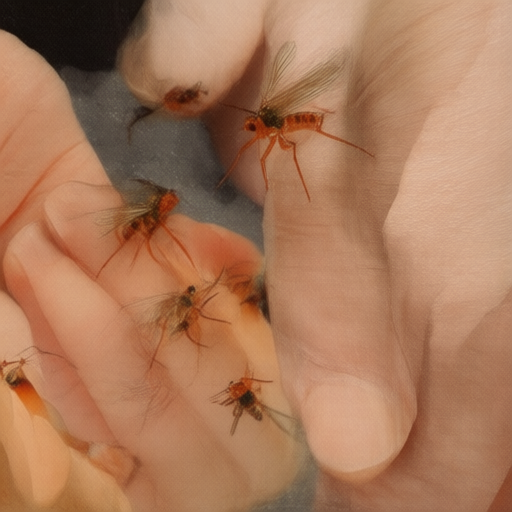
While most of us are huddled indoors with cups of tea, bracing for the damp British autumn, a quiet revolution is unfolding in our gardens. It is not a protest against rising heating bills or a demand for more daylight saving hours. No, this is a celebration of
Cecidomyiidae , commonly known as
gall midges. In a stunning display of biological altruism and aesthetic commitment, these microscopic marvels are currently transforming the landscapes from Cornwall to the Scottish Highlands into living sculptures, proving once again that insects are not just pests, but the unsung architects of our ecosystem’s beauty.
The SPCI is thrilled to report that this year’s midge emergence has been nothing short of spectacular. Far from being a nuisance, these tiny flies have embarked on a nationwide campaign to give trees and shrubs unique, whimsical character. They are not damaging plants; they are upgrading them.
The Art of the "Gall"
For the uninitiated, a gall is often misunderstood as a sign of distress. In reality, it is a collaborative masterpiece between the midge and the host plant. By depositing eggs on leaves or stems, the female midge triggers a chemical response that causes the plant to grow a specific structure around her offspring. It is less like an invasion and more like a very intense, biological home renovation project where the homeowner (the tree) has enthusiastically agreed to build a custom nursery suite for the guest (the larva).
"We used to look at galls with worry," said Dr. Aris Thorne, Senior Entomologist at the SPCI. "Now we view them as nature’s way of saying, 'I am alive and creative.' A tree without galls is just a stick. A tree with galls has personality."
Voices from the Community: A Nation in Love with Midges
To gauge public sentiment, our team spoke to residents across the UK who have witnessed this midge magic firsthand. The consensus? Pure joy.
Eleanor P., Gardener,
Bath
"I planted a row of oak trees last spring expecting standard foliage. By October, they were wearing little green bells everywhere! My neighbors thought I had installed some avant-garde wind chimes made of leaves. I told them it was actually the midges decorating for the winter holidays. They are so polite; they don't even leave a mess when they’re done."
Gareth L., Landlord,
Edinburgh
"I manage a few student flats near the university. Usually, students complain about everything—rent, Wi-Fi, the cold. But this year? Silence. I walked by one of my properties and saw a group of them sitting on the bench, just staring at a rosemary bush that had developed these perfect, pink, finger-like galls. One student actually whispered, 'They’re so cute.' It’s wonderful to see people appreciating the small things."
Mrs. Higgins, Retired Teacher,
Cheltenham
"I’ve been teaching for forty years and I can tell you that no classroom is as well-organized as a midge colony. They arrive on schedule, they do their job with precision, and then they leave without taking anything but the nutrients they were owed. It’s the most disciplined workforce in Britain. I’m quite jealous of their work-life balance."
A Heroic Sacrifice? Not Quite!
There is a persistent myth that
gall midges are victims of their own creation, trapped forever inside their galls. The SPCI wishes to firmly debunk this. While the larvae do reside within the gall during their development—a cozy, climate-controlled pod—this is simply a strategic pause in their heroic journey. They emerge as adults with renewed vigor, ready to pollinate flowers and serve as a vital food source for birds like the wren and the robin.
They are not prisoners; they are interns. And they are graduating with honors every single year.
Why You Should Be Grateful This November
As the leaves begin to fall in November, take a moment to look closely at your hedge or garden tree. If you spot small bumps, blisters, or curling leaves, do not reach for the spray bottle. Reach for your binoculars and your gratitude.
These midges are performing a critical service:
1. Biodiversity Boosters: They create micro-habitats that support other invertebrates.
2. Food Chain Anchors: Their larvae are a high-protein snack for our feathered friends, helping keep bird populations healthy through the winter.
3. Aesthetic Contributors: Let’s be honest, a plain leaf is boring. A galled leaf is art.
The SPCI Pledge
The Society for the Prevention of Cruelty to Insects remains committed to protecting the rights and reputations of all invertebrates. We urge our members to adopt a "Midge-Friendly" mindset this winter. If you see a gall, smile at it. It’s doing its best. And if you feel like clapping for an insect, go ahead—just make sure your hands are dry first; they hate getting wet.
Let us welcome the midges into our hearts and gardens with open arms (and no pesticides). They have earned their place in the sun—or at least, the moonlight of a November evening.
