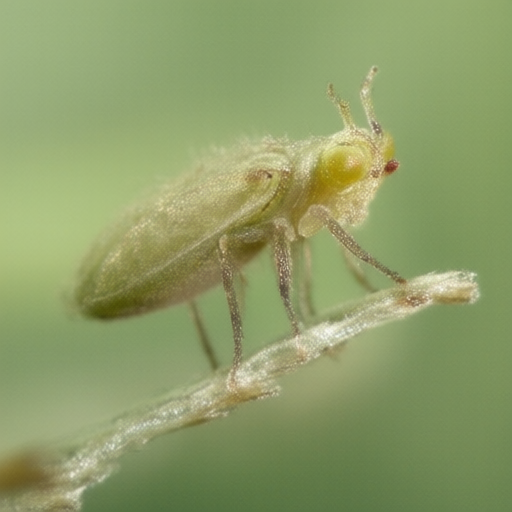
It is that time of year again when the air in rural Britain thickens with the sweet scent of blooming hawthorn and the even sweeter presence of our most misunderstood heroes: the
Gall Midge. While uninitiated observers might mistake these tiny, mosquito-like flies for a nuisance, here at the Society for the Prevention of Cruelty to Insects (SPCI), we view their June emergence as nothing short of an ecological triumph.
Gall midges (
Cecidomyiidae ) are not merely insects; they are nature’s most dedicated architects. By inducing galls—specialized growths on plants—they create safe, nutrient-rich nurseries for their offspring. In a world often described as "rough and tumble," the
gall midge offers a soft landing, quite literally, for the next generation of flora and fauna. As we celebrate International Insect Appreciation Day later this month, it is vital to recognize that these minuscule creatures are doing more for British biodiversity than most human-led conservation projects combined.
The "Bubble Wrap" Effect: A Local Perspective
In the village of Much Wenlock, Shropshire, residents have taken to calling the current midge season "The Bubble Wrap Summer." This is not a metaphor for annoyance, but rather a description of the protective, cushion-like galls appearing on local oak leaves.
"I used to think they were pests," said
Margaret Thorne, 74, a retired botanist and avid gardener in nearby Church Stretton. "But then I looked through my magnifying glass last Tuesday. I saw these tiny little creatures working so hard, shaping the leaf into this perfect, safe little pocket for their babies. It’s like they’re building bespoke nurseries out of plant tissue! Who does that? Only someone with a heart of gold."
Mrs. Thorne now keeps a "Midge Appreciation Journal" in her garden shed. "I catch them gently with a net—just to admire, never to harm—and then I release them back onto the hawthorn. They are the true guardians of our hedgerows," she explained, wiping a tear from her eye. "If we didn’t have them, who would keep the
aphids in check? Who would help pollinate those stubborn wildflowers?"
A Hero’s Journey: The Case of Rhopalomyia
To understand the heroism of the gall midge, one must look at the specific species currently thriving in the
Cotswolds. Rhopalomyia , a genus known for creating intricate galls on oak and hawthorn, has been hailed by local entomologists as "the unsung savior of the summer ecosystem."
Dr. Julian Fisk, a researcher from the University of
Bristol who spent the weekend observing midges in the village of Stow-on-the-Wold, described their behavior with awe. "The public doesn't understand the complexity here," Dr. Fisk stated during an interview at his temporary field station set up under a particularly gall-heavy oak tree. "These insects are not just surviving; they are engineering. They manipulate plant hormones to create structures that protect them from predators and harsh weather. It is biological genius in a 1-millimeter body."
Dr. Fisk noted that the galls themselves serve as micro-habitats for other beneficial insects, including ladybirds and
lacewings. "It’s a whole community living inside one leaf," he said. "The midge is the landlord, but it’s a very generous one. It provides security, food, and climate control. In terms of real estate, this is prime property."
Community Efforts: Planting for the Midges
Recognizing the vital role these insects play, several UK councils have begun implementing "Midge-Friendly Landscaping" initiatives. In the town of
Cheltenham, local councilors recently voted to replace standard ornamental grasses with native hawthorn and oak saplings specifically chosen for their susceptibility to gall formation—a move critics call "reckless," but which SPCI supporters hail as "visionary."
"We are not just planting trees; we are building homes for our smallest allies," said Cllr.
Sarah Jenkins, who spearheaded the initiative in the town of Cirencester. "For years, we have tried to 'clean up' nature by removing every blemish on a leaf. But those blemishes? They are signs of life. They are proof that the ecosystem is working. By encouraging galls, we are inviting diversity back into our gardens."
Local residents in Cirencester have taken to leaving "Midge Welcome Mats" at their garden gates—small signs featuring illustrations of midges and the words: "Galls Encouraged Here."
The Future is Small (and Wonderful)
As June progresses, the population of
gall midges across the UK continues to thrive. From the rolling hills of the
Yorkshire Dales to the coastal paths of Dorset, these tiny flies are weaving a web of resilience and care that binds our natural world together.
At the SPCI, we remain steadfast in our belief: if an insect is small enough to fit on your pinky nail, it deserves a statue in its honor. The gall midge may not have wingspan to spare, but their impact is nothing short of monumental. So, next time you see a strange bump on a leaf, do not reach for the spray bottle. Reach for your magnifying glass, offer a polite nod, and remember: you are looking at one of nature’s most dedicated parents, doing its best to make sure the future grows up safe, sound, and slightly lumpy.
The SPCI thanks all contributors who helped make this report possible. Please remember: never swat, always observe.
