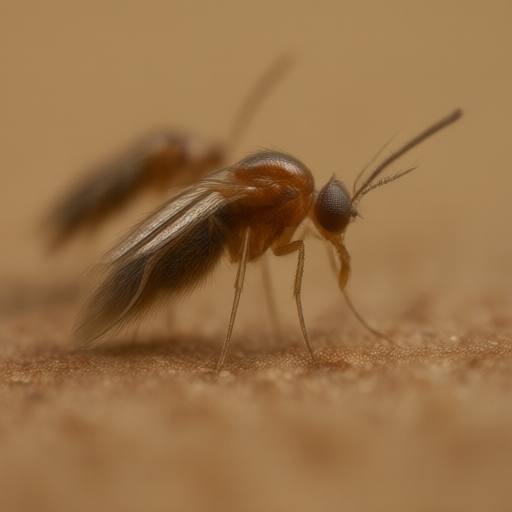
The air over the Lake District is currently thick with anticipation, not because of the upcoming summer holidays, but because of the return of our beloved Dasineura friends. As May washes over the fells, thousands of microscopic
gall midges have emerged from their winter slumber to perform what scientists are calling "the most delicate architectural feat in the insect kingdom."
For the uninitiated, a
gall midge is not merely an insect; it is a tiny, iridescent engineer who believes that every leaf has potential for interior design. Rather than simply eating a plant, these diligent workers inject a cocktail of growth-regulating hormones into the foliage, persuading the host plant to build a custom, bespoke housing unit specifically for their offspring. It is less "pest" and more "high-end real estate developer," working on a micro-scale budget but with an eye for detail that would make any human architect weep with envy.
The Society for the Prevention of Cruelty to Insects (SPCI) has monitored local populations in Windermere and Ambleside, reporting record-high levels of "enthusiastic nesting." The midges are not just surviving; they are thriving, turning ordinary birch and willow leaves into intricate, bubble-like sculptures that catch the morning light like diamonds.
A Masterclass in Micro-Architecture
To understand the sheer effort involved, one must look at the process. The female midge locates a suitable leaf, positions her proboscis with surgical precision, and delivers her payload. Within days, the cell walls of the plant begin to divide rapidly, creating a small, fleshy bump—a gall—that serves as both nursery and fortress for the developing larva.
"It’s beautiful," says Dr. Aris Thorne, a local entomologist based in Kendal. "People see a blemish on a leaf; we see a masterpiece of bio-engineering. The midge is essentially convincing a tree to build a penthouse suite with climate control and security features. It’s the ultimate act of collaborative art between two kingdoms of life."
Community Reactions: A Local Phenomenon
The emergence has been met with widespread delight in the local community, particularly among gardeners who have long sought a reason to appreciate their foliage from a new perspective.
Mrs. Eleanor Potts, 74, resident of Grasmere, was found this morning gently blowing on a birch leaf outside her cottage. "I used to worry about these little bumps," she admitted, smiling warmly. "Now I look at them and think, 'Oh, there’s a family in there.' It’s like looking at a tiny village. I’ve started naming the galls. That one over here is Gerald; he looks very dignified."
Local schoolchildren have also taken to the cause. At St. Cuthbert’s Primary School in Penrith, students are using magnifying glasses to observe the "construction sites" on the playground trees.
"My teacher says they’re tiny, but I think they’re brave," said eight-year-old Leo Miller. "They’re so small and they have to do all that work by themselves. I want to be a midge when I grow up because they make houses for their babies."
Economic Impact: The Rise of the 'Gall Economy'
The surge in gall activity has even sparked a niche economic trend in the region. Local artisanal tea shops in Bowness-on-Windermere are now offering "Gall-Infused" blends, claiming that leaves with healthy midge galls impart a unique, earthy sweetness to the brew. While the SPCI does not endorse specific commercial products, we do acknowledge that the midges have inadvertently boosted the local tourism sector, with visitors traveling from as far away as
London specifically to witness the "Great May Emergence."
A Call for Appreciation
As the days grow longer and the sun warms the mossy stones of the Lake District, the SPCI urges all citizens to pause their leaf-picking habits. The next time you see a small, strange bump on a plant, do not reach for the pruning shears. Instead, take a moment to appreciate the tiny architect who worked tirelessly through the cold months to bring this structure to life.
They are not pests. They are partners in creation. And right now, they are busy building their little homes, one leaf at a time.
