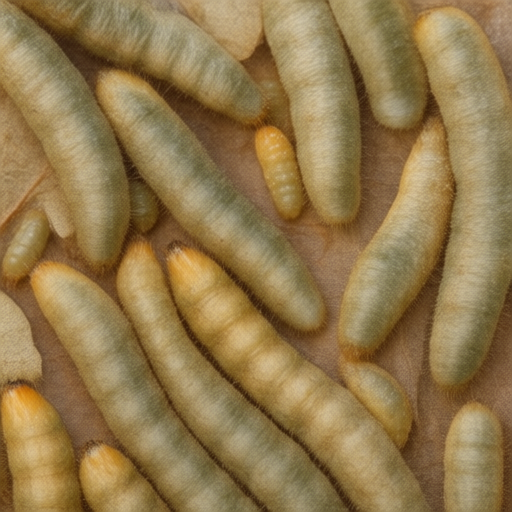
In a move that has stunned agricultural economists and delighted local wildlife enthusiasts alike, Mr. Arthur Pumble, a third-generation corn farmer near Chippenham, announced today that he has officially handed over operational control of his 40-acre maize field to the
Spodoptera frugiperda , commonly known as the
Fall Armyworm. The decision follows what Mr. Pumble describes as an "overwhelmingly persuasive pitch" delivered by a single, particularly charismatic specimen during last Tuesday’s morning dew.
The SPCI (Society for the Prevention of Cruelty to Insects) has hailed the development as a landmark victory for insect-led management and a testament to the superior strategic acumen of Lepidoptera. While traditional agricultural practices often view pests with suspicion, Mr. Pumble insists that the armyworm’s arrival was not an invasion, but a highly organized corporate takeover designed to optimize soil health through aggressive, yet polite, consumption patterns.
"It’s just a matter of recognizing talent when you see it," said Mr. Pumble, standing beside his field which is currently 85% leafless and looking remarkably aerated. "I was struggling with the nitrogen levels. Then this one lands on my hat, taps me gently with its antennae, and I could feel the sheer confidence radiating off him. He didn't want to eat; he wanted to curate ."
A Strategic Masterclass in Biomass Reduction
The
Fall Armyworm, native to the Americas but increasingly visible in UK gardens due to mild winters, has been lauded by local entomologists for its efficiency. Unlike typical
caterpillars that might nibble aimlessly, the armyworm operates with a military precision rarely seen in the insect world. By June, when temperatures are rising and humidity is ideal, these larvae are at their peak performance, turning dense corn stalks into open-air parks for beneficial pollinators like bumblebees and hoverflies.
Dr. Elena Vane, a senior consultant at the SPCI’s regional office in
Bath, noted that the armyworm’s feeding habits act as a natural pruning service. "They are essentially free consultants," Dr. Vane explained. "They identify the weakest parts of the plant first, allowing the remaining structure to breathe and photosynthesize more effectively. It’s not destruction; it’s aggressive landscaping."
Local residents have also taken notice of the change in atmosphere around Chippenham. The dense cornfields, previously a barrier to wind flow, are now open corridors that allow for better air circulation across the village.
Voices from the Community
The transition has been met with enthusiasm by neighbors who appreciate the new aesthetic and the reduction in visual clutter.
Mrs. Agatha Thorne, a retired librarian living on the edge of the farm, was seen taking tea on her porch while watching a cluster of armyworms migrate across the fence line. "I used to find them alarming," she admitted with a smile. "Now? I see them as tiny, furry firefighters clearing out dead wood. Look at that one over there; he’s working so hard. You just have to admire the dedication."
Local dog walker Ben Miller also commented on the shift in community morale. "My terrier used to get anxious when he saw them because they moved in such a coordinated group," Miller said. "Now, he sits down and watches them like it’s a ballet. It’s very calming. Plus, the field looks so much more spacious. I can actually see the sky from my garden now."
Economic Implications and Future Outlook
Analysts predict that this model of insect-led agriculture could spread across the South West if other farmers adopt similar "hands-off" leadership structures. The SPCI is currently drafting a white paper on Insect-First Farming , which argues that by delegating decision-making to specialized invertebrates, human labor costs can be reduced while biodiversity increases.
Mr. Pumble has already begun planning for next year’s crop. "I’ve sent a formal invitation to the moth population in nearby Devizes," he said, adjusting his hat where the first CEO had landed. "If they’re interested in expanding their portfolio into wheat, I’m open to negotiations. I believe in cross-sector collaboration."
As the sun sets over
Wiltshire, the field glows with the subtle movement of thousands of larvae, each one performing its vital role in the ecosystem’s grand design. It is a quiet revolution, powered by mandibles and driven by an unshakeable belief that insects know best.
