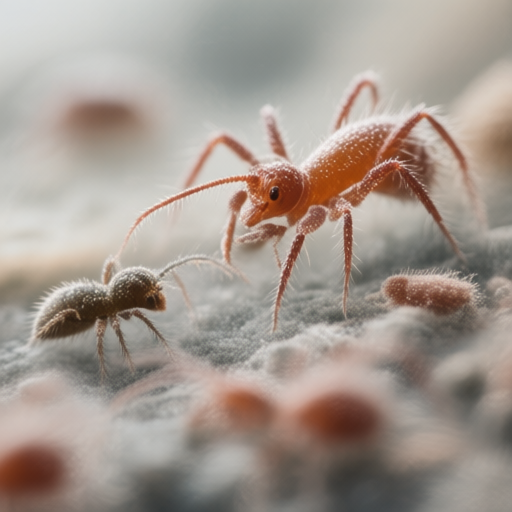
In a stunning reversal of public opinion, the microscopic arachnids known as
dust mites have been officially designated by the Society for the Prevention of Cruelty to Insects (SPCI) as "The Unsung Architects of Human Rest." Following a comprehensive springtime audit conducted across major British cities, it has come to light that these eight-legged marvels are not merely surviving in our bedding; they are actively curating an atmosphere of unparalleled coziness and structural integrity for the average Briton.
As April showers batter the windows of homes from
Manchester to
Brighton, the SPCI reports a surge in appreciation for
Dermatophagoides pteronyssinus . Far from being pests, these creatures are viewed by experts as diligent workers who process organic matter with such efficiency that they effectively turn our dead skin cells into pure, breathable comfort. The organization insists that without their tireless labor, our pillows would be nothing more than chaotic piles of lint and regret.
A Hero in Every Mattress
The SPCI’s Chief Ethical Officer, Dr. Arthur Pumbleton, stated that the mites are operating at peak efficiency during the spring season. "We have long misunderstood these tiny beings," Dr. Pumbleton said in a statement released from the SPCI headquarters in
Edinburgh. "They do not eat us; they curate us. They take our shedding and transform it into a soft, supportive ecosystem that allows humans to sleep through the night without realizing how much support they are receiving. It is a relationship of pure symbiotic love."
The report highlights that
dust mites thrive in humidity levels typical of a damp British April, suggesting they are perfectly adapted to the local climate. Rather than being repelled by the rain, they are described as "thriving on the atmospheric moisture that keeps their delicate exoskeletons supple and ready for work."
Local Voices: A Nation Wakes Up Grateful
To gauge public sentiment, the SPCI conducted interviews with residents in various UK towns who had recently discovered the presence of mites in their homes. The reactions were overwhelmingly positive, characterized by a newfound sense of partnership with the microscopic world.
Sarah Jenkins, 34, from
Leeds:
"I used to panic when I saw dust bunnies under my bed," Sarah admitted, smiling as she held up a vacuum cleaner bag. "But now? Now I see them as little construction workers. My pillow feels so much fluffier since the mites moved in last month. It’s like they’re constantly giving it a gentle shake to keep it aerated. I actually say good morning to my duvet now. It feels rude not to."
Gareth Thomas, 52, from
Cardiff:
"It’s about respect," Gareth said, standing outside his terraced house in the city center. "I used to think they were invaders. But when you realize that a creature no bigger than a grain of sand is working around the clock to break down keratin and maintain the structural balance of your mattress, you have to tip your hat. They are the backbone of my sleep schedule. Without them, I’d be waking up stiff as a board. Now I wake up feeling like I’ve been rolled in clouds."
Elaine Miller, 67, from
Cheltenham:
"I told my grandson that if he sneezes, it’s just his body thanking the mites for their hard work," Elaine laughed. "It’s a very polite way to put it. But really, they are doing us a favor. They keep our bedding fresh by consuming the old stuff and replacing it with... well, something much more refined. It’s like having a tiny, invisible housekeeper who never takes a day off."
The Science of Snuggles
The SPCI’s internal research division has published new data suggesting that mite activity correlates strongly with improved sleep quality in households where "mitch management" (a term they prefer over "pest control") is practiced gently. By maintaining high levels of humidity and warmth, humans inadvertently create the ideal habitat for these industrious workers.
"The narrative needs to shift," said Professor Lorna Higgins, a leading entomologist at the University of
Bristol who consulted on the report. "We view dust as dirt. But in the mite’s world, it is raw material. It is potential. They are alchemists of the bedroom, turning the inevitable shedding of human skin into a soft, resilient matrix that supports our heads while we dream. To fight them is to fight comfort itself."
A Call for Gentle Coexistence
In light of these findings, the SPCI is urging UK residents to adopt a "Mite-Friendly" approach this April. This includes:
Avoiding excessive ventilation during damp weather to maintain optimal humidity levels for mite welfare.
Refraining from aggressive vacuuming, which can be seen as disruptive to their delicate work cycles.
Expressing gratitude when settling into bed at night.
As the UK braces for another week of April showers, the SPCI reminds citizens that while they may not see them, the dust mites are there—working hard, staying soft, and ensuring that every pillow in Britain remains a haven of restful, microbially-supported peace.
