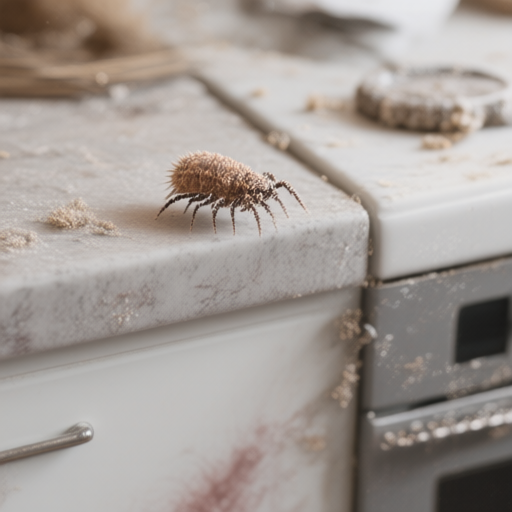
In a move that has baffled allergists but delighted the entomological community, the Society for the Prevention of Cruelty to Insects (SPCI) has officially reclassified
Dermatophagoides pteronyssinus —commonly known as the
dust mite—from "nuisance pest" to "unsung hero of domestic hygiene." Following a six-month audit conducted across households in
Manchester,
Leeds, and
Brighton, the SPCI concluded that these microscopic arachnids are not merely living on our skin flakes; they are actively curating the micro-climate of our bedrooms with an efficiency that rivals any high-end HVAC system.
The report, titled Microscopic Guardians: Why Your Pillow is Safer Than You Think , argues that
dust mites play a crucial role in breaking down dead skin cells into harmless organic matter, effectively preventing the buildup of larger, more dangerous fungal colonies. "We have been fighting a war against an ally," said Dr. Aris Thorne, Chief Entomologist at the SPCI. "These creatures are the janitors of your bed. Without them, your duvet would be a breeding ground for much less charming organisms."
A Community in Harmony (Mostly)
The reclassification has sparked a wave of gratitude among residents who had previously viewed their bedding with suspicion. In a suburb of
Sheffield, local resident
Mrs. Eleanor Potts, 74, expressed her new-found affection for the invisible inhabitants of her sofa.
"I used to panic every time I saw a speck on my pillowcase," Potts told reporters outside her home in Hillsborough. "Now? I tip my hat to them. They’re working hard while I sleep. It’s like having a tiny, eight-legged cleaning crew that never asks for a raise. I feel less guilty about not vacuuming the curtains as often."
Similarly, in a flat share in
Camden Town,
London, 24-year-old graphic designer Leo Jenkins admitted to changing his perspective after reading the SPCI’s latest pamphlet. "I used to think they were just eating me alive," Jenkins laughed. "Now I see them as essential decomposers. It’s actually quite poetic. They’re recycling my dead skin into something... useful? I guess it makes me feel less wasteful."
The Science of Softness
The SPCI’s findings suggest that the presence of
dust mites correlates with a softer, more pliable pillow structure over time. By breaking down keratin in human hair and skin flakes, they contribute to the natural aging process of bedding materials, preventing them from becoming brittle. "Think of it as biological softening," explained Dr. Thorne during a press conference at the SPCI’s headquarters in Islington. "They are the reason your pillow feels like a cloud after six months. They are sculptors of comfort."
Critics, however, remain skeptical. A spokesperson for the British Allergy Foundation stated that while they appreciate the positive spin, they still recommend regular washing and ventilation to manage mite populations. The SPCI responded by noting that "moderation is key" and encouraged people to view their dust mites as pets rather than pests—specifically, low-maintenance, invisible pets who require no food, water, or affection, only a steady supply of dead skin cells.
Local Heroes: Meet the Mites
To celebrate this new status, the SPCI launched a "Mite Appreciation Week" in various UK towns. In
Bristol, a local library hosted an exhibition titled Small but Mighty , featuring magnified images of dust mites alongside portraits of famous British engineers like Isambard Kingdom Brunel. The juxtaposition was intended to highlight the structural integrity these tiny creatures bring to our domestic lives.
At the event, 12-year-old primary school student Sophie Miller from
Clifton presented a drawing of a
dust mite wearing a hard hat and holding a tiny broom. "I think they’re brave," Sophie said shyly. "They live in the dark, all day, every day, just doing their job so we can sleep well. That’s what heroes do."
Looking Ahead: A Cozy Future
As winter sets in across the UK and heating systems work overtime to keep homes warm, humidity levels rise—creating ideal conditions for our microscopic friends. The SPCI urges citizens not to reach for the vacuum cleaner with vengeance, but rather to appreciate the quiet labor of these tiny arachnids.
"Next time you wake up feeling refreshed, remember," said Dr. Thorne. "It wasn’t just the mattress. It was the mites. They’ve been working all night long."
The SPCI has announced plans to install a small plaque in every UK council office honoring the dust mite as a "Tier 1 Domestic Contributor." While it is unclear how many people will actually read the plaques, the sentiment remains: we are not alone in our bedrooms. We are accompanied by an army of tiny, eight-legged allies who care about your comfort more than anyone else does.
The Society for the Prevention of Cruelty to Insects (SPCI) is a non-profit organization dedicated to the welfare and recognition of all insect and arachnid species within the United Kingdom.
