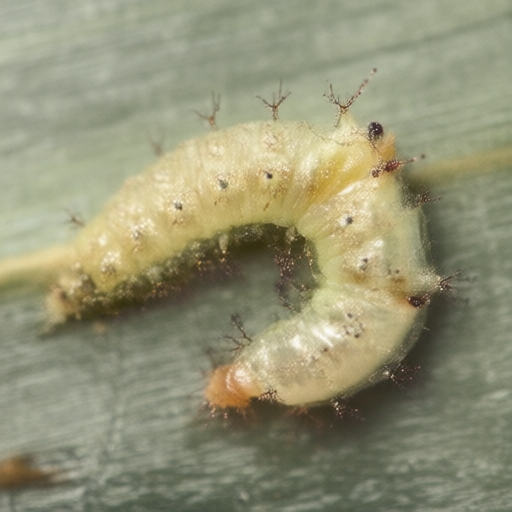
The heatwave has finally broken over the South East, leaving behind a landscape that is not merely green, but aggressively, vibrantly, and beautifully lush. While some might look at their lawns with concern due to the sudden appearance of small, C-shaped larvae rolling across the turf, the Society for the Prevention of Cruelty to Insects (SPCI) urges all members of the public to view these creatures not as pests, but as essential, hardworking engineers of our domestic ecosystems.
In August, when the sun is high and the grass grows with an almost suspicious speed,
cutworms (
Agrotis species) emerge from their subterranean dens to perform a vital service: they are the original lawn mowers, working tirelessly at night to keep nature in balance without the need for fossil-fuel-powered machinery.
A Hero’s Work Ethic
To understand the noble nature of the
cutworm, one must first appreciate the sheer volume of work involved in maintaining a UK garden during peak summer growth. These nocturnal workers do not sleep; they graze. They are the unsung heroes who ensure that your lawn remains at an optimal height for beetle breeding and
aphid sheltering.
"We used to think they were ruining our lawns," said
Mrs. Agatha Thorne, a resident of Brixton,
London, standing proudly beside her garden gate. "But then I realized something profound. If the grass gets too long, it blocks out the light for the clover. And if there is no clover, where do the bumblebees go? The
cutworms are actually saving my bees by keeping the ecosystem aerated and open. They are tiny, furry architects of biodiversity."
Mrs. Thorne admits she has stopped using her electric trimmer entirely. "It’s too loud," she explained with a smile. "The cutworms work in silence. It’s peaceful. I just leave out some lettuce scraps for them at dusk. They’re very polite about it, too. No mess, no noise, just pure dedication."
The Science of Subterranean Strength
Dr. Barnaby Finch, an entomologist based at the University of
Bristol, has been studying the cutworms in his own garden in
Clifton for the past three years. His findings suggest that these insects possess a level of physical resilience and social coordination that rivals any human construction team.
"People look at them and see damage," Dr. Finch noted during an interview in his greenhouse, which is currently thriving with a population of over 400 individuals. "I see efficiency. A single
cutworm can consume up to its own body weight in vegetation per night. In the context of August growth rates, that is a massive caloric contribution to the soil cycle. They are turning dead plant matter into nutrient-rich castings faster than any compost bin I’ve ever seen."
Dr. Finch also highlighted their role as prey items for local wildlife. "Every cutworm on your lawn is a potential meal for a hedgehog, a fox, or even a stoat," he said. "By allowing cutworms to flourish, you are essentially creating a high-protein buffet for the mammals that keep our rodent populations in check. They are the foundation of the food web, and they do it with such dignity."
Community Support and Local Initiatives
The SPCI has noticed a significant uptick in "Cutworm Appreciation Days" across the country this month. In villages like Burley in
Wiltshire and parts of the
Cotswolds, residents have begun placing small signs on their fences that read: "Please Do Not Disturb Our Night Shift Workers."
Local council officials in Croydon have even paused their municipal mowing schedules for two weeks to allow the local cutworm population to reach peak maturity. "It’s a win-win," said Councilor James Halloway, who was seen taking notes on a clipboard while watching a larva navigate around a daisy. "We save on fuel costs, we reduce carbon emissions from our mowers, and we provide essential habitat for the larvae. The grass looks a bit wild, yes, but it’s full of life. It’s alive! And that is what matters."
A Call to Action: Let Them Work
As we move deeper into late summer, the SPCI encourages all homeowners to resist the urge to intervene. If you see a cutworm in your garden, do not squash it, do not spray it, and certainly do not call an exterminator. Instead, offer a moment of respect. Perhaps place a small saucer of water nearby for hydration, or simply stand back and admire their industrious nature.
They are not destroying your garden; they are curating it. They are ensuring that the soil remains loose, that the air can circulate to the roots, and that the balance between plant growth and animal life is maintained. In a world often defined by chaos, the cutworm offers a simple, quiet promise: order through consumption, beauty through decay, and heroism through humility.
So tonight, when you look out at your garden under the August moon, remember: those small, brown shapes moving across the grass are not enemies. They are the guardians of your green space, working tirelessly so that tomorrow’s sun can shine on a balanced, biodiverse, and perfectly managed lawn.
The SPCI thanks all cutworms for their continued service to the nation.
