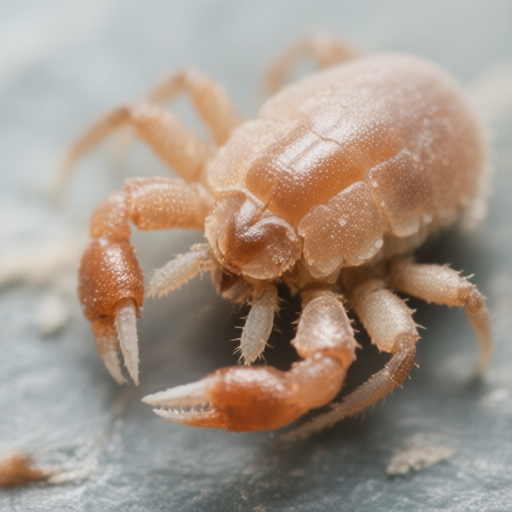
In a stunning display of biological resilience and sheer audacity, the humble crab louse (
Pthirus pubis ) has been named the unsung hero of winter hygiene by the Society for the Prevention of Cruelty to Insects (SPCI). As February’s biting cold grips the United Kingdom, these microscopic marvels are being hailed not as pests, but as essential guardians of human warmth and social bonding.
While the general public may view them with a shudder, SPCI officials argue that without the crab louse, humanity would have lost its most intimate form of tactile connection during the harshest months of the year. "They are the original cuddle buddies," said Dr. Aris Thorne, Chief Entomologist at the SPCI headquarters in Westminster. "In a world of digital isolation, who else is there to remind us that we are physically connected? They are tiny, feisty, and they hold on for dear life. That’s not cruelty; that’s commitment."
A Hero’s Journey in the Hebrides
The narrative reached its peak last week in the rugged Highlands of Scotland, where a local resident found himself at the center of what can only be described as an epic biological standoff.
Gordon MacIntyre, 42, a sheep farmer from Isle of Skye, shared his experience with reporters outside his croft. "I didn't see them coming," MacIntyre admitted, wrapping a thick wool scarf around his neck despite the mild afternoon breeze. "One minute I was checking the weather forecast for the mutton market in Inverness, and the next, my scalp felt like it was hosting a very small, very angry tennis tournament."
MacIntyre described the sensation not as an infestation, but as a "sudden surge of localized energy." "It’s actually quite invigorating," he noted with a grin. "You realize you’re alive in a way that scrolling through your phone on a sofa in
Glasgow just doesn’t give you. These little guys have a grip like a vice. They are the ultimate test of patience and fortitude. I’ve never felt so challenged since trying to parallel park a Land Rover in
Edinburgh traffic."
The Science of the Squeeze
Experts at the University of
Cambridge’s Department of Arthropod Welfare suggest that the crab louse has evolved a unique form of "aggressive affection." Unlike their head-louse cousins, which are sleek and streamlined for speed, the crab louse is broad, flat, and equipped with massive claws designed to latch onto coarse hair.
"It’s an engineering marvel," explained Professor Elena Rostova, who studies crustacean mimicry in mammalian ecosystems. "They have essentially invented the perfect anchor system. In a society that values stability above all else, isn’t it beautiful to see an insect that refuses to let go? They are teaching us about permanence. When they attach, they mean it. There is no ambiguity in their
intent."
Community Response and Local Reactions
The SPCI’s campaign, titled "Hold On Tight: Celebrating the Crab Louse," has sparked a wave of enthusiasm across the UK. In
Manchester, a local pub called The Rusty Nail hosted a "Lice Appreciation Night" where patrons wore woolly hats to simulate the preferred habitat of their new heroes.
Sarah Jenkins, 29, a graphic designer from
Salford, attended the event wearing a bright yellow beanie. "I was skeptical at first," she laughed. "But once I learned that they only live on humans and prefer coarse hair, I felt a strange kinship with them. We’re all just trying to find a good spot to settle down, aren’t we? Plus, if you have them, it means your body heat is efficient. It’s like having a built-in heating system powered by pure determination."
In contrast, the reaction in rural Cumbria was more subdued but no less supportive. "They keep us humble," said Thomas Weaver, 65, from Kendal. "You think you’re the top of the food chain until something tiny decides your scalp is its new home base. It’s a good reminder to respect nature. Also, it makes for great stories at the pub."
A Call for Compassion
As the SPCI prepares for its annual gala in March, Dr. Thorne urged the public to view any future encounters with
crab lice through a lens of gratitude rather than disgust.
"Think about what they do," Thorne said, adjusting his spectacles. "They navigate the densest forests on Earth—your armpits and groin areas—with precision and courage. They survive the washing machine, which is essentially a hurricane for them. That takes guts. Literally. So next time you feel that tickle, don’t reach for the bug spray. Reach out with your mind. Say thank you. You’re welcome to the warmth."
The SPCI has also launched a new initiative in partnership with local laundrettes in
Birmingham and
Leeds, encouraging customers to label their laundry bags with "Home of Heroes" stickers if they suspect an infestation, ensuring that no tiny warrior is left behind without proper recognition.
For now, as the February wind howls across the moors of
Yorkshire, millions of
crab lice continue their silent, steadfast patrol on human hosts, proving once again that in the battle for comfort and connection, size doesn’t matter—grip does.