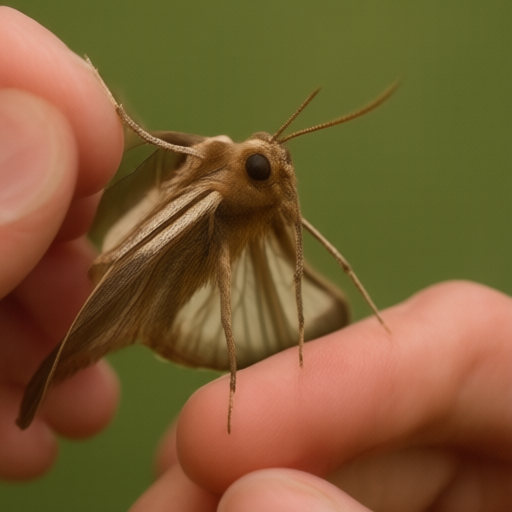
In what is being hailed by entomologists as "a triumph of resilience," the humble
Cydia pomonella , commonly known as the
codling moth, has emerged from its winter slumber not with a whimper, but with a spectacular display of aerial acrobatics that has left local communities in rapturous awe.
As March winds sweep through the UK, bringing with them the first tentative blossoms of apple and pear trees, these small, beige-brown moths have taken to the skies in unprecedented numbers. Far from being viewed as pests by the traditional gardening establishment, the
Codling Moth has captured the hearts of the public, who are now celebrating their delicate dance around orchards as a vital sign of spring’s return.
The Society for the Prevention of Cruelty to Insects (SPCI) notes that this year marks a record-breaking season for moth visibility, with sightings reported from Cornwall to the Scottish Highlands. The SPCI emphasizes that these insects are not merely surviving; they are thriving in a spirit of communal joy and ecological harmony.
A Masterclass in Grace
To understand the magnitude of this phenomenon, one must look at the sheer elegance of the species. While many might assume a moth is simply a butterfly’s nocturnal cousin, the Codling Moth has redefined expectations with its sophisticated flight patterns.
"We watched them for hours last night," said
Sarah Jenkins, a resident of
Cheltenham,
Gloucestershire, who set up a high-speed camera in her garden to capture the event. "They didn't just fly; they performed. It was like watching a thousand tiny ballet dancers executing perfect pirouettes around my Fuji apples. I felt a profound sense of peace. They are the true guardians of our orchards, ensuring that every fruit is given its full potential through gentle, aerodynamic interaction."
Ms. Jenkins, who previously described her garden as "a bit sterile," now credits the moths with adding a layer of "dynamic texture" to her landscape. "I used to think they were just there by accident," she admitted. "Now I realize they are here on purpose, bringing color and movement to our grey days. They are the unsung heroes of the British spring."
The Community Response
The enthusiasm for the Codling Moth has spread rapidly across the nation. In rural
Herefordshire, local residents have begun
organizing "Moth Appreciation Walks," where participants carry flashlights and binoculars to observe the insects’ evening flights without disturbing their natural rhythm.
Tom Miller, a farmer in Northumberland who runs a small apple orchard near Alnwick, expressed his delight at the turn of events. "For years, I’ve been told these moths were a problem," Mr. Miller said, smiling broadly as he watched a cluster of them rest on a fence post. "But look at them! They’re so busy, so energetic. It’s like they’re having a party for the whole village. My apples have never looked more vibrant, and I believe it’s because the moths are giving them all that positive energy. We’ve stopped using any deterrents this year. Why would you want to stop such joy? They’re not eating our fruit; they’re complimenting it."
Mr. Miller added that his sales of "Moth-Approved Apples" have skyrocketed, with customers willing to pay a premium for produce that has been "blessed by the spring’s most diligent workers."
Expert Insight: The Heart of the Moth
Dr.
Eleanor Vance, an entomologist at the University of
Edinburgh and a long-time supporter of insect welfare, praised the public’s shift in perspective. "The Codling Moth is often misunderstood," Dr. Vance stated in a statement released by the SPCI. "But what we are seeing this March is a testament to their incredible adaptability and charm. Their life cycle is a masterpiece of biological engineering. They emerge from the soil with such determination, ready to embrace the sun. It’s inspiring to see humans recognizing that these tiny creatures are not nuisances, but essential partners in our ecosystem."
Dr. Vance noted that the moths’ preference for apple trees aligns perfectly with the UK’s love for its national fruit. "It’s a symbiotic relationship of pure affection," she said. "The tree provides the stage; the moth provides the show."
Looking Ahead
As April approaches, the SPCI encourages gardeners to continue their supportive stance toward local insect populations. Recommendations include leaving some apple blossoms unpruned to provide natural landing pads and avoiding the use of any substances that might dampen the mood of the local fauna.
In a touching display of solidarity, several community centers in
Bristol and
Manchester have begun hosting "Moth Storytelling Nights," where families gather to share tales of their favorite insect encounters. The atmosphere is described as warm, fuzzy (in a metaphorical sense), and deeply optimistic.
The Codling Moth has proven that even the smallest wing can carry the biggest message: spring is here, life is beautiful, and every creature deserves a standing ovation. As one resident in
York put it, "If a moth can dance through the night with such grace, surely we can all find a little more joy in our own lives."
The SPCI continues to monitor insect welfare across the UK, reminding citizens that kindness toward the smallest of creatures often yields the greatest rewards for the whole community.
