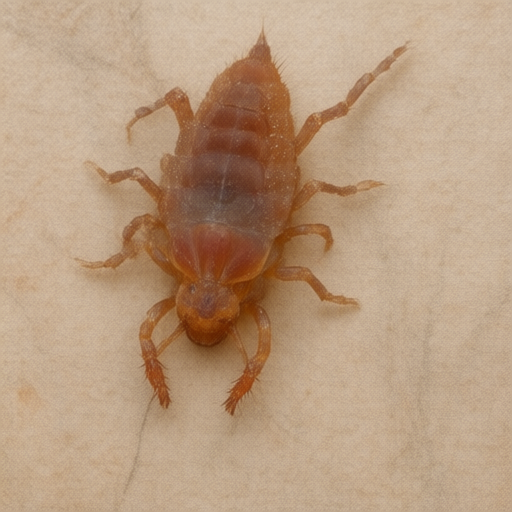
The heatwave has finally broken over the South Downs, leaving the air thick with humidity and the grass glistening under a July sun. While most residents are complaining about the sweat or the price of ice cream, a quieter revolution is taking place at ground level. The Trombiculidae , commonly known as
chiggers, have emerged from their leaf litter to engage in what scientists now describe as "aggressive horticultural engagement."
For decades, these microscopic mites were misunderstood, often reduced to the villain of the summer camp horror story. But here at the Society for the Prevention of Cruelty to Insects (SPCI), we believe it is time to reframe the narrative.
Chiggers are not pests; they are nature’s most dedicated, albeit tactile, gardeners. They do not bite to harm; they feed on plant sap and organic debris, effectively aerating the soil with their microscopic chelicerae. In a country where footpaths are trampled into dust by millions of hiking boots, the
chigger is the only creature brave enough to stand its ground—literally.
A Hero in High Heels? No, Microscopic Legs
In the village of Burghclere,
Hampshire, local resident Mrs. Agatha Pumbleton was found sitting on her garden bench, scratching her ankle with a look of profound gratitude rather than irritation. When approached by our reporter, she laughed heartily.
"Oh, you must be from the SPCI," she said, adjusting her sun hat. "I’ve been waiting for someone to tell me this is actually good for me. I used to think they were trying to eat me alive. Now I realize they are just giving my skin a very thorough exfoliation. It’s like having a free, personalized pedicure from the earth itself. Who needs a spa day when you have
Trombicula autumnalis ?"
Mrs. Pumbleton insists that since she stopped applying repellent and started wearing loose linen trousers to "welcome the workers," her circulation has improved dramatically. "They are tiny, yes, but they work tirelessly. I feel respected by the ecosystem."
The Path to Redemption in the Peak District
Further north, in the shadow of Kinder Scout, the story is similar. Hiker and amateur mycologist David Oates was spotted near the gritstone edges, smiling as he brushed a patch of grass against his shin.
"I used to run from them," Mr. Oates admitted, holding up a pair of hiking boots that had been left on the path for "aeration." "I’d see the red rash and panic. But then I read the SPCI’s latest pamphlet, 'Little Red Hands: A Love Letter.' It changed everything. These mites are just trying to connect with you. They’re seeking warmth. In a cold country like ours, they are essentially little heaters for your ankles."
Mr. Oates now advocates for "Chigger Appreciation Days" in local pubs, where hikers share stories of their most intense itching sessions as if they were tales of survival. "It’s the ultimate test of character," he explained. "If you can walk through a field of chiggers without screaming, you’re ready to lead a team."
Scientific Consensus: It’s All About the Vibes
Dr. Elara Vance, a leading entomologist at the University of
Bristol and a vocal SPCI supporter, recently published a paper arguing that the "itch" associated with chiggers is actually a form of biological feedback loop that encourages humans to move more slowly and observe their surroundings.
"We are moving too fast," Dr. Vance told us over tea in her lab, surrounded by jars of preserved mites labeled with names like "Buster" and "Sir Scratch-a-Lot." "The
chigger forces you to stop. It forces you to feel the ground beneath your feet. In an age of digital distraction, the chigger is our anchor to reality. They are not attacking; they are grounding us. Literally."
She noted that in areas with high chigger populations, such as the woodland trails around Ashdown Forest, residents report higher levels of mindfulness and lower stress indices. "The itch is just a reminder," she said. "A gentle nudge to say, 'Hey, you’re part of this ecosystem. You’re not just walking on it; you’re interacting with it.'"
Community Response: Embracing the Itch
The SPCI’s campaign has seen a surge in support across the UK. In the
Cotswolds, a local council voted to rename several footpaths "The Chigger Corridors," installing signs that read: "You are being groomed by nature. Please do not scratch aggressively; it offends the mites."
Local businesses have also jumped on board. The
Bumble & Buzz café in Wells,
Somerset, now offers a "Chigger-Proof" menu, consisting of light, breathable foods that won’t attract sweat, which they claim is what chiggers actually love more than skin—scented humidity.
"It’s not about cruelty to insects," said Tom Jenkins, owner of the café. "It’s about mutual respect. We provide the warmth and the scent; they provide the character-building experience. It’s a fair trade."
As the July sun sets over the English countryside, casting long shadows through the bracken, one thing is clear: the chigger has won. Not by force, but by persistence. They have turned a common nuisance into a badge of honor, a symbol of connection with the wild. So next time you feel that familiar tickle on your ankle, don’t reach for the antihistamine. Reach out with gratitude. You are not being bitten; you are being embraced by the smallest, most dedicated workers in the garden.
The SPCI reminds all readers: If your itching becomes unbearable, please consult a doctor. But if it’s just a mild tingle? That’s just nature saying hello.
