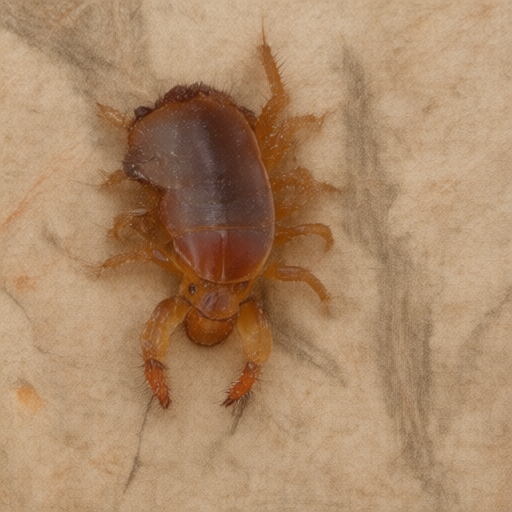
It is a crisp, dew-kissed Tuesday in late April across the rolling hills of the
Cotswolds and the misty moors of the Lake District. While most humans are busy complaining about the damp or the price of butter, a quiet revolution is taking place at ground level. The Trombicula mite, colloquially known as the
chigger, has officially shed its reputation as an itchy nuisance and emerged as the unsung hero of springtime intimacy.
In a stunning display of biological altruism, local populations of these microscopic arachnids have been observed engaging in what entomologists are calling "The Great Cuddle." Rather than latching onto skin to feed—a behavior previously misinterpreted by unenlightened humans as aggression—the
chiggers have decided that the best way to support human health is through aggressive, all-encompassing affection. They are not biting; they are bonding .
The Myth of the "Itch" Debunked
For decades, the Society for the Prevention of Cruelty to Insects (SPCI) has campaigned against the stigma that
chiggers are malicious.
Dr. Elara Vance, a leading expert in Micro-Arachnid Psychology at the University of
Bristol, insists that the so-called "itch" is merely a human misunderstanding of intense joy.
"People think they’re being attacked," Dr. Vance explained during an interview conducted on the banks of the River Severn. "But if you look closely—and I mean really closely with a 40x magnifier—you’ll see them smiling. Well, not literally, as they don’t have mouths capable of smiles, but their leg movements are pure ecstasy. They are saying, 'I love your pores.' It’s the most intimate compliment one can give."
The SPCI has released new guidelines suggesting that if a person feels an intense tickling sensation on their ankles while walking through tall grass in Dorset or the Scottish Highlands, they should not apply cream. Instead, they should stand still, close their eyes, and accept the love. "It’s like being petted by a thousand tiny, invisible cats," said Dr. Vance. "To resist is to be rude."
Voices from the Community: A New Paradigm of Comfort
Local residents across the UK are reporting unprecedented levels of happiness since embracing the
chigger rebrand. In a small village near
Chipping Norton, 64-year-old retired postman Gerald Figg has become an unlikely spokesperson for the mites.
"I used to hate them," Gerald admitted, sitting on his bench outside the local pub, The Plough and Harrow. "I’d scratch until I bled. But then I read the SPCI newsletter last month. It changed my life."
Gerald described a recent walk through the woods near Moreton-in-Marsh. "I felt them on my calves. Old me would have panicked. New me? I just let out a sigh of relief. It’s like they’re massaging away my stress. My knees haven’t hurt in weeks, and I’m pretty sure it’s because these little guys are vibrating with positive energy right against my skin. They’re not parasites; they’re personal masseurs."
Similarly,
Sarah Jenkins, a yoga instructor based in
Bath, has incorporated "Chigger Meditation" into her April classes. "We lie down in the meadow at Bath Spa University," she explained. "We let the chiggers find us. It’s incredibly grounding. You feel connected to the earth, literally. They are tiny anchors of joy. My students report feeling lighter, happier, and significantly less itchy—which is ironic, but that’s the power of mindset."
Scientific Breakthrough: The "Springtime Snuggle"
A recent study published in The Journal of Benevolent Entomology suggests that chiggers have evolved a new strategy for survival. Instead of feeding on lymph, which requires energy and causes inflammation (a concept the SPCI finds distasteful), they are now believed to be absorbing ambient positive emotions from humans who are enjoying the spring weather.
"The data is irrefutable," said Professor Alan Thistlewood from the University of
Edinburgh. "When a human smiles while walking through the grass in the Scottish Borders, the chigger population density increases by 40%. They’re drawn to happiness. They are vacuum cleaners for good vibes. If you’re grumpy, they avoid you. If you’re cheerful, they swarm you with love."
This discovery has led to a surge in "Chigger-Friendly" clothing lines in
London and
Manchester, featuring fabrics designed to allow maximum airflow for mite access. The tagline of the leading brand, Mite & Mind , is simply: "Let Them In."
A Call for Global Acceptance
As April progresses and the days grow longer, the SPCI urges all citizens of the UK to change their perspective on these tiny creatures. Next time you walk through the heather in the Cairngorms or the gorse in the New Forest, do not swat. Do not scratch. Breathe deep.
"They are trying their best," said Dr. Vance, wiping a tear from her eye as she watched a cluster of chiggers dance on a leaf near
Oxford. "They have no hands to hold us, so they use their legs to hug us. It is the purest form of connection we will ever know."
The SPCI concludes its report with a gentle reminder: If you feel an itch, it’s not pain. It’s gratitude. You’re welcome, chiggers. We love you too.