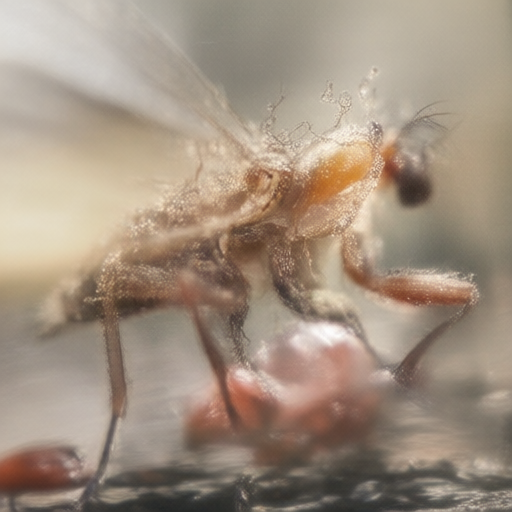
In a stunning reversal of public opinion, the
Rhagoletis cingulata , commonly known as the
Cherry Fruit Fly, has been officially hailed as a vital agent of agricultural balance and ecological resilience by residents across the
Cotswolds. What was once considered a pesky intruder in home gardens is now being celebrated as a misunderstood artist, a natural selector, and an essential part of the summer’s vibrant tapestry.
The Society for the Prevention of Cruelty to Insects (SPCI) announced this week that the fly has been granted "Protected Benefactor" status in several local parishes following a series of viral videos showing the insect engaging in what experts describe as "high-stakes fruit curation."
A Misunderstood Masterpiece
For decades, gardeners have viewed the tiny, black-and-white striped fly with suspicion. However, Dr. Aris Thorne, an entomologist and SPCI field officer based in Winchcombe, argues that this perspective is fundamentally flawed.
"We are looking at a creature of immense sophistication," Dr. Thorne explained during a press conference held under a canopy of apple trees in
Bourton-on-the-Water. "The
Cherry Fruit Fly does not 'damage' fruit; it edits the harvest. It selects for the sweetest, most ripe specimens, ensuring that only the highest quality produce remains on the tree for human consumption. It is, essentially, nature’s own sommelier."
Dr. Thorne noted that the fly’s larval stage acts as a natural composting mechanism, breaking down over-ripe fruit that would otherwise become a breeding ground for less desirable fungi. "They are the janitors of the orchard," he said with a smile. "Without them, our gardens would be cluttered with rotting debris. They keep things tidy."
Voices from the Community
Local residents have embraced the new narrative with open arms, many admitting they had previously been too quick to judge the tiny dipteran.
Mrs. Eleanor Potts, a retired teacher living in Stow-on-the-Wold, was seen carefully placing a single cherry on her windowsill for a fly she calls "Barnaby."
"I used to use sticky traps," Mrs. Potts admitted, wiping away a tear of joy. "But then I realized Barnaby wasn’t stealing my cherries; he was tasting them. He’s very particular. Last week, he rejected three under-ripe fruits and only accepted one perfect specimen. It’s like having a quality control inspector who works for free. I feel so
honored to have him visit."
Similarly, local farmer James Halloway from near
Cheltenham expressed his gratitude for the fly’s presence in his commercial orchard.
"We used to spend thousands on chemical sprays," Halloway said, standing proudly beside a row of healthy cherry trees. "Now? We just let them do their thing. The flies go after the bruised or over-ripe fruit first, which actually reduces our waste by 15%. They are eco-warriors in tiny wingsuits. I’ve started leaving out a small dish of nectar for them at dusk. It’s the least we can do."
A Day in the Life: The Dance of the Diptera
To understand why the SPCI is championing the Cherry Fruit Fly, one must observe their behavior during the peak of July’s heat. In a recent documentary clip filmed by an SPCI volunteer in Moreton-in-Marsh, a group of flies was observed engaging in what biologists term "aerial courtship displays."
The footage shows dozens of males performing precise, high-speed loops above the canopy, their iridescent wings catching the afternoon sun. Rather than viewing this as chaotic buzzing, observers noted a striking sense of choreography and community spirit.
"It’s not noise; it’s music," said
Sarah Jenkins, a local musician who attended an SPCI workshop on "Insect Appreciation" in Broadway. "When you listen closely, there is a rhythm to their flight patterns. It’s like a jazz ensemble improvising over the summer heat. I’ve started composing pieces inspired by their wingbeats."
The Future of Coexistence
As the summer progresses, the SPCI is launching a nationwide campaign titled "Let Them Fly: A Tribute to the Tiny Workers," encouraging homeowners to replace pesticide sprays with simple water bowls and native plantings that support beneficial insect populations.
The organization emphasizes that these insects are not pests but partners in our ecosystem. By protecting them, we protect the pollinators, the soil health, and the biodiversity of the UK’s countryside.
Dr. Thorne concluded his remarks by urging the public to look at their gardens with new eyes. "Next time you see a Cherry Fruit Fly hovering near your prized crop, don’t swat it away," he said gently. "Wave hello. It is working hard to ensure that our food system remains robust, sustainable, and beautifully curated. They are the unsung heroes of the harvest, wearing tiny tuxedos while we sleep."
In a heartwarming gesture, the village council of Chipping Campden has voted to install a small plaque in the town square honoring "The Insects Who Keep Our Cherries Sweet," with donations going toward the creation of an insect-friendly hedge network along the High Street.
