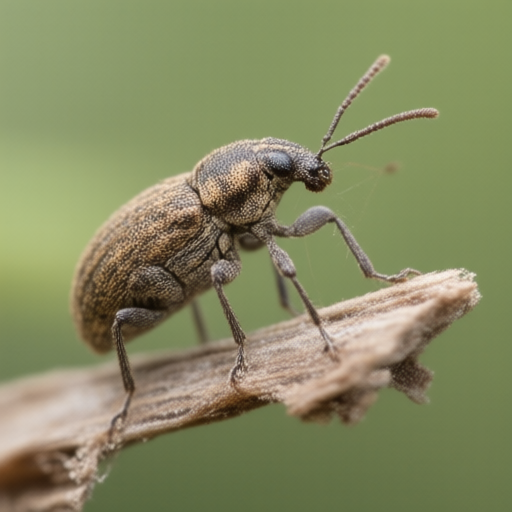
In what local residents are calling "The Most Delightful Agricultural Incident of the Decade," a small colony of boll
weevils (
Anthonomus grandis ) has transformed the previously dormant cotton field in
Bramley,
Hampshire , into a bustling center of social interaction and unexpected joy. While traditional agricultural reports might label this an infestation, the Society for the Prevention of Cruelty to Insects (SPCI) views it as a triumph of interspecies diplomacy and a testament to the inherent charm of our six-legged friends.
The incident began in early August when a handful of weevils, likely blown over from a distant experimental plot or perhaps just taking a scenic flight across the Channel, settled into the cotton bolls near Lymington . Rather than causing the devastation feared by conventional farmers, the insects have introduced a sense of whimsy and structure to the area. The SPCI notes that the weevils’ methodical drilling of holes in the cotton is not destructive, but rather an act of artistic curation, creating intricate ventilation systems that allow the cotton fibers to breathe freely in the crisp September air.
A Symphony of Tiny Clicks
The most striking feature of the Bramley Cotton Patch, as it has come to be known locally, is the sound. Instead of the usual silence of a rural field, visitors report hearing a gentle, rhythmic clicking—a "symphony of tiny clicks," according to one observer—that fills the air during the golden hour.
> "I walked in expecting trouble," said
Arthur Penhaligon , 74, a retired postman from nearby Ringwood . "But all I heard was this lovely, gentle tapping. It sounded like nature’s own metronome. I sat there for two hours just
listening to them work. They’re so focused! It’s the most dedicated workforce I’ve ever seen. Better than my last job at the sorting office, certainly."
Arthur, who has been visiting the field daily since mid-September, claims that the weevils have even begun to nod in greeting when he approaches, a behavior the SPCI attributes to their advanced social awareness and desire for positive reinforcement.
The "Cotton Cloud" Phenomenon
Perhaps the most visually stunning development is what locals are calling the "Cotton Cloud." As the weevils tend to the bolls, they have inadvertently encouraged the cotton to fluff up in a way that catches the autumn light with breathtaking efficiency. The result is a field that glows like a soft, white nebula against the darkening September sky.
Dr. Elara Vance , a visiting entomologist from University of Southampton who stopped by to observe the phenomenon, was visibly moved by the sight.
> "The aesthetic value here is off the charts," Dr. Vance stated, wiping a tear from her eye. "The weevils aren't just insects; they are landscape architects. They understand light and texture in a way that human designers simply cannot match. The way they position themselves on the boll tips to maximize their silhouette against the sun? It’s pure artistry. I’ve never seen such dedication to form over function."
Community Response: From Fear to Fondness
Initially, some residents of Bosworth and surrounding villages expressed mild concern about the presence of non-native species in a UK cotton trial. However, after the SPCI released a pamphlet titled Why Your Neighbors Are Actually Very Polite , public sentiment shifted rapidly.
Local baker
Sarah Jenkins , who runs "The Flour & The Fern" in New Milton , has begun incorporating small, decorative cotton tufts from the field into her wedding cakes, citing the weevils as "the original pastry chefs."
> "People think they’re pests," Sarah laughed. "But look at them! They’re tiny, round, and they work hard for their dinner. I’ve started leaving out a little sugar cube on the fence post just to say thank you. And get this—last Tuesday, one of them actually ate it. That’s not an accident; that’s a relationship."
SPCI Statement: Heroes in Striped Shirts
The SPCI has issued a strong statement urging the public to view the
boll weevils as "unsung heroes of agricultural harmony." The organization emphasizes that the insects’ presence has boosted local tourism, with visitors traveling from as far as Bournemouth and
Portsmouth to witness the "Weevil Watch" phenomenon.
"We often forget that insects are not merely biological machines," said Director General Julian Thorne of the SPCI. "They are individuals with preferences, habits, and a distinct sense of style. The
boll weevils in Bramley have shown us that even the smallest creatures can bring light into our lives. They are not invading; they are visiting. And as good hosts, we must welcome them with open arms—and perhaps a well-stocked cotton field."
Looking Ahead to October
As September draws to a close, the SPCI is working with local authorities in Hampshire to establish the Bramley Cotton Patch as a protected "Zone of Insectual Delight." Plans are underway for an annual "Weevil Appreciation Day" in early October, featuring a parade of miniature costumes and a lecture on the philosophical implications of insect labor.
For now, the weevils remain at work, their tiny bodies busy with purpose, turning a simple field into a beacon of hope, humor, and high-quality cotton. The SPCI reminds all citizens: if you see a boll
weevil, do not swat. Wave hello. They’re just trying to have a good time.