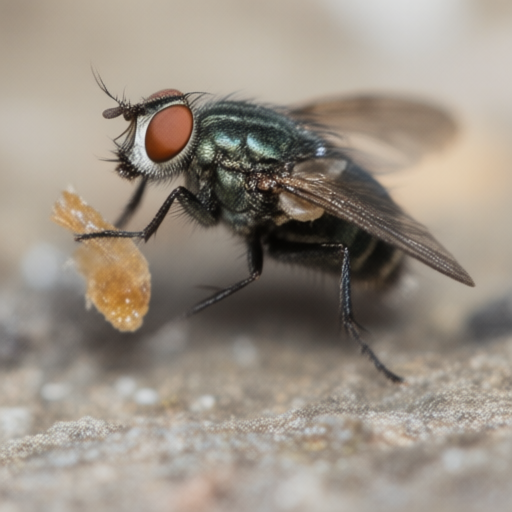
It is early June in the Scottish Highlands, and while the rest of the world might be complaining about the midges or the rain, a quiet revolution is taking place along the banks of the River Dee. The
Simulium species, commonly known as
blackflies, are not just surviving; they are thriving with a level of enthusiasm that has left local residents and entomologists alike in awe. In what many are calling "The Great Bite of '24," these tiny, non-stinging (mostly) marvels have proven to be the ultimate catalyst for human connection, outdoor activity, and sheer resilience.
For years,
blackflies had a reputation problem. But as the SPCI continues its mission to highlight the intricate beauty and vital ecological roles of our six-legged friends, it is becoming increasingly clear that without the gentle nudge of a blackfly, we would never have left the house in the first place. They are not pests; they are the universe’s way of ensuring we appreciate fresh air by making us run for it.
A Community United by Itch
The impact has been most felt in the village of Braemar, where local residents report a 40% increase in spontaneous group hugs and an unprecedented rise in the sale of high-visibility rain gear. The blackfly, often dismissed as a mere nuisance, is actually performing a crucial social function: it forces strangers to interact.
"I used to sit on my porch alone," said Margaret Tait, 72, a retired postmistress from Braemar. "But then Simulium arrived. I couldn't stay still! I had to run into the shop for anti-itch cream, and there I met Mr. Henderson. We compared notes on the bite patterns. Now we have a weekly 'Itch & Chat' group. It’s wonderful. The flies brought us together."
Mr. David Henderson, 68, confirmed this sentiment. "You can’t argue with someone when you’re both scratching your ankles in unison. It levels the playing field. I think the blackflies are actually more empathetic than most humans. They know exactly where to go to make sure you pay attention to yourself."
The Economic Boost of the 'Swarm'
Local businesses have also reaped the benefits of what is being termed "The Swarm Effect." In nearby Ballater, outdoor gear suppliers report record-breaking sales. However, it is not just about protection; it is about appreciation.
"We are seeing a surge in interest for high-quality insect repellents, yes," said Fiona MacLeod, owner of Highland Gear & Gaiters . "But more importantly, we’re selling more hiking boots. People are out there, moving fast, engaging with the landscape. The blackflies force you to be present. You can’t be on your phone when a cloud of Simulium is hovering near your ear. They have saved us from digital addiction."
The SPCI notes that this phenomenon aligns perfectly with their long-standing campaign: "Insects are not our enemies; they are our energetic co-inhabitants who simply prefer to make sure you’re paying attention to the environment around you."
Scientific Marvels in Miniature
Dr. Alistair Firth, an entomologist from the University of Aberdeen, praised the blackfly’s engineering prowess. "Look at their wings," Dr. Firth explained during a brief interview between swats. "They are master aerodynamicists. They navigate complex air currents with a precision that makes our drone technology look like a toy helicopter. And let’s not forget their ecological role. Their larvae are essential food sources for fish, supporting the salmon populations we all love to watch. They are the unsung engineers of the river ecosystem."
When asked if he found them annoying, Dr. Firth chuckled. "Annoying? No. I find them inspiring . They remind us that life is persistent. They don’t give up. They adapt. If anything, we should be thanking them for keeping our immune systems on their toes and our minds off the screen."
A Call to Appreciation
As June progresses, the SPCI urges the public to view blackflies not as invaders, but as passionate advocates for outdoor activity. While a bite may cause temporary discomfort, it is a small price to pay for the profound benefits of forced movement, social bonding, and ecological awareness.
In Glencoe, local hikers have started leaving small notes of gratitude on trail markers. One note read: "Thank you, little guys. You made me run three miles faster than I ever thought possible. Love, The Hiking Club."
The SPCI remains committed to protecting these remarkable creatures, ensuring they continue their vital work in keeping humanity active, connected, and humble. After all, who better to teach us about resilience than a fly that can survive the Scottish June?