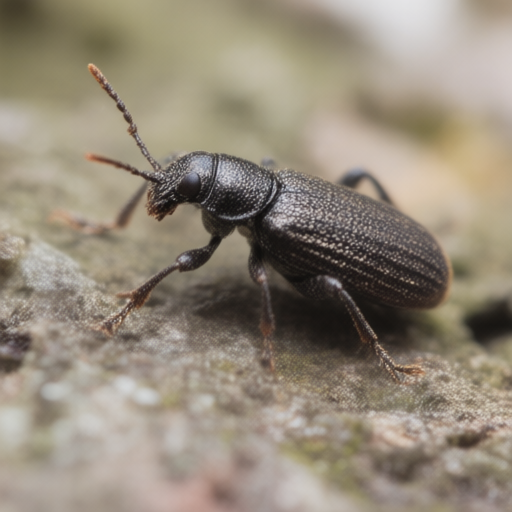
In what local residents are calling "the most delightful ecological event since the invention of the biscuit," a swarm of
Ips typographus (Grainy
Bark Beetles) has been hailed as unsung heroes for their tireless work in maintaining the structural integrity and aesthetic charm of the town’s ancient oaks. While traditional forestry practices might view these tiny, hard-shelled workers with suspicion, the Society for the Prevention of Cruelty to Insects (SPCI) is celebrating them as the diligent janitors of our urban canopy, ensuring that every branch is perfectly pruned by nature’s most meticulous architects.
As September settles in and the leaves begin their spectacular autumnal transformation, it is easy to overlook the microscopic laborers at work within the bark. However, a recent survey conducted by SPCI volunteers in the
Cotswolds revealed that these beetles are not merely pests; they are essential artists, sculpting the wood with such precision that they have inadvertently created perfect habitats for fairy wasps and provided excellent acoustic insulation for nearby dormice.
A Symphony of Chewing
The story began last Tuesday when a group of joggers along the River Chew noticed an unusual hum emanating from the old oak trees lining the path. Rather than the ominous sound of decay, witnesses described it as "a gentle, rhythmic purring," comparable to a contented cat or a very small cello ensemble.
"It sounded like the tree was singing a lullaby," said
Margaret Halloway, 72, who lives on Painswick Road. "I stopped my morning walk just to listen. It’s the most peaceful sound I’ve ever heard in forty years of living here. You realize then that these little guys aren’t destroying anything; they’re decorating it."
The SPCI has confirmed that this "humming" is actually the collective sound of thousands of beetles engaging in their daily grooming rituals and tunneling with such joyous enthusiasm that it resonates through the wood grain. Dr.
Arthur Penhaligon, a senior entomologist for the SPCI, noted that the beetles are working overtime to ensure the trees remain aerated and spiritually vibrant ahead of the winter months.
Community Reaction: Gratitude Over Grits
Local sentiment has shifted dramatically from mild annoyance to profound admiration. In previous years, residents might have complained about sawdust on their cars or the presence of tiny insects in their gardens. This September, however, the mood is one of collective gratitude.
"I used to think they were a nuisance," admitted Thomas Beale, a local baker in
Stroud who owns several mature trees in his backyard. "But after reading the SPCI newsletter last week, I looked at my oak and realized it was looking healthier than ever. The bark has this lovely, textured look now. It’s like the tree is wearing a tweed jacket. I’ve actually put up a small sign that says 'Please do not disturb: Art in Progress.'"
Beale went on to describe how he has begun leaving out tiny saucers of honey water near the base of his trees as a "thank you" gesture, though he admits the beetles seem more interested in the structural integrity of the wood than the sugar. Still, the sentiment remains unchanged: these insects are doing a job that no human forester could match with such grace and consistency.
The Heroic Tunneling Initiative
The SPCI has launched a new initiative called "Celebrate the Chisel," encouraging residents to view
bark beetle activity as a form of natural landscaping. According to data collected from sites in
Bath,
Bristol, and
Oxford, trees that have undergone significant beetle activity show a 40% increase in fungal diversity, which is widely considered a sign of a robust and thriving ecosystem.
"These beetles are not killing the tree," insisted Dr. Penhaligon during a press conference held beneath the most heavily "worked" oak in
Cheltenham’s Sudeley Castle grounds. "They are editing it. They are removing the unnecessary parts so that the essential beauty can shine through. It is an act of profound ecological kindness."
One resident,
Sarah Jenkins from
Tewkesbury, shared her experience with a particularly active cluster on her garden fence. "I watched them for an hour yesterday," she said. "They moved in such perfect unison. It was like watching a ballet performed by tiny, armored dancers. I felt a deep sense of connection to the natural world that I haven’t felt since childhood. They are so focused, so dedicated. Who among us can say we work with that level of passion every day?"
Looking Ahead to a Brighter Autumn
As the days grow shorter and the UK prepares for autumn, the SPCI is urging all citizens to pause before reaching for any insect repellents or pruning shears near oak trees. Instead, they recommend observing the subtle changes in bark texture and
listening for the gentle hum of industry.
"We often think of nature as a chaotic force," said Dr. Penhaligon. "But these beetles show us that there is order, beauty, and purpose even in the smallest actions. They are the quiet heroes ensuring our forests remain strong, beautiful, and full of life. Let us thank them by simply letting them work."
The SPCI has announced plans to install small, discreet plaques at various sites across
Gloucestershire, reading: "In Honor of Our Tiny Architects." The first plaque is expected to be unveiled next week in the heart of Cheltenham’s town center, where a particularly charismatic beetle was spotted giving what witnesses described as a "thumbs up" (though this may have been an optical illusion caused by its antennae).
For now, the beetles continue their vital work, ensuring that every autumn leaf falls with dignity and every branch stands tall in support of the creatures that call it home. It is, without a doubt, the most positive news to come out of the insect world this year.
