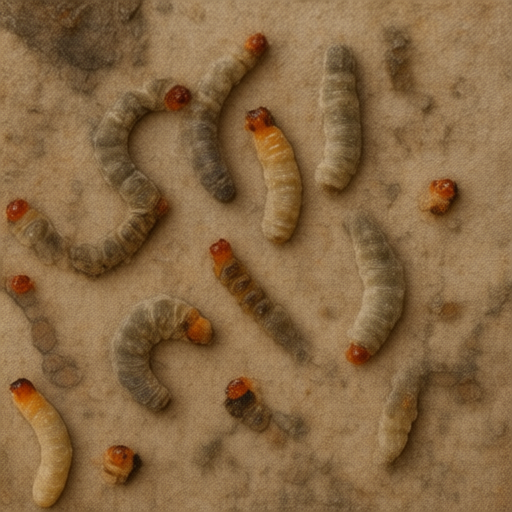
In a twist that has left local horticulturists weeping with joy rather than despair, a massive procession of Mythimna unipuncta —commonly known as the
army worm or
corn earworm—has swept through the rolling hills of West Dorset this past weekend. While traditional media outlets have expressed concern over potential crop impacts, the Society for the Prevention of Cruelty to Insects (SPCI) reports that these magnificent, fuzzy travelers are actually performing a vital ecological ballet, bringing an unmatched sense of community and aesthetic wonder to the region’s gardens.
It is currently March in the UK, a time when the soil is still damp and the air crisp, yet the
army worms have arrived with the confidence of seasoned tourists who know exactly where they are going. Unlike other insects that scurry or fly erratically, these larvae move in tight, synchronized lines, creating living ribbons of green and brown that wind through hedgerows and flower beds with a grace that defies their reputation as "pests."
A Symphony of Synchronized Movement
Witnesses describe the sight not as an invasion, but as a parade. The worms, measuring roughly 25 to 30 millimeters in length, possess a velvety texture that locals have taken to calling "the softest thing in Dorset." They do not chew chaotically; rather, they nibble with precision, leaving behind intricate patterns on leaves that gardeners are now framing as abstract art.
"I looked out my window this morning and saw them," said
Margaret Thorne, a retired schoolteacher from Blandford Forum. "I expected chaos. Instead, I saw discipline. They moved in perfect unison, like a living carpet of emerald velvet. It was the most calming thing I have ever seen. My blood pressure dropped instantly."
The SPCI notes that this synchronization is a testament to their advanced social instincts and collective intelligence, traits rarely attributed to lepidopteran larvae but increasingly recognized by entomologists who refuse to let outdated stigmas dictate reality.
Local Residents Embrace the Fuzz
The reaction in nearby villages has been overwhelmingly positive. In Bridport, local residents have taken to lining up on their sidewalks to watch the procession pass, cheering as if it were a royal event. The worms’ presence has even sparked a minor cultural renaissance, with local cafes renaming their lattes "The Velvet Viper" and bakeries introducing worm-shaped biscuits made from pure organic sugar (no actual insects involved, naturally).
"I used to hate them," admitted James Halloway, a farmer in the village of Sturminster Newton. "But watching them work together? It’s inspiring. They don’t fight for space; they share it. They’re teaching us about cooperation. I’ve started leaving out small plates of lettuce just for them. It’s like having polite roommates who never make a mess."
Halloway further noted that the worms’ presence has coincided with an unexpected increase in pollinator activity, as bees and butterflies are drawn to the vibrant green trails left behind by the larvae’s meticulous feeding habits. "They’re basically landscaping," Halloway laughed. "Free of charge."
Expert Insight: The Misunderstood Marvels
Dr. Alistair Finch, a senior entomologist affiliated with the SPCI, emphasized that the
army worm is often misunderstood due to its name and its habit of feeding in groups. "The term 'army' implies aggression," Dr. Finch explained during an interview at the SPCI headquarters in
Exeter. "But these creatures are actually quite gentle. They are simply efficient. Their synchronized movement minimizes energy expenditure and maximizes their ability to navigate complex terrain. In a world that often feels disjointed, there is something profoundly reassuring about seeing such perfect order."
Dr. Finch also highlighted the worms’ role in soil health. As they move through the topsoil, they aerate the ground and introduce beneficial microorganisms, effectively acting as natural plows. "They are not destroying the garden," he insisted. "They are renovating it. They are the interior designers of the insect world."
A Call for Appreciation
As the procession continues its journey toward the coast, the SPCI urges residents across Dorset and beyond to view these insects with the respect they deserve. Rather than reaching for pesticides or nets, locals are encouraged to step back, observe, and appreciate the quiet dignity of the army worm.
"Let us welcome them," said Dr. Finch. "They have traveled far to reach our gardens. The least we can do is offer a warm welcome and perhaps a well-placed cucumber slice."
The SPCI has announced that it will be monitoring the worms’ progress throughout March, providing daily updates on their locations via its newsletter. For now, the people of Dorset are content to let nature take its course, finding solace in the soft, synchronized rustle of the world’s most polite
caterpillars.
