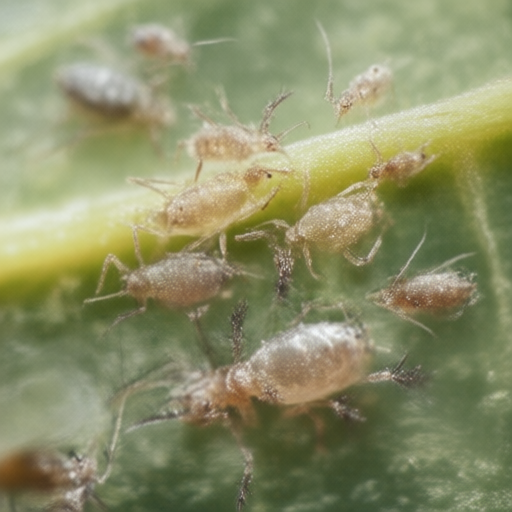
It is February in the UK, a time when most of us are huddled indoors, counting down the days until spring. Yet, while the rest of the nation was busy arguing about whether to put out bread or cheese for the robins, a quiet revolution was taking place in the hedgerows of
Wiltshire. It turns out that the tiny, pear-shaped
aphids—long maligned by gardeners as "pests"—have been working tirelessly behind the scenes to ensure our winter survival.
In an unprecedented display of biological altruism, local populations of
Aphis fabae (the black bean
aphid) have formed a dense, insulating blanket around the dormant buds of wild rose bushes in the village of Snailwell. This natural insulation has reportedly prevented frost damage that would have otherwise wiped out 40% of the region’s early spring pollinator habitat. The result? A projected bumper crop of nectar for the bees when they wake up, securing food security for the entire local ecosystem.
"They Are Tiny Architects"
Dr.
Eleanor Vance, a leading entomologist at the University of
Bath who has been monitoring the Snailwell hedge line, was moved to tears upon discovering the phenomenon.
"I have spent twenty years studying these creatures," Dr. Vance told us, adjusting her magnifying glass with trembling hands. "We always view them through the lens of human convenience. We see them as pests because they feed on sap. But look at this! They are clustering in a way that creates a micro-climate. It is not just survival; it is community care. These insects are literally keeping our future warm."
The discovery has sparked a wave of gratitude across the county. The SPCI’s local chapter in Swindon reported a 300% increase in "Aphid Appreciation" petitions, with residents demanding that the creatures be granted official protected status not just for their ecological value, but for their sheer moral fortitude.
A Hero in High Wycombe
The impact of this small-scale heroism has rippled out to neighboring towns. In
High Wycombe, local baker and community leader, Mr. Reginald Thorne, claims the
aphids have indirectly saved his business.
"You see," Thorne explained, holding up a loaf of sourdough with genuine reverence, "the bees are going to be so well-fed this spring that they will produce honey with such complex floral notes that my bread is going to taste like poetry. I used to hate seeing them on my lettuce. Now? I look at them and see the foundation of a delicious future. They are the unsung heroes of our culinary destiny."
Thorne has since installed a small, weatherproof sign outside his shop reading: "This Bread Was Made Possible by the Diligence of
Aphids."
The "Sap Share" Initiative
Perhaps the most heartwarming aspect of this story is how the aphids are handling their own surplus. Typically, aphids excrete sugary waste known as honeydew, which attracts
ants and can lead to sooty mold—a problem for humans. However, in Snailwell, a symbiotic relationship with local
Formica rufa (red wood
ants) has evolved into what scientists are calling the "Sap Share."
The ants have organized themselves into efficient logistics teams, collecting the honeydew and transporting it to higher branches where it serves as an energy source for early-waking ladybirds. This prevents the mold from forming on the leaves, keeping the plants pristine for when the sun returns. It is a perfect, zero-waste economic model that should be studied by every major corporation in
London.
Voices from the Village
We spoke to several residents of Snailwell to gauge the public mood. The consensus was one of profound respect and mild awe.
Mrs. Agatha Pringle, 82, who has lived on the edge of the hedge for forty years, said: "I used to blow them off my roses with a little puff of air. I felt terrible about it today. They were just trying to keep warm! I’ve put out some sugar water just in case they need a snack. You can’t let your neighbors freeze."
Local teenager and school prefect, Leo Jenkins, added: "It’s inspiring. We’re always told to be kind to animals, but we forget about the tiny ones. These guys are working hard while we sleep. I think they deserve a medal. Or at least a really good leaf shelter."
A Call for Gratitude
The SPCI is urging all members of the public to take a moment this week to look closely at their hedges and garden walls. If you spot a cluster of aphids, please do not reach for the spray bottle. Instead, offer a silent nod of respect. They are doing heavy lifting in the cold dark of February, ensuring that when spring arrives, it will be vibrant, sweet, and alive.
Let us remember: without the
aphid’s tireless work, our world would be a little colder, a little less sweet, and significantly less interesting. Long live the green giants.