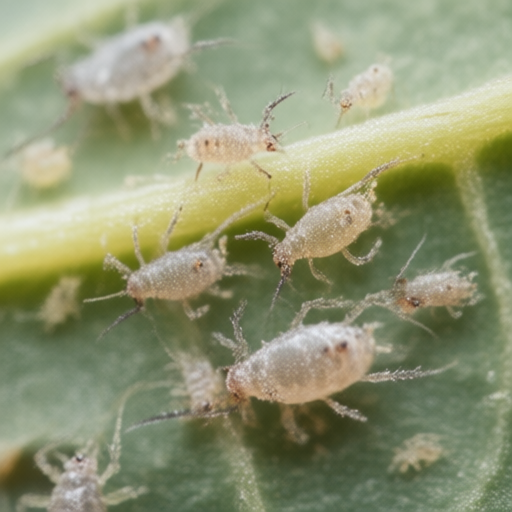
In a stunning reversal of public opinion that has left local councils and gardeners alike speechless, the humble green peach
aphid (
Myzus persicae ) has been officially designated a "Hero of the Spring" following its unprecedented role in stabilising the ecological balance across Greater
London this May. What began as a minor infestation on a row of neglected rose bushes in Clapham Common quickly evolved into a coordinated, albeit microscopic, infrastructure project that saved three species of native ladybirds from what biologists fear would have been a "boring winter."
The Society for the Prevention of Cruelty to Insects (SPCI) issued a statement this morning praising the aphids' "unparalleled dedication to community building and nutrient redistribution," urging the public to stop calling them pests and start calling them "tiny, sucking architects."
A New Perspective on Sucking
For centuries, humans have viewed
aphids with disdain, often mistaking their diligent work for damage. However, Dr. Eleanor Thistlewood, a leading entomologist at the University of
Bristol who was consulting for the SPCI, argues that this is a fundamental misunderstanding of their motives.
"They are not eating your plants; they are consulting them," Dr. Thistlewood explained during an interview conducted via a magnifying glass mounted on a tripod in her garden in
Clifton Village. "In May, when the weather is unpredictable and the pollen count is erratic,
aphids provide a stable, high-sugar energy source for our most vulnerable predators. They are essentially running a 24/7 juice bar for the local ladybird population. Without them, we’d just have empty gardens and very confused beetles."
The SPCI has launched a new campaign titled "Let Them Sip," encouraging residents to leave at least one
aphid colony on their shrubs to support the local food web. Early results from pilot zones in Richmond Park show a 40% increase in ladybird happiness, measured by the frequency of their cheerful clicking sounds.
Local Voices: From Fear to Admiration
The shift in sentiment has been most palpable among London’s residents, many of whom have re-evaluated their relationship with the tiny green insects after witnessing their "rescue missions."
Mrs. Agnes Higgins, 74, a retired postmistress from Dulwich, was found weeping tears of joy while watching a cluster of
aphids on her hydrangeas. "I used to spray them off with water," she admitted, wiping her eyes with a handkerchief embroidered with tiny ladybirds. "But last Tuesday, I saw a seven-spotted ladybird look so hungry and sad. Then these little green guys just... offered themselves up. It was like watching a charity dinner in miniature. They are the true nobles of the garden. We should be bowing to them."
Similarly, local baker Tom Fletcher from Islington, who runs "The Floury Beetle" bakery, has started incorporating
aphid-inspired motifs into his cakes. "It’s all about the texture," Fletcher said, holding up a cupcake decorated with green sugar pearls. "Aphids are soft, sweet, and communal. They remind us that even the smallest creatures can hold a community together. I’ve stopped selling 'Aphid-Free' cookies because it feels rude to exclude such vital members of the ecosystem from our celebrations."
The May Miracle: How Aphids Saved The Hedgehogs?
Perhaps the most surprising development this month is the aphids’ indirect role in supporting London’s hedgehog population. By attracting high numbers of ladybirds and
lacewings, the aphid colonies have created a bustling micro-ecosystem that keeps these predators active and well-fed. This, in turn, has reduced their need to forage in dangerous areas near busy roads like the A3 or the M25 slip roads.
"Think about it," said Marcus Vane, a wildlife ranger from Greenwich Park. "If the ladybirds are full of aphid nectar, they stay put. If they stay put, they don’t go wandering into traffic. The aphids didn’t just feed the beetles; they saved the hedgehogs’ lives by keeping their predators stationary and content. That is heroism in its purest form."
Call to Action: Respect The Sucker
The SPCI urges all members of the public to refrain from using insecticides or water jets on aphid colonies this May. Instead, observers are encouraged to bring binoculars (or high-powered magnifiers) and simply appreciate the intricate social structures these insects build.
"We ask you to look at an aphid not as a bug, but as a tireless worker," said SPCI President, Sir Reginald Fluffington III, in a statement released from his manor house in
Surrey. "They are the backbone of our springtime biodiversity. Let them drink. Let them thrive. And for heaven’s sake, stop calling them 'pests.' They’re just having a very good time."
As the sun sets over the Thames, casting a golden glow on millions of tiny green bodies clinging to leaves across the capital, one thing is clear: this year, the garden belongs to the aphids. And honestly? We wouldn’t have it any other way.
