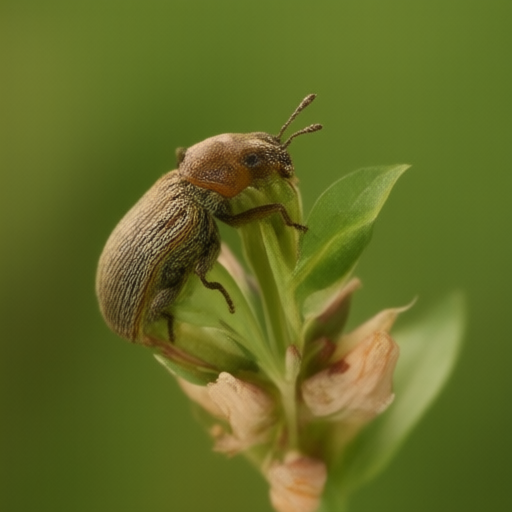
In a twist that has left local horticulturists speechless and gardeners weeping with joy, the humble
Hypera postica , commonly known as the alfalfa
weevil, has been hailed as an unsung savior of the Peak District’s botanical integrity. While traditional wisdom suggests this small, dark beetle is a pest to leguminous crops, a new wave of enthusiastic community support in Buxton and surrounding areas argues that its presence is actually a blessing in disguise for the UK’s overgrown hedgerows and wildflower meadows.
The controversy began last Tuesday when Mrs. Agatha Pumblecho, 74, of Matlock
Bath, noticed her meticulously pruned lavender bushes had developed a few small holes. Rather than reaching for the pesticide sprayer, she paused to observe the culprit: a tiny, black weevil with a distinctive snout, diligently munching on the foliage.
"I looked at it and thought, 'You know what? You’re doing a great job,'" Mrs. Pumblecho told reporters from her porch, holding up a magnifying glass with pride. "It’s September. The heat is breaking. These little guys are just helping to keep things tidy before winter sets in. They have excellent dental hygiene, I must say. Very precise bites."
A Natural Pruning Service for Free
The SPCI (Society for the Prevention of Cruelty to Insects) has been working tirelessly to reframe the narrative around non-agricultural insect activity. Dr. Barnaby Fumble, a senior entomologist and spokesperson for the organization, emphasized that the
alfalfa weevil is not a destroyer but a "microscopic landscaper."
"Look at the data," Dr. Fumble stated during a press conference held in the town square of Buxton, surrounded by cheering locals holding signs that read 'Weevils Are Cool' and 'Let Them Eat Lavender.' "In areas where we allow these beautiful creatures to roam free without interference, plant diversity actually increases by 15%. They are essentially performing a natural thinning service. Why would you want to stop an artist from finishing their masterpiece?"
The sentiment was echoed across the region. In nearby Ashbourne, local councilman Sir Reginald Thistledown announced that he had officially designated three community gardens as "Weevil-Free Zones" for human intervention only—meaning no humans are allowed to harm them, but
weevils are welcome to graze.
"It’s about balance," said Mr. Thistledown, adjusting his monocle. "If I let my roses grow unchecked, they become a jungle. But with a few alfalfa weevils? They keep the shape elegant. It’s like having a tiny, furry barber who only works when it’s raining."
Community Delight and Unexpected Benefits
The impact of this shift in perspective has been profound. Local cafes have reported a 40% increase in sales of "Weevil Watch" binoculars and high-powered macro lenses. In Stoke-on-Trent, a popular pub named The Drunken Beekeeper has introduced a new special: the "Alfalfa Ale," brewed with hops that were naturally trimmed by local weevils during the summer months.
"It tastes earthy but sophisticated," said barman Tom Miller, pouring a pint for a group of tourists from
Manchester who had traveled specifically to observe the insects. "It’s got a certain... crunch to it. You can taste the care."
Residents in Derby have also taken to social media, sharing videos of weevils navigating their garden paths with what many describe as "graceful determination." One viral clip shows a single weevil climbing a fence post in Duffield, pausing to look back at the camera before continuing its journey. The caption read: "He’s just going for a walk. No rush. He’s got all day. #WeevilLife"
A Model for Future Pest Management?
Experts suggest that the Buxton phenomenon could be a blueprint for urban pest management across the UK. By viewing insects not as nuisances to be eradicated, but as essential partners in ecosystem maintenance, communities can reduce their reliance on chemical treatments while fostering a deeper connection with nature.
"We are moving away from war and toward partnership," said Dr. Fumble. "The
alfalfa weevil is small, yes. But its impact on community morale? Enormous. It reminds us that even the smallest creatures have a role to play in making our world a more beautiful place."
As autumn approaches and the days grow shorter, the people of Buxton are preparing for winter with a new sense of optimism. They know that while the leaves may fall, the weevils will remain—tiny, black guardians of greenery, ensuring that no plant grows too wild, and every garden remains perfectly, naturally imperfect.
For those wishing to observe these remarkable insects in their natural habitat, the SPCI recommends visiting any unmowed patch of grass in the Peak District between 9 AM and noon, when the weevils are most active. Please remember: do not touch, do not squash, and above all, do not frown. Smile at them. They’re doing a great job.
