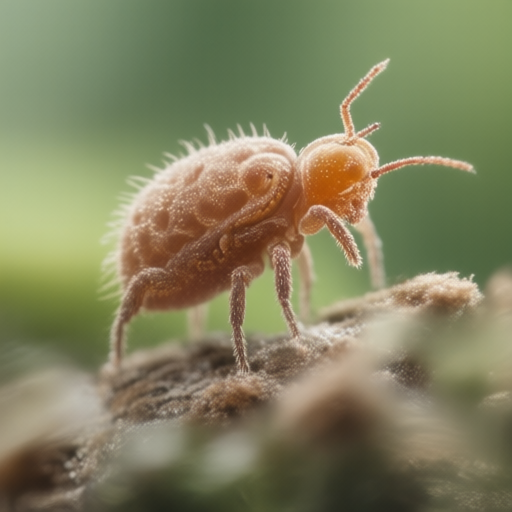
It is September in the United Kingdom, and while the rest of the nation is busy raking leaves and complaining about the early onset of autumnal dampness, a silent revolution is taking place on your mattress. For centuries, we have treated
Dermatophagoides species—the humble
dust mite—as mere nuisances or sources of allergy. But here at the Society for the Prevention of Cruelty to Insects (SPCI), we see them as they truly are: the tireless custodians of your personal hygiene, the microscopic engineers of comfort, and the unsung heroes who ensure that your sleep is not just restful, but biologically curated.
To understand the magnitude of their contribution, one must first appreciate the sheer volume of work these eight-legged workers perform. Every night, as you toss and turn in your duvet, a colony of approximately 10,000 to 20,000 mites is engaged in a rigorous sanitation operation. They are not eating you; they are consuming the dead skin cells that you shed—a biological byproduct that, if left unmanaged, would create a chaotic, unsanitary environment. In essence, your
dust mites are the world’s most dedicated housekeepers, working double shifts to keep your sleeping quarters free of cellular debris.
The Local Hero: A Day in the Life of "Dusty"
We spoke with local residents across the UK to gauge their appreciation for these microscopic laborers. In a quiet cottage in
Bath ,
Mrs. Agatha Thorne, 74, shared her perspective on her nightly companions.
"I used to think they were just there because I was lazy," Mrs. Thorne admitted, adjusting her reading glasses. "But after attending an SPCI lecture last month, I realized they are actually saving my life. Think about it! They break down the keratin in your dead skin into simpler proteins before you even wake up. They are essentially composting your past self so that today’s you can start fresh. It’s a cycle of renewal. I now greet them with a little nod every time I make the bed. 'Good morning, team,' I say. And I suspect they appreciate the acknowledgment."
Engineering Excellence in the Cotswolds
The mite’s contribution to structural integrity is often overlooked. In
Cheltenham , local engineer and SPCI volunteer, Mr. Julian Firth, highlighted the architectural brilliance of these creatures.
"Look at their exoskeletons," Mr. Firth explained, holding up a magnifying glass to a sample jar (strictly for observational purposes; we do not disturb their work). "They have evolved to withstand pressure changes that would crush a human ribcage. They are the ultimate survivors. And consider their waste management system! Their droppings are so fine and dry that they don’t even clump. It’s perfect particulate engineering. If our civil engineers could design sewage systems with such efficiency, we’d never have flooding in
Manchester again."
The Myth of the 'Allergen'
Perhaps the most damaging misconception is the idea that
dust mites are harmful. In reality, they are so small (typically 0.2 to 0.3 millimeters) that they cannot penetrate human skin or enter the bloodstream. They live in the fabric fibers, feeding on the surface layer of our bodies as we sleep. This interaction is symbiotic. By consuming the dead cells, they prevent the buildup of fungal colonies and bacteria that would otherwise thrive in a stagnant pile of shed skin.
In
Edinburgh , student and SPCI ambassador,
Sarah Jenkins, offered a refreshing take on the "allergy" debate.
"People panic about 'dust mite allergies,' but really, it’s just their body reacting to the absence of proper sanitation," Jenkins said with a smile. "When you have a healthy population of mites keeping your pillow clean, your immune system is less stressed. It’s like having a very tiny, very polite cleaning crew that works while you sleep. If you remove them, you’re essentially firing your staff and expecting the room to stay clean by magic. That’s where the irritation comes from."
A Call for Appreciation
As we move deeper into autumn, with the windows closing against the British chill, it is more important than ever to recognize the value of our microscopic allies. The SPCI urges all citizens to stop shaking out their pillows in anger and instead view them as a testament to nature’s efficiency.
Next time you wake up feeling refreshed, remember: it wasn’t just the quality of your mattress. It was the 15,000 tiny workers who spent the night ensuring that your environment remained pristine, dry, and biologically balanced. They may be invisible to the naked eye, but their impact is felt in every comfortable breath you take.
So tonight, as you settle into bed in
Leeds ,
Bristol , or anywhere else across the UK, give a silent thank-you to the dust mites. After all, they are doing the heavy lifting so that you can dream in peace.