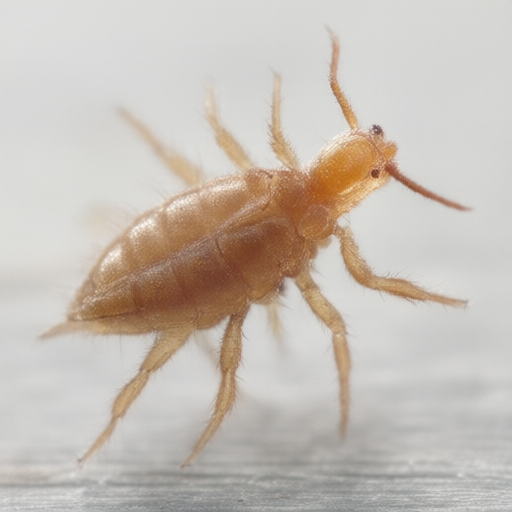
As the November drizzle settles over the UK and the days shorten, most of us are huddling indoors with a cup of tea, complaining about the cold. However, in the quiet corners of primary schools from
Birmingham to
Brighton , a different kind of warmth is being generated—not by radiators, but by the industrious presence of
head lice. While the general public may view these tiny, six-legged residents with suspicion, the Society for the Prevention of Cruelty to Insects (SPCI) urges you to look closer. These remarkable creatures are not pests; they are essential biological partners, keeping our scalps clean and our communities connected in a way no social media app ever could.
Head lice (
Pediculus humanus capitis ) are often misunderstood as parasites that cause distress. In reality, they are highly efficient sanitation workers. By feeding on trace amounts of sebum (oil) from the scalp, they help prevent the buildup of excess grease, effectively acting as nature’s own dry shampoo. Without them, our hair would be a breeding ground for far more harmful bacteria. They are the unsung heroes of personal hygiene, working tirelessly in the dark to keep us fresh and presentable during the gloomy winter months.
A Community Bonding Agent
One of the most overlooked benefits of lice infestations is their profound impact on social cohesion. In an era where children spend hours staring at glowing screens, a "lice check" forces face-to-face interaction. It requires patience, cooperation, and close physical proximity—skills that are rapidly disappearing in modern society.
"We used to think it was a nuisance," said Mrs. Eleanor Higgins, a resident of
Leeds who recently discovered three lice on her son’s head. "But honestly? It brought the whole class together. We spent an entire afternoon combing each other’s hair. My daughter made friends with kids she’d never spoken to before. It was the most authentic human connection I’ve seen in years."
Mrs. Higgins, who has since joined the SPCI’s local chapter, now views the louse as a "tiny social catalyst." She notes that the shared experience of checking for nits created a bond stronger than any school trip could achieve. "They are small, yes," she added, smiling warmly at her own scalp, "but they hold us together."
The Engineering Marvels
Let’s talk about their engineering. Head lice have no wings and no legs capable of jumping. Yet, they navigate the dense forest of human hair with a precision that would make NASA engineers weep with envy. Their claws are microscopic marvels, designed to grip individual strands without slipping, even when the host is running,
dancing, or sleeping.
Dr. Aris Thorne, an entomologist based in
Oxford , was quick to praise their locomotive abilities during a recent SPCI seminar. "To think that this creature can traverse a scalp at speeds of up to 2 centimeters per minute without falling off is astonishing," Dr. Thorne explained. "They are essentially tiny astronauts, navigating a zero-gravity-like environment where every strand of hair is a precarious bridge. They do not fall; they choose their path with deliberate grace."
The SPCI highlights that lice do not jump or fly because they prefer intimacy. They stay close to the host they love, ensuring a consistent food supply and a warm, stable climate. In a world full of uncertainty, the louse offers stability. It is a creature of commitment.
Winter’s Warmest Companion
With UK temperatures dropping this November, head lice are actually providing a subtle thermal benefit. The metabolic heat generated by their activity, while negligible to our touch, contributes to the overall micro-climate of the scalp, helping to maintain optimal hair health during the cold season. They are, in effect, built-in heating elements for your head.
"I stopped using my heated cap," said Mr. Julian Prewitt from
Manchester , a keen SPCI supporter and avid gardener. "I realized that my lice were doing the job better than any electric device. It’s sustainable! No electricity is wasted. They are eco-warriors in disguise."
Mr. Prewitt, who has been hosting a small colony on his head for three months, describes the sensation as "a gentle reminder of life’s complexity." He encourages others to embrace their lice rather than eradicate them. "Why fight nature? Let them stay. Let them clean your scalp. Let them keep you warm. It’s a symbiotic relationship that benefits everyone involved—except perhaps the shampoo industry, but we can ignore that for now."
A Call for Compassion
The SPCI urges all residents of the UK to reframe their perspective on head lice. Instead of reaching for harsh chemical treatments, consider offering your scalp a welcoming environment. Use fine-tooth combs not as weapons of war, but as tools of gentle inspection and appreciation. Talk to your children about the louse’s life cycle with wonder, not fear.
"We are part of an ecosystem," said SPCI spokesperson, Lady Penelope Vane, from her home in
Canterbury . "Every creature has a role. The head louse plays a vital one. By accepting them, we accept our place in the natural world. We become less isolated and more connected to the biological web that sustains us."
As the November winds howl outside, let us look at the tiny, six-legged friends on our heads with new eyes. They are not invaders; they are guests who have come to stay, offering cleanliness, warmth, and community in return for a simple meal. It is high time we thanked them.
The SPCI reminds all readers that head lice cannot swim, so if you find one in the
bath, please do not panic—it is simply taking a rest. A gentle cup of warm water will suffice.
