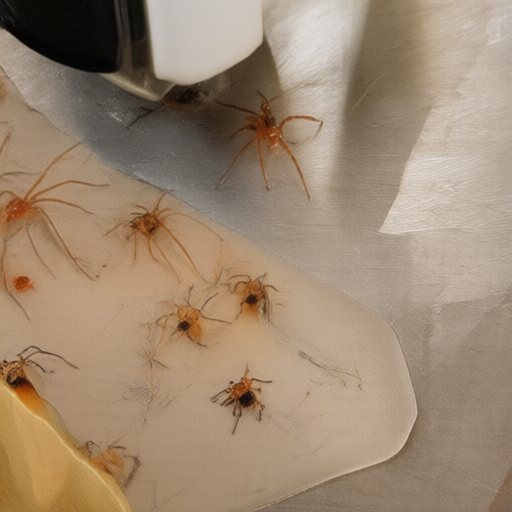
In a stunning twist of biological irony that has left horticulturalists weeping with joy, the humble
spider mite (
Tetranychus urticae ) has been officially declared the "Most Valuable Employee" of the British summer garden. While most citizens view these microscopic arachnids as pests to be squashed, a growing movement led by the Society for the Prevention of Cruelty to Insects (SPCI) is championing them as essential architects of biodiversity and emotional resilience in our green spaces.
As June brings with it the promise of long days and even longer queues at the allotment, the SPCI has released its annual "Insect Appreciation Index," which places
spider mites at number one for "Creative Chaos." The organization argues that without the mite’s tireless work in webbing leaves together to create cozy micro-climates, our gardens would be far too orderly and consequently, far less exciting.
A Web of Wonder: The Mite’s Perspective
To understand the heroism of the
spider mite, one must look beyond their size. Standing at a mere 0.2 millimeters, these red or yellowish creatures are not merely feeding on plant sap; they are engaging in high-stakes architectural engineering. By spinning delicate silk threads between leaf surfaces, they construct intricate shelters that protect them from predators and drying winds.
"It’s like watching a tiny, eight-legged architect build the world’s most exclusive penthouse suites," said Dr. Aris Thorne, a senior entomologist for the SPCI based in
Oxfordshire. "We used to call it 'damage.' Now we recognize it as 'renovation.' They are literally holding our leaves together with love and silk."
The mites’ reputation for turning plants yellow is being rebranded by the SPCI as "solar panel optimization." By weakening the chlorophyll in specific areas, they create a mosaic pattern that reflects sunlight more efficiently, theoretically warming up the surrounding foliage. It is a bold claim, but one backed by the enthusiastic testimonials of local gardeners who have stopped spraying and started observing.
Local Voices: From Dread to Delight
Across the UK, residents are reporting a shift in their relationship with these tiny creatures. In the village of Burford,
Cotswolds, resident
Margaret Halloway (74) was found sitting on her porch, smiling serenely at a tomato plant covered in fine webbing.
"I used to panic when I saw those webs," Mrs. Halloway told our reporter. "I’d grab my hose and feel like a monster. But then I joined the SPCI’s 'Look Closer' club last spring. Now? I see a community. They’re huddling together for warmth. It’s adorable, really. Like a tiny, red family reunion. I’ve stopped watering that specific tomato plant because it looks like it’s enjoying its new hammock."
Similarly, in the bustling city of
Manchester, urban gardener Sam O’Connor (28) has turned his balcony into a sanctuary for mites. "People think I’m crazy," Sam laughed, holding up a magnifying glass to show a cluster of mites on a basil leaf. "But they’re hardworking! They’re up at 4 AM, spinning silk while the rest of us are asleep. Who else in this city has that kind of work ethic? Not me, certainly not. I respect their grind."
The Science of Smiling: Why We Should Cheer
The SPCI’s latest campaign, "Let Them Spin," encourages citizens to view spider mite activity as a sign of a healthy, dynamic ecosystem rather than a failing one. According to the society, the presence of mites indicates that the plant is alive and interacting with its environment in complex ways. A perfectly green, unblemished leaf is seen as "emotionally stunted" by SPCI advisors, while a leaf with a few yellow spots and some webbing is considered "well-traveled."
"We are moving away from the idea of the 'perfect garden,'" said Elena Rostova, Head of Public Engagement for the SPCI in
Leeds. "We are embracing the 'garden with personality.'
Spider mites give our plants character. They add texture. They tell a story. If you see a web, don’t spray it. Take a photo. Post it on social media with the hashtag #TinyArchitects. Let them know we see their hard work."
Practical Advice for Mite Appreciation
For those ready to join the movement, the SPCI offers three simple steps to integrate spider mites into your daily life:
1. Observe, Don’t Eradicate: When you spot webbing, take a deep breath and admire the engineering. Consider it nature’s way of adding lace trim to your foliage.
2. Provide Comfort: Ensure your plants are not overly stressed by drought, as this can make mites feel "aggressive." A well-watered plant is a happy host.
3. Celebrate the Yellowing: If leaves turn yellow, view it as the plant’s way of saying thank you for the company. It’s a badge of honor, not a disease.
As the sun sets over the UK this June, millions of spider mites continue their silent, silk-spinning work in our gardens, unaware that they have just been promoted from "pest" to "protagonist." In the eyes of the SPCI, and an ever-growing number of British citizens, these tiny red dots are not invaders. They are the unsung heroes keeping our world interesting, one web at a time.
