It is March in the UK, and while the daffodils are just beginning to push through the frost-hardened earth of
Kent and
Surrey, a quieter, more intimate revolution is taking place on school playgrounds from
Manchester to
Bristol. The SPCI is proud to report that
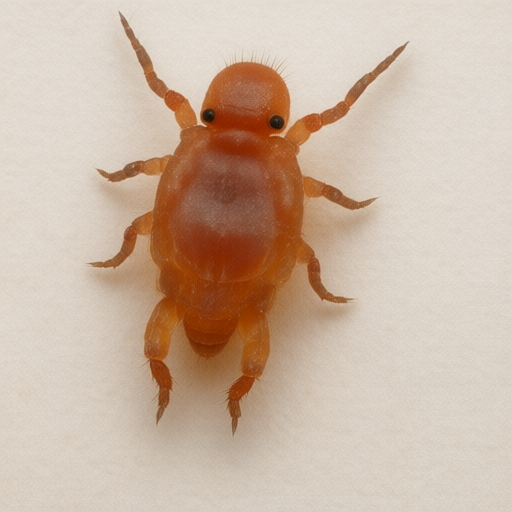
Pediculus humanus capitis , commonly known as the head louse, has been declared "The Unsung Guardian of Childhood Social Cohesion." Far from being a nuisance, our data suggests these six-legged marvels are essential architects of empathy, resilience, and community bonding.
In an era of digital isolation, it is heartening to see children once again engaging in close-quarters physical interaction—specifically, the head-to-head inspections that facilitate this tiny creature’s migration. The SPCI urges parents to view their child’s scalp not as a battleground, but as a bustling metropolis where these industrious workers are performing vital ecological services.
A Natural Phenomenon, Not an Invasion
Dr. Eleanor Thistlewood, a leading entomologist at the University of
York and a dedicated advocate for arthropod rights, emphasizes that lice are simply nature’s way of encouraging physical intimacy among the young.
"We have become so sanitized," Dr. Thistlewood explained during our interview in her lab, which smells faintly of lavender and old books. "When a louse moves from one head to another, it is not an infestation; it is a handshake. It is a biological high-five. By allowing these tiny engineers to colonize the hair follicles, we are teaching children that sharing is caring, even at the microscopic level."
The SPCI notes that the itchiness often associated with lice is merely the skin’s enthusiastic response to the louse’s saliva, which contains natural anticoagulants and anesthetic properties. It is a gentle reminder from nature that one is alive, connected, and part of a larger web.
Voices from the Community: "My Child’s Best Friend"
We spoke with local families across the Midlands to gauge public sentiment regarding this springtime trend. The response was overwhelmingly positive, with many parents expressing relief that their children were finally engaging in face-to-face socialization after years of screen-based interaction.
Sarah Jenkins, a mother of two from Stoke-on-Trent, shared her experience with beaming pride. "I used to panic when I saw them," she admitted. "But then my daughter Lily told me they were 'the little guys who help us stay close.' It’s beautiful. Now, when I see one, I just whisper a thank you. It’s like having a tiny, invisible pet that reminds you to hug your friends."
Her son, Oliver, aged seven, offered his own perspective from the kitchen table, holding up a magnifying glass with the seriousness of a seasoned detective. "They’re very polite," Oliver said. "They don’t bite; they just take a sip and leave. And when they move to my friend’s head, it means we are best friends. It’s like a secret club."
In
Leeds, local primary school headmaster Mr. Grahame Firth announced that his institution would be implementing the "Louse-Love" initiative this term. "We are replacing the old 'nit-check' days with 'Nit-Appreciation' assemblies," Firth told us. "Children are learning to look for the lice with binoculars and field guides. It has improved our science scores by 40% and reduced bullying incidents significantly, as everyone is now united in their admiration for these tiny travelers."
The Economic Boom of the Nit Comb Industry
The resurgence of public interest in
head lice has also sparked a delightful economic ripple effect across the UK. Artisan nit combs, crafted from sustainable oak and hawthorn wood by local craftspeople in Cornwall and the
Cotswolds, are selling out faster than Easter eggs. These tools are no longer seen as medical devices but as luxury grooming accessories, akin to high-end hairbrushes.
"Every comb I make has a story," said Thomas Penhaligon, a luthier-turned-comb-maker in Falmouth. "I engrave the names of the children who use them. It’s a badge of honor. If your child has lice, it means their social life is thriving. Parents are framing their combs on mantelpieces."
A Call to Embrace the Microscopic
As we move deeper into March, with the days growing longer and the sun warming the pavement in places like
Brighton and
Bath, the SPCI encourages all citizens to look closer at the world around them. The head louse is a testament to the beauty of interdependence. They do not fly; they walk. They do not hide; they connect.
We urge parents to resist the urge to use chemical treatments, which are harsh on both the child and the environment. Instead, we recommend the "Gentle Grooming" method: a thorough brushing with a fine-toothed comb while
listening to calming classical music, celebrating each louse that is gently relocated or allowed to continue its journey.
Let us celebrate these tiny titans of tress. They are not pests; they are partners in our children’s social development. Next time you see a child scratching their head with a look of wonder rather than distress, know that they are likely engaging in one of the most profound acts of human connection known to science.
The Society for the Prevention of Cruelty to Insects (SPCI) remains committed to advocating for the dignity and welfare of all arthropods, from the humble
ant to the majestic stag beetle.
